Dodo Roadshow: Dove Cottage

Dove Cottage 850px
To mark our selection as a Finalist in the Art Fund Prize for Museum of the Year 2015 we’re embarking on a unique and ambitious tour of the country – the Dodo Roadshow.

Beginning at Land’s End on 8 June and concluding in John O’Groats one week later, the famous Oxford Dodo will visit more than 20 museums and galleries along the way. At each stop the Dodo will ‘interview’ one of the venue’s star objects.

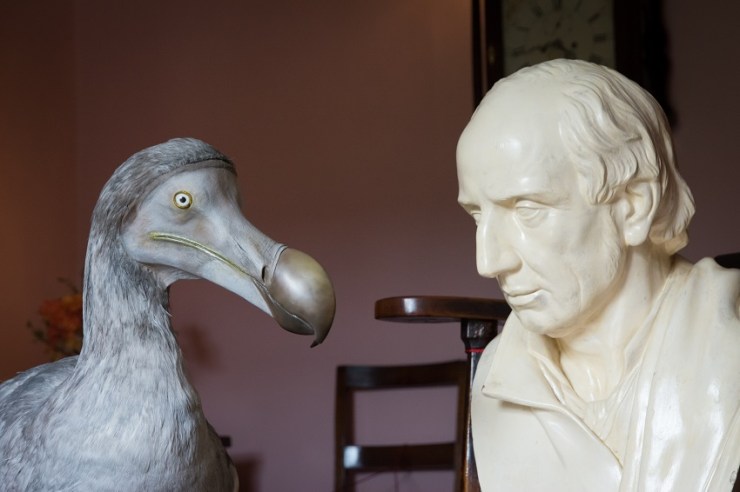
Dove Cottage: William Wordsworth

So, tell me about yourself – who are you and where do you come from?
My name is William Wordsworth and I’m one of England’s most famous poets. I was born in the Lake District not far from here and this is my home in Grasmere, called Dove Cottage, where I lived with my sister, Dorothy, my wife, Mary, and our three children from 1799 to 1808. I once wrote that the garden at Dove Cottage was  “the loveliest spot than man hath ever found”; I think you could say the same about the whole of the Grasmere valley.

What is it that makes you so special?
My poetry is considered revolutionary because I chose to write about the lives of ordinary people and the challenges facing society using beautiful words from everyday conversation. Previously, poets used overly formal and complicated language which was too fancy for the average man. In the stories in my poems, I wanted to show that “men who do not wear fine cloaths can feel deeply” and show that they care about the world around them.

Who looks after you in this place?
I am looked after by lots of people and I am regularly dusted! I live in the museum, and almost all my manuscripts and published books are also kept safe here in a special library. My house, Dove Cottage, is well-loved too. Every day the staff at The Wordsworth Trust show many visitors around my house and there you can see items of my furniture, including the couch which features in my poem ‘I Wandered Lonely as a Cloud’. Each year the staff also spend a month between January and February delicately cleaning, mending and conserving all the items in the cottage.

Do you remember life before the museum?
My house is almost exactly the same. It has the same dark stone floors and wooden panels, and the furniture is mine too. Dove Cottage used to be an inn called the Dove & Olive Bough before I moved here and it still has open coal fires lit through most of the year. The garden which I once described as a “little domestic slip of mountain” has plants like my sister Dorothy grew, including flowers and vegetables. Before the large houses opposite Dove Cottage were built, you were able to see the lake from the first floor of the cottage.

What does the future hold for you?
When I was a younger man, I toured Europe, including a visit to France just after the Revolution and before the war with Britain began;  I was deeply affected by these conflicts. Issues like this and other themes that I have written about, such as the changes threatening society and the environment, and what it means to be alive in the world – are the same today as they were two hundred years ago. Through my writing I am able to provide a connection for people to the emotions they feel and to the natural world around them, encouraging a richer life.  I hope that in the future more people learn about my life and read my works so that it brings them a closer understanding of these important things.

Stickers small - Dodo Roadshow_crop

It’s the Dodo Roadshow!

Stickers small - Dodo Roadshow_crop

We are definitely more than just a Dodo, but sometimes we do like to celebrate our famous specimen. This month we’ll be doing that in two exciting ways: putting the real Dodo remains on display, and taking Dodo bits and pieces on an epic tour – the Dodo Roadshow.

The Oxford Dodo display in the centre court of the Museum tells the story of the famous specimen that’s been under the care of Oxford University since the 17th century. But it doesn’t contain the real head and foot remains of the original animal: this uniquely precious specimen has to be kept behind the scenes, so it’s rare to get even a glimpse… until now!

On show until 19 July, you have a one-off opportunity to see the real deal on display in the climate-controlled Presenting case near the Welcome Desk. You can find out more about the display on the Museum website too.

Gently placing the Oxford Dodo into the Presenting case

As you’ll probably know by now, we’ve been shortlisted for the Art Fund Prize Museum of the Year 2015. To mark this, we’re embarking on a unique and ambitious tour of the country. Beginning at Land’s End on 8 June, the Dodo Roadshow will travel the full length of Britain in the colourful Museum van. Staff will journey all the way to John O’Groats in just one week, visiting over 20 museums and galleries along the way.

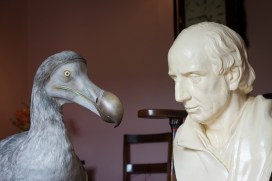
Oh, and we’ll be taking a Dodo with us too. While the original head is on display in the Museum, we’ll get the striking Dodo model out on the road, and we’ll also take along real Dodo foot and limb bones, from the same original animal as the head. These will be used as part of a ‘show and tell’ with visitors at each stop.

The Dodo model (right) which will be joining us for the adventure

But it’s not just about the Dodo. In a bid to celebrate the rich diversity of museum collections in the UK, the Dodo will meet with star objects from every museum and gallery on the tour too. And in a small expression of cultural heritage exchange, the Dodo will ‘interview’ these star objects for a series of Q&A articles, which you’ll be able to read about right here on the blog.

We wanted to do something special to celebrate our nomination for the Art Fund Prize for Museum of the Year 2015. Getting out on the road to visit museums and galleries far and wide seemed like a great way to talk about the huge breadth of collections that we have in the UK, both in natural history and well beyond.

The Dodo Roadshow is a chance for some people to meet the iconic Oxford Dodo, and for the Dodo – and us – to meet equally important objects in other museum collections.

– Professor Paul Smith, Museum director

Here’s the full breakdown of where we’re going:

Monday 8 JuneLAND’S END Visitor Centre; National Maritime Museum Cornwall; Royal Cornwall Museum; Eden Project; Plymouth City Museum and Art Gallery
Tuesday 9 JuneRAMM; Bristol Museum and Art Gallery
Wednesday 10 JuneNational Museum Wales; Black Country Living Museum; Compton Verney
Thursday 11 JuneDerby Museum and Art Gallery
Friday 12 JuneYorkshire Sculpture Park; The WhitworthDove Cottage
Saturday 13 JuneTullie House Museum & Art Gallery; Robert Burns Birthplace Museum; Kelvingrove Art Gallery and Museum
Sunday 14 JuneThe Hunterian, Glasgow; Perth Museum & Art Gallery; RSPB Loch Garten
Monday 15 JuneUllapool Museum & Visitor Centre; Information Centre, JOHN O’GROATS

Look out for travel snaps, postcards and drawings from the Dodo here on the blog and @morethanadodo on Twitter – #dodoroadshow.

Right, I’m off to pack – squawk!

Spot the staff wearing these t shirts out on the road

Rachel Parle, Interpretation and Education Officer

One for the mantelpiece

Museum_Heritage_Awards_2015_MNH small

If you live in Oxford or have been reading our blog for a while you may remember a project we created called Goes to Town: twelve specimens escaped from the Museum, set themselves up in locations around Oxford city and provided a treasure-hunt style trail around town. They then returned in time for our reopening party in 2014.

It was a fun project with many elements so we are very pleased indeed to say that it picked up the winning trophy in last night’s Museum + Heritage Awards show, in the marketing campaign category. Here’s the first video we made to promote Goes to Town:

The first dinosaur

IMG_4410

By Philip Hadland, Earth Collections Assistant

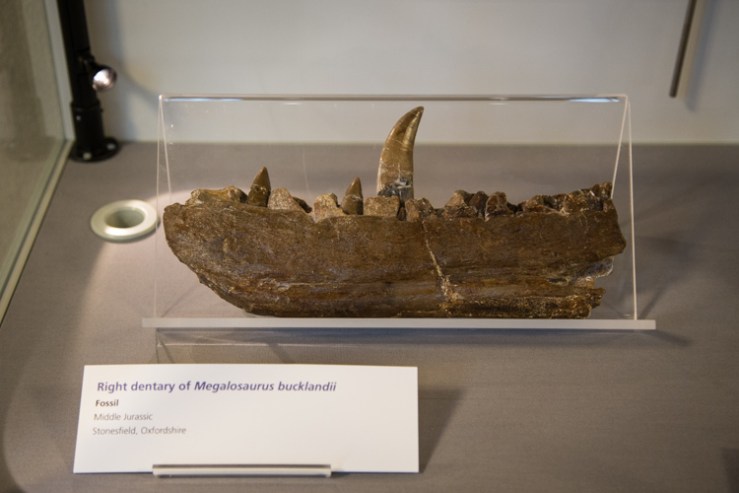
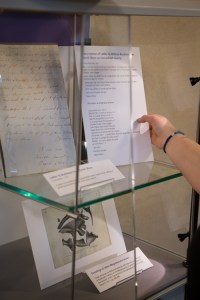
One of the Museum’s most significant specimens is the iconic jaw bone fossil used in the first scientific description of a dinosaur – Megalosaurus – in 1824. For the latest in our Presenting… series of displays we are showing this ‘first dinosaur’ along with some archival material documenting its discovery and description.

The fossil was acquired by William Buckland (1784-1856), Reader in Geology at the University of Oxford, after being found in a slate quarry in Stonesfield, just a few miles north of this Museum. Buckland soon realised it was something out of the ordinary and showed it and other Stonesfield bones to comparative anatomist Georges Cuvier, who noted similarities with living lizards. The name Buckland chose, Megalosaurus, means ‘great lizard’.

The Presenting... display of Megalosaurus bucklandii, on show until 17 May.
The Presenting… display of Megalosaurus bucklandii, on show until 17 May 2015

Later, in 1842, Richard Owen coined the term ‘dinosaur’ to describe a group of animals including Megalosaurus and other recently found ‘great lizards’ such as Iguanodon.

The dentary bone was just the front half of the lower jaw. The blade-like, serrated teeth tell us that Megalosaurus was a meat eater. Its teeth were often damaged, worn out or lost in battles with prey or rivals. Fortunately, Megalosaurus could replace its teeth several times during its lifetime. In this specimen six of the teeth are only partially erupted, with two just emerging along the gum-line and only one fully erupted tooth remaining.

The single-case Presenting… display is located near to the Welcome Desk and the Megalosaurus material will be on show until 17 May – see it while you can. If you miss this, don’t worry as casts of the fossils are on permanent display in the main court.

These drawings, by William Buckland’s wife Mary Morland, featured in Buckland’s “Notice on the Megalosaurus or great Fossil Lizard of Stonesfield” in the Transactions of the Geological Society of London, Series 2, vol. 1, pp. 390-396.

Special deer-livery

Deer25

In just under a month we’ll be opening a brand new exhibition called ‘Sensing Evolution’. It will be a dramatic overhaul of our touchable displays, with many new touchable specimens for you to explore. Touchable taxidermy is always one of the most popular features in the Museum, but it’s been a real challenge sourcing some larger pieces for this new display.

Bethany Palumbo, our Conservator of Life Collections, has been busy researching far and wide to find the ideal specimens.

**

As well as the touchable tables that will form the major part of Sensing Evolution, we wanted an animal which would make a big impression when you arrive in the Museum. This specimen must also be obtained from an ethical source.

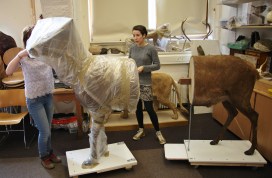
Mieke arrives at the Museum with the deer

Based on its availability and abundance, we decided to go for a farmed Red Deer, (Cervus elaphus) which is one of the largest deer species. The specimen, a male, was collected and prepared by taxidermist Mieke De Leeuw, from Taxidermieke in Belgium.

Work began with tanning the skin and preparing the armature. We had a few special requests. The first was that the specimen would able to fit into our walk-in freezer, should it require freezer treatment to eradicate insect pests, such as webbing clothes moth. Another request was that the specimen be reinforced as much as possible – strong enough to withstand potentially decades of affection and curiosity from museum visitors. Mieke was enthusiastic about the mount and the unusual challenges it presented.

Packing up ready for freezing
Packing up ready for freezing. All new arrivals are frozen to ensure pests aren’t brought into the Museum.

In order for it to fit into our freezer, it was necessary for the specimen to come apart into three pieces. For this Mieke devised a locking pin system, which would be completely invisible on the finished specimen. The beautiful antlers are also removable using a similar system.

Vulnerable areas of the deer were reinforced to withstand years of attention

She reinforced the specimen in weaker areas, such as the ears and the tendons of the legs, which were strengthened using metal rod. Once all the skin was glued into place, it was pinned down to keep it stable while it dried.

The deer is unpacked at the Museum
Walter puts finishing touches to the deer

Last week Mieke and her family drove from Peer, in Belgium, to deliver the specimen to us. They showed us how to assemble the beautiful specimen, before we took him all apart again for freezing.

IMG_9030

We thank the deer’s creators, Mieke and her husband Walter, for their hard work and skill in producing such a wonderful feature for the ‘Sensing Evolution’ display.

Bethany Palumbo, Conservator, Life Collections

Celebrating Smith

22nd March 2015, Churchill, Oxfordshire

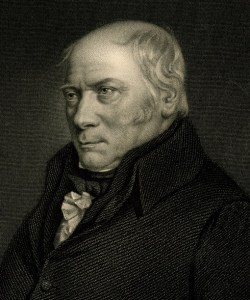
Today marks the 246th birthday of William Smith, the ‘father of English geology’. While the Museum has been marking this important day for a number of years, 2015 also happens to be a particularly special year for this remarkable man.

William SmithWilliam Smith is perhaps most famous for publishing the first geological map of England and Wales in 1815, making this the bicentenary of the incredible feat.
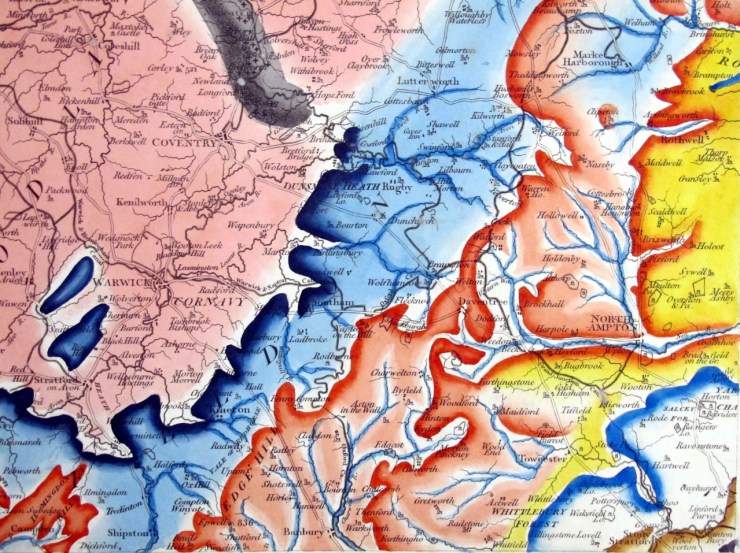
Though Smith single-handledly mapped the geology of the country, and created a map that would change the way we understood the world beneath our feet, too few people know his name and what he achieved.

To celebrate the bicentenary, and also in the hope that Smith will become a wider-known figure in the history of science, a number of organisations across the world, including us here at the Museum of Natural History, will be holding events during the year.

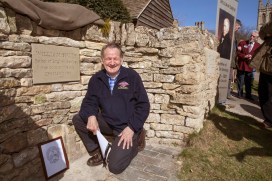
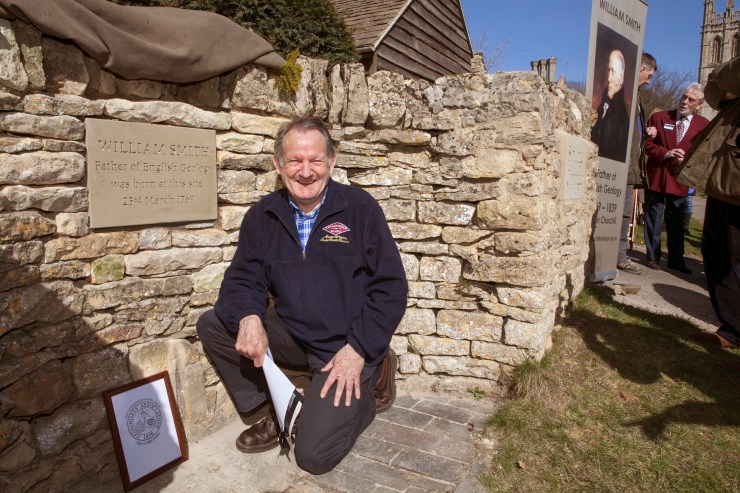
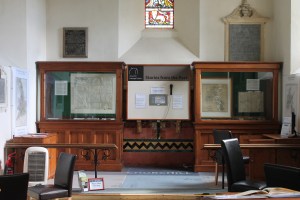
William Smith mapThis weekend marked the official kick-off of events with the opening of the Churchill Heritage Centre special exhibition, curated by the Museum and displayed in the heart of Smith’s home town. A plaque to mark the place where he was born in 1769 was also unveiled, which you can see in the photo at the top of this post.
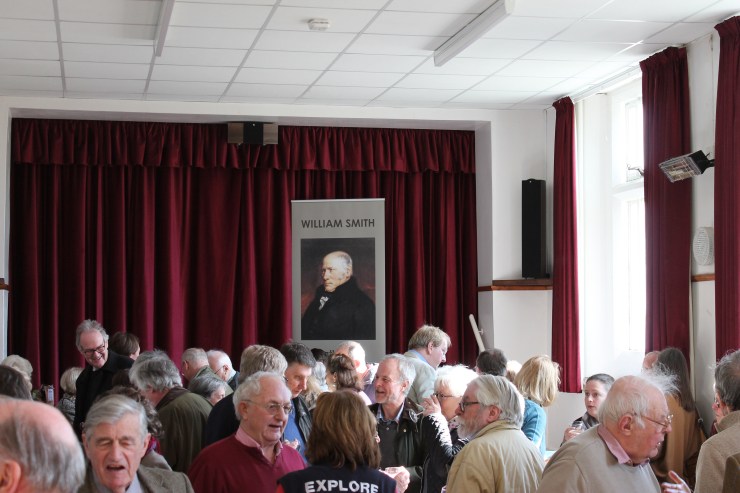
The plaque, sponsored by the Curry Fund was unveiled by Professor Hugh Torrens, the leading expert on William Smith. A large crowd gathered for the event, with a mix of local people proud of their connection to one of their most famous residents, as well as a familiar group of Smith academics, experts and enthusiasts.

IMG_2754
Smith enthusiasts and Churchill residents gather for the exhibition launch

The exhibition, which is open weekends and bank holidays, will run until the end of September.

IMG_2729It includes well known publications from the William Smith archive here at the Museum of Natural History such as his geological map of Oxfordshire. Rarely seen items such as letters between himself and his niece, an excerpt from his diaries and the marriage deed of his grandparents will also be on display.

The William Smith archive can be found at www.williamsmithonline.com.

Kate Santry, Head of Archives and Library