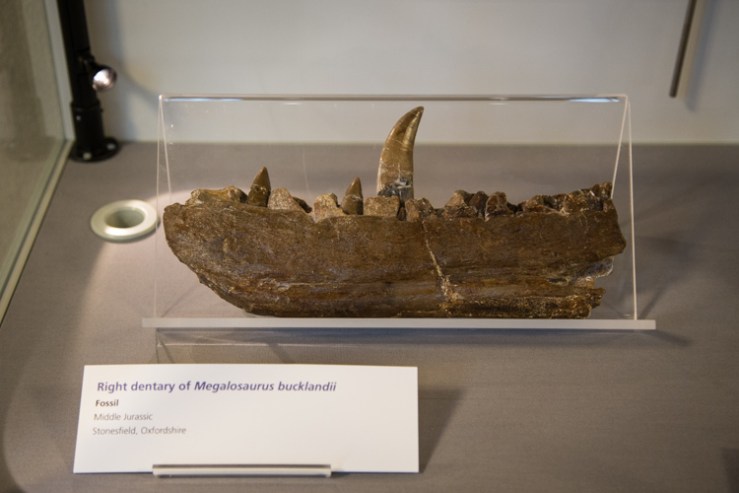
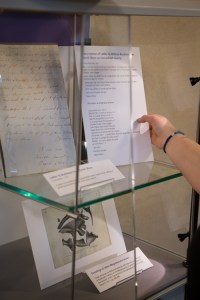
One of the Museum’s most significant specimens is the iconic jaw bone fossil used in the first scientific description of a dinosaur – Megalosaurus – in 1824. For the latest in our Presenting… series of displays we are showing this ‘first dinosaur’ along with some archival material documenting its discovery and description.
The fossil was acquired by William Buckland (1784-1856), Reader in Geology at the University of Oxford, after being found in a slate quarry in Stonesfield, just a few miles north of this Museum. Buckland soon realised it was something out of the ordinary and showed it and other Stonesfield bones to comparative anatomist Georges Cuvier, who noted similarities with living lizards. The name Buckland chose, Megalosaurus, means ‘great lizard’.
The Presenting… display of Megalosaurus bucklandii, on show until 17 May 2015
Later, in 1842, Richard Owen coined the term ‘dinosaur’ to describe a group of animals including Megalosaurus and other recently found ‘great lizards’ such as Iguanodon.
The dentary bone was just the front half of the lower jaw. The blade-like, serrated teeth tell us that Megalosaurus was a meat eater. Its teeth were often damaged, worn out or lost in battles with prey or rivals. Fortunately, Megalosaurus could replace its teeth several times during its lifetime. In this specimen six of the teeth are only partially erupted, with two just emerging along the gum-line and only one fully erupted tooth remaining.
The single-case Presenting… display is located near to the Welcome Desk and the Megalosaurus material will be on show until 17 May – see it while you can. If you miss this, don’t worry as casts of the fossils are on permanent display in the main court.
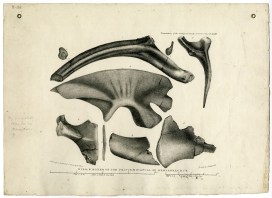
These drawings, by William Buckland’s wife Mary Morland, featured in Buckland’s “Notice on the Megalosaurus or great Fossil Lizard of Stonesfield” in the Transactions of the Geological Society of London, Series 2, vol. 1, pp. 390-396.
In just under a month we’ll be opening a brand new exhibition called ‘Sensing Evolution’. It will be a dramatic overhaul of our touchable displays, with many new touchable specimens for you to explore. Touchable taxidermy is always one of the most popular features in the Museum, but it’s been a real challenge sourcing some larger pieces for this new display.
Bethany Palumbo, our Conservator of Life Collections, has been busy researching far and wide to find the ideal specimens.
**
As well as the touchable tables that will form the major part of Sensing Evolution, we wanted an animal which would make a big impression when you arrive in the Museum. This specimen must also be obtained from an ethical source.
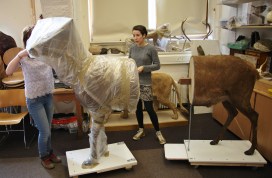
Mieke arrives at the Museum with the deer
Based on its availability and abundance, we decided to go for a farmed Red Deer, (Cervus elaphus) which is one of the largest deer species. The specimen, a male, was collected and prepared by taxidermist Mieke De Leeuw, from Taxidermieke in Belgium.
Work began with tanning the skin and preparing the armature. We had a few special requests. The first was that the specimen would able to fit into our walk-in freezer, should it require freezer treatment to eradicate insect pests, such as webbing clothes moth. Another request was that the specimen be reinforced as much as possible – strong enough to withstand potentially decades of affection and curiosity from museum visitors. Mieke was enthusiastic about the mount and the unusual challenges it presented.
Packing up ready for freezing. All new arrivals are frozen to ensure pests aren’t brought into the Museum.
In order for it to fit into our freezer, it was necessary for the specimen to come apart into three pieces. For this Mieke devised a locking pin system, which would be completely invisible on the finished specimen. The beautiful antlers are also removable using a similar system.
Vulnerable areas of the deer were reinforced to withstand years of attention
She reinforced the specimen in weaker areas, such as the ears and the tendons of the legs, which were strengthened using metal rod. Once all the skin was glued into place, it was pinned down to keep it stable while it dried.
The deer is unpacked at the MuseumWalter puts finishing touches to the deer
Last week Mieke and her family drove from Peer, in Belgium, to deliver the specimen to us. They showed us how to assemble the beautiful specimen, before we took him all apart again for freezing.
We thank the deer’s creators, Mieke and her husband Walter, for their hard work and skill in producing such a wonderful feature for the ‘Sensing Evolution’ display.
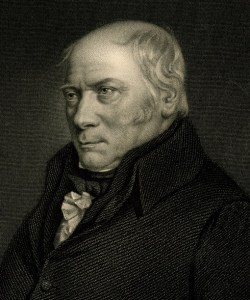
Today marks the 246th birthday of William Smith, the ‘father of English geology’. While the Museum has been marking this important day for a number of years, 2015 also happens to be a particularly special year for this remarkable man.
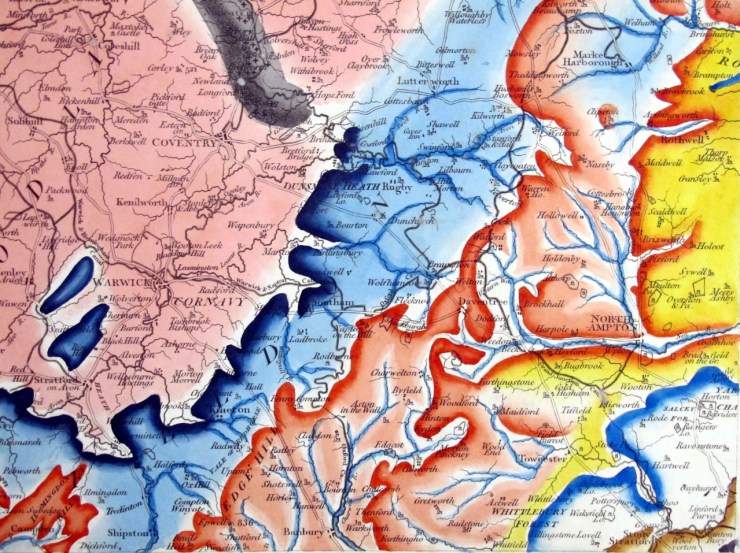
William Smith is perhaps most famous for publishing the first geological map of England and Wales in 1815, making this the bicentenary of the incredible feat.
Though Smith single-handledly mapped the geology of the country, and created a map that would change the way we understood the world beneath our feet, too few people know his name and what he achieved.
To celebrate the bicentenary, and also in the hope that Smith will become a wider-known figure in the history of science, a number of organisations across the world, including us here at the Museum of Natural History, will be holding events during the year.
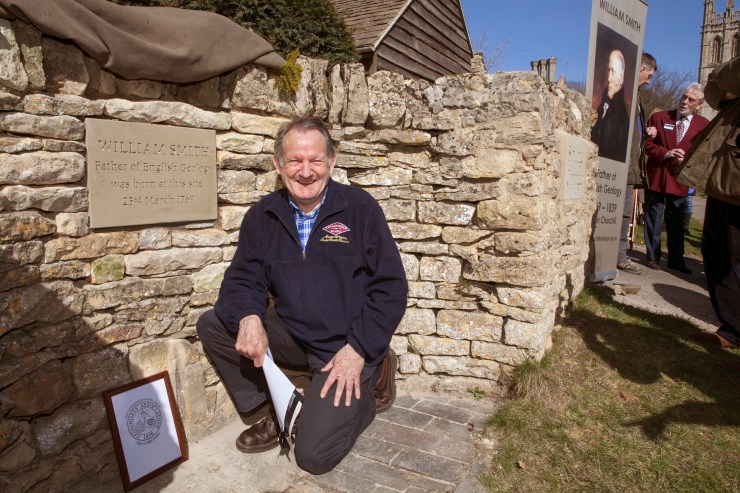
This weekend marked the official kick-off of events with the opening of the Churchill Heritage Centre special exhibition, curated by the Museum and displayed in the heart of Smith’s home town. A plaque to mark the place where he was born in 1769 was also unveiled, which you can see in the photo at the top of this post.
The plaque, sponsored by the Curry Fund was unveiled by Professor Hugh Torrens, the leading expert on William Smith. A large crowd gathered for the event, with a mix of local people proud of their connection to one of their most famous residents, as well as a familiar group of Smith academics, experts and enthusiasts.
Smith enthusiasts and Churchill residents gather for the exhibition launch
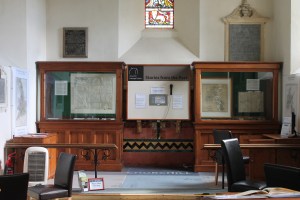
The exhibition, which is open weekends and bank holidays, will run until the end of September.
It includes well known publications from the William Smith archive here at the Museum of Natural History such as his geological map of Oxfordshire. Rarely seen items such as letters between himself and his niece, an excerpt from his diaries and the marriage deed of his grandparents will also be on display.
A birthday, on 12 February, and an ‘inordinate fondness for beetles’ are possibly the only things Charles Darwin and I have in common. In his autobiographical notes (1887) Darwin says that at the age of ten he made the decision to collect, but not kill insects; at the same age I was given, by my junior school teacher, four Madagascan hissing cockroaches (the large male I called Burt). So Darwin and I began a lifelong fascination with natural history at a similarly early age, though with very different results.
Much is written about Darwin and his scientific accomplishments, but did you know he was also an avid beetle collector? The quote below is testament to his enduring enthrallment with beetles.
“I feel like an old war-horse at the sound of the trumpet when I read about capturing of rare beetles… It really almost makes me long to begin collecting again”
Trypocopris vernalis, collected by Darren Mann, North Wales, 1986
Darwin was also a close correspondent of Reverend F.W. Hope, the founder of the entomological collections at the Museum, and the two often set out on insect-collecting expeditions together. These trips regularly resulted in the capture of rare or unusual species, and an occasional publication.
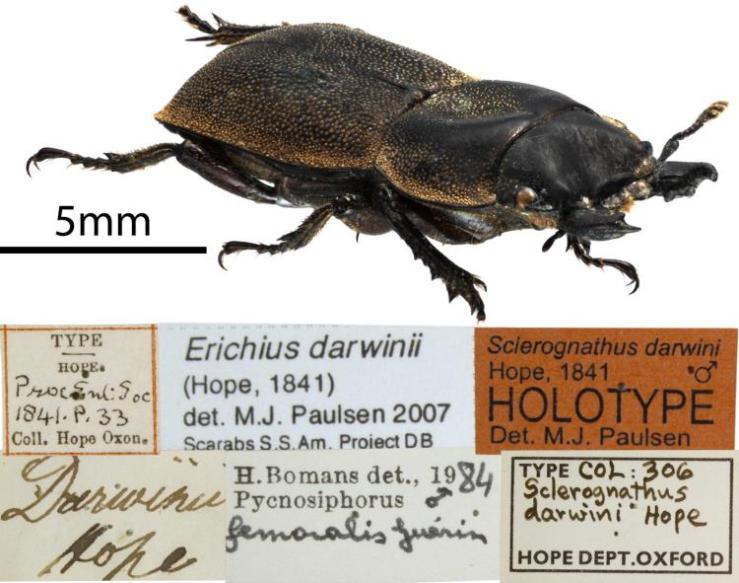
In 1831, Darwin embarked on his famous voyage around the world as naturalist on the HMS Beagle. He returned to England, in 1836, with around 4,000 insects, some of which were donated to his good friend Hope. Hope scientifically described a few of Darwin’s new species of beetles and named them in Darwin’s honour. Examples include the ground beetle Carabus darwinii and the stag beetle Dorcus darwinii.
Dorcus darwinii (Hope, 1841) “The above insect I have lately received from Chili. It is named in honour of Charles Darwin, Esq., who has greatly contributed to our acquaintance with the Entomology of Valparaiso, Chili, and other parts of the South American continent.” Hope, F.W. 1843.
During the Beagle voyage Darwin became the first collector of Tasmanian beetles. Onthophagus australis, collected by Darwin in Hobart Town in Tasmania in 1836, is shown in the photo at the top of this post. Whilst in Hobart Town he was also surprised to find
“Four species of Onthophagus, two of Aphodius, and one of a third genus, very abundant under the dung of cows; yet these latter animals [cows] had then been introduced only thirty-three years. Previously to that time, the Kangaroo and other small animals were the only quadrupeds; and their dung is of a very different quality to that of their successors introduced by man.”
This observation, possibly made on his birthday (and what a great way to spend the day) points to research questions that are ongoing today: the effects of habitat change from forest to pasture, and the impact that introduced farm animals have on native dung beetle populations.
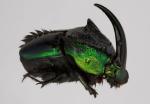
In his 1871 publication, The Descent of Man,Darwin returned to dung beetles, writing about their sexual dimorphism, or differences in appearance between males and females, and arguing that there must be a contest between males and females which drives rapid evolutionary divergence amongst populations. There is now considerable scientific evidence to support these views on sexual selection, some based on dung beetle research.
Phanaeus quadridens from the New World
So we come full circle. I work in the building where, in 1860, there was the first public meeting on Darwin’s then newly-published book, The Origin of the Species, an event now often referred to as the Huxley–Wilberforce debate, or Great Debate. My hobby and research interest focus on dung beetles and their ecology, including the effects of habitat change and loss of dung beetle diversity. And within sight of my office are those dung beetles Darwin wrote of from Hobart Town…
I am fortunate to be part of the curatorial team that looks after Hope’s collection, including those specimens given to Hope by Darwin. We have put a few of these on public display for the first time as part of our ‘Presenting…’ series of temporary exhibitions and to celebrate Darwin’s (and my) birthday I will give an informal short talk in the Museum on Thursday 12 February at 2.30pm, focusing on Darwin material from the collections.
A new year, a nice new display case. You may already be familiar with the Presenting… series that we’ve been running since March 2013; it started as a way to showcase treasures from the Museum’s collection during our closure year. Something changing and engaging to see as you passed through our darkened museum into the Pitt Rivers. Since re-opening early in 2014, we’ve celebrated significant natural history anniversaries, shared some of the staff’s favourite objects and put on joint displays with other departments in Oxford University. Now, for 2015, Presenting… is getting a make-over.
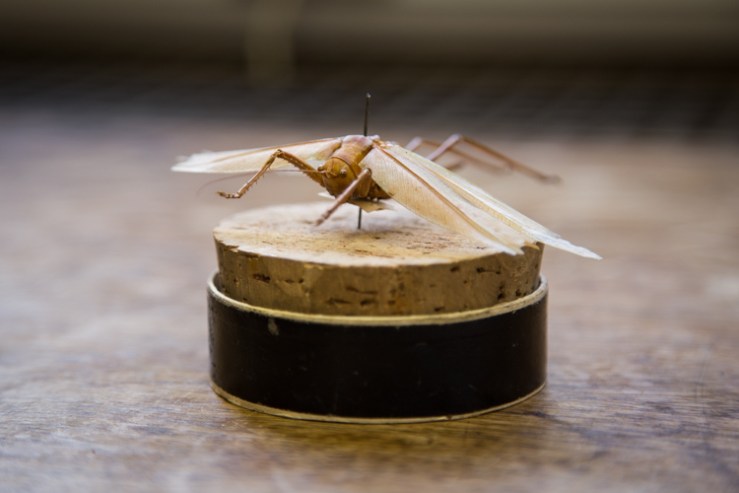
Bush cricket, family TettigoniidaeAmoret from Life collections installs a letter from Darwin to Hope
Today we’ve installed a brand new Presenting… display, in a posh new case. With humidity control and UV protection, this standard-leading unit gives us the opportunity to showcase some of the really special and fragile specimens from the collections. We’re launching tomorrow with a display of insects collected by none other than Charles Darwin.
As well as showing off some specimens collected by the great man in Australia and Tasmania, Darwin’s Insects will tell the story of his close friendship with Frederick William Hope (1797–1862), founder of the Hope Department of Entomology in this Museum. Hope was one of the most eminent entomologists of his time and when Darwin collected insects he often turned to Hope to help identify them.
Preparing specimens in the Life collections
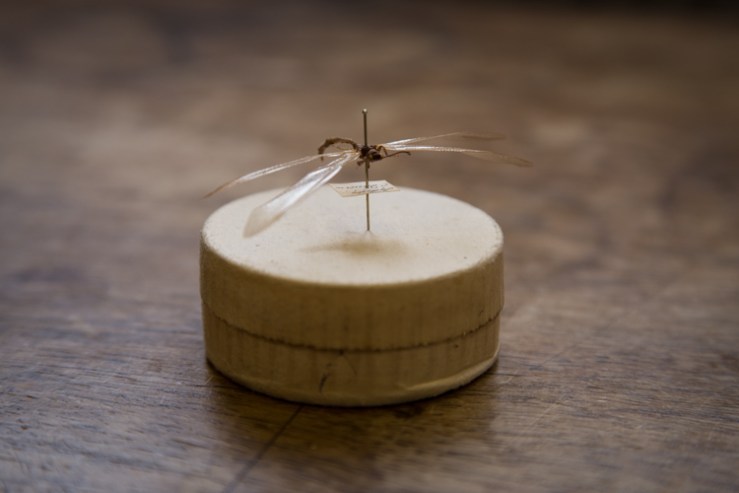
Darwin’s journey on HMS Beagle began in 1831 and towards the end of the trip he travelled around parts of Australia and Tasmania observing and collecting many species, including the insects you can see on display. They’re displayed in pill boxes similar to the type Darwin would have used to collect the specimens originally, and you can see Darwin’s handwriting on the tiny labels.
Ant lion, family Myrmeleontidae
Alongside the pinned insects, you can see one of Darwin’s letters to Hope, sent in 1837. He mentions insects that he collected between January and April 1836, which include the specimens on display. He is asking for Hope’s assistance, because so many of these insects are unknown to science. Hope was always keen to help identify new species and in another correspondence, from 1834, he promised to give Darwin “all assistance in my power” with this task.
The insects and letter will be on display from tomorrow (10 January) until 8 March. Pop in and take a look!
Rachel Parle, Interpretation and Education Officer
The Museum’s architecture is adorned with plants. Stone ferns carved by the O’Shea brothers unfurl from the capitals and wrought iron palm fronds embellish the roof. But we actually have very few botanical specimens on display in the Museum itself. The Oxford University Herbaria, by contrast, have around 1 million plant specimens in their collection and, established in 1621, they boast the oldest herbarium in the United Kingdom.
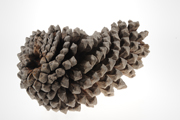
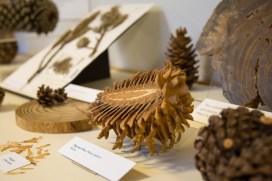
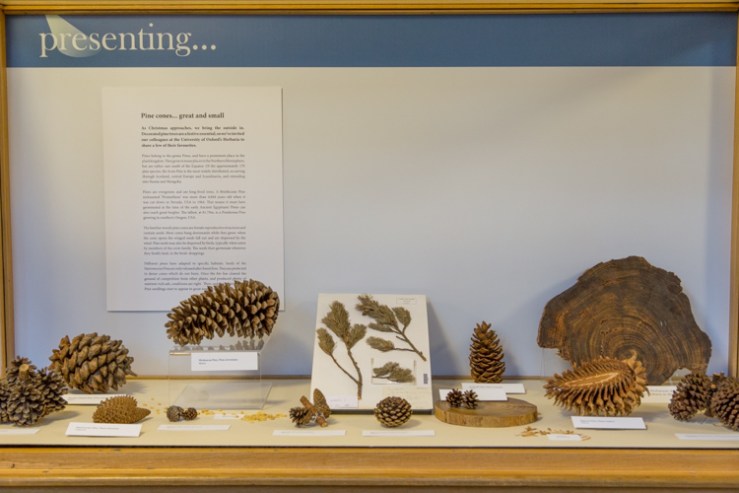
As Christmas approaches, we bring the outside in, with decorated pine trees a festive essential. This seemed like the perfect opportunity to invite our colleagues at the Herbaria to share a few of their favourites, by installing a display in our Presenting… case. James Ritchie, Herbarium apprentice, revealed the story behind these fabulous pine cones.
Pines belong to the genus Pinus, and have a prominent place in the Plant Kingdom. They grow in many places in the northern hemisphere, but are quite rare south of the Equator. Of the approximately 170 pine species, the Scots Pine is the most widely distributed; occurring through Scotland, central Europe and Scandinavia, and extending into Russia and Mongolia.
Michoacan Pine cone
Pines are evergreens and are long-lived trees. A Bristlecone Pine nicknamed ‘Prometheus’, was more than 4,844 years old when it was cut down in Nevada, USA in 1964 . That means it must have germinated at the time of the early Ancient Egyptians!
Pines can also reach great heights. The tallest, at 81.79 m, is a Ponderosa Pine growing in southern Oregon, USA.
The familiar woody pine cones are female reproductive structures and contain seeds. Most cones hang downwards while they grow; when the cone opens the winged seeds fall out and are dispersed by the wind. Pine seeds may also be dispersed by birds, typically when eaten by members of the crow family. The seeds germinate wherever they finally land, in the birds’ droppings.
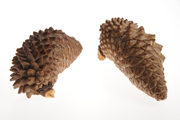
Narrowcone pine cone
Different pines have adapted to specific habitats. Seeds of the Narrowcone Pine are only released after forest fires. They are protected in dense cones which do not burn. Once the fire has cleared the ground of competition from other plants, and produced plenty of nutrient-rich ash, conditions are right for the Narrowcone Pine seedlings to flourish.
You can see the pine cones on display in the Museum until early in the New Year. Next in the Presenting... series will be a special selection of insects collected by none other than Charles Darwin – on show from 10th January.
Rachel Parle, Interpretation and Education Officer






 William Smith is perhaps most famous for publishing the first geological map of England and Wales in 1815, making this the bicentenary of the incredible feat.
 This weekend marked the official kick-off of events with the opening of the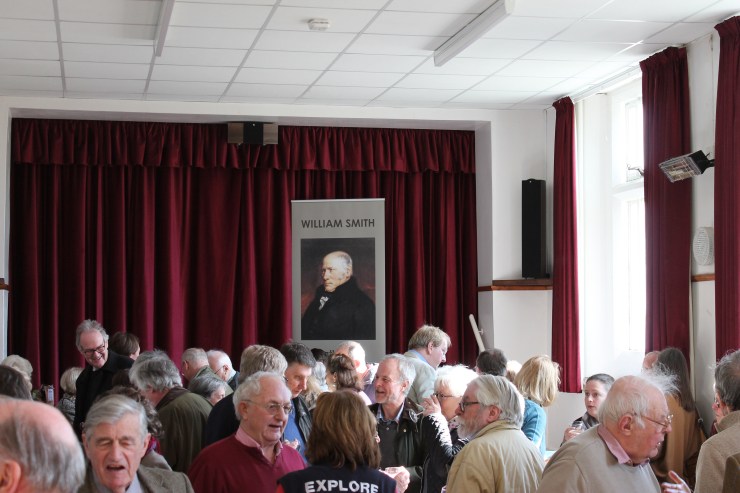
 It includes well known publications from the William Smith archive here at the Museum of Natural History such as his geological map of Oxfordshire. Rarely seen items such as letters between himself and his niece, an excerpt from his diaries and the marriage deed of his grandparents will also be on display.





 Pines belong to the genus Pinus, and have a prominent place in the Plant Kingdom. They grow in many places in the northern hemisphere, but are quite rare south of the Equator. Of the approximately 170 pine species, the Scots Pine is the most widely distributed; occurring through Scotland, central Europe and Scandinavia, and extending into Russia and Mongolia.