Layer upon layer

IMG_6299

Handwritten in Stone
9 October 2015 – 31 January 2016

Today sees the opening of our new special exhibition – Handwritten in Stone – celebrating the life and work of William Smith on the bicentenary of his publication of the first geological map of England and Wales.

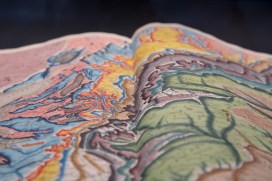
Dubbed ‘The Map that Changed the World’ in Simon Winchester’s book of that title, the beautifully hand-coloured map revealed a three-dimensional arrangement of rock layers, or strata, along with a fourth dimension – time.

This work earned Smith the moniker ‘the father of geology’, an accomplishment all the more impressive given that Smith achieved it single-handedly and with very little formal education.
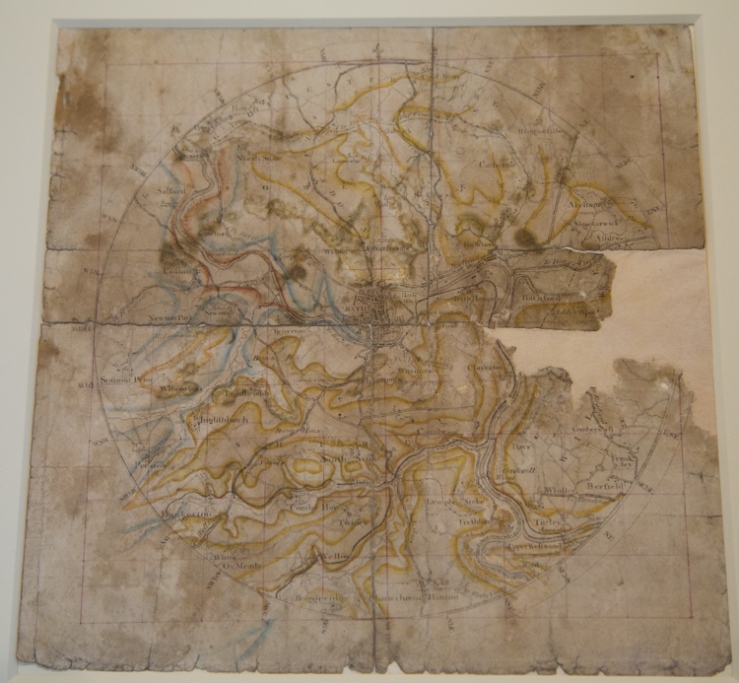
This 1799 map of Bath, on display in the exhibition, is the oldest geological map in the world

The Museum holds the largest archive of Smith material in the world. Alongside the famous 1815 map, shown at the top of the article, are personal papers, drawings, publications, maps and geological sections, most of which are being displayed for the first time. With these we have some fossil material from the collections: Smith realised that particular combinations of fossils were unique to different rock formations and could be used to date the strata.

Design work on the 'drawing board', created by Claire Venables at Giraffe Corner
Design work on the ‘drawing board’, created by Claire Venables at Giraffe Corner. Photo: Claire Venables

Handwritten in Stone, supported by the Heritage Lottery Fund, is the first show in our new special exhibition gallery on the upper east side of the building. Working out how to use the space was a learning process, and the final, elegant design is the work of local consultancy Giraffe Corner.

To bring the final exhibition together we collaborated with writer Rebecca Mileham, an installation team from the Ashmolean Museum, and more than 50 volunteers. Look out for more about the volunteers’ contributions on this blog soon.
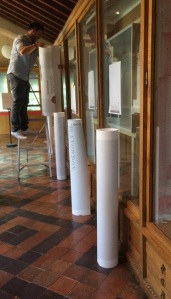
Applying the graphics in the gallery
Applying the graphics in the gallery. Photo: Claire Venables

The 1815 map itself takes centre-stage in the exhibition, flanked on one side by the history of Smith’s work building up to its publication, and on the other by the legacy of his techniques, which are still used today.

To discover the full story of William ‘Strata’ Smith head over to the upper east side of the Museum before 31 January.

And don’t forget to look out for our What’s On programme which includes lots of William Smith and geology-focused events, including a public talk by author Simon Winchester on 13 October.

Scott Billings – Public engagement officer
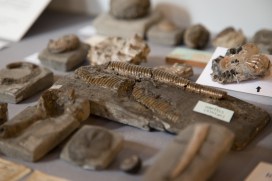
Presenting… the Gault Clay

IMG_5120

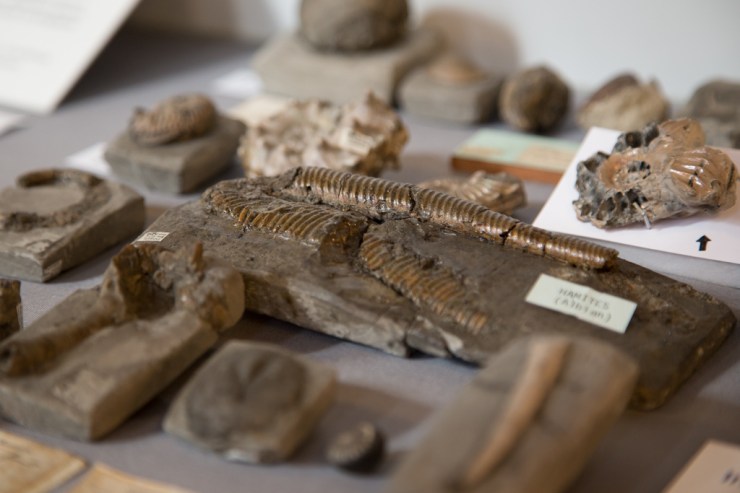
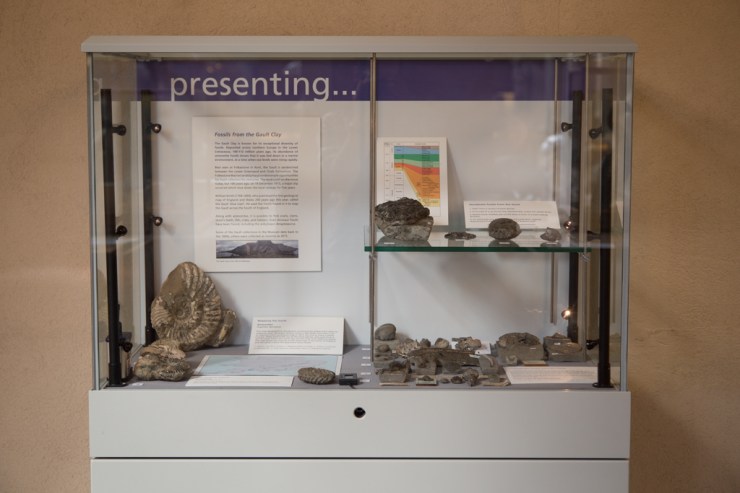
Our changing Presenting… display offers a look at highlights, themes and topical material drawn from the Museum’s collections. The current display presents a rich selection of fossils taken from a formation known as the Gault Clay. This will be on show until 21 September (Madagascar is up next), so it’s almost your last chance to see it.

The Gault Clay is known for its exceptional diversity of fossils. Deposited across northern Europe in the Lower Cretaceous, 100-112 million years ago, its abundance of ammonite fossils shows that it was laid down in a marine environment, at a time when sea levels were rising rapidly.

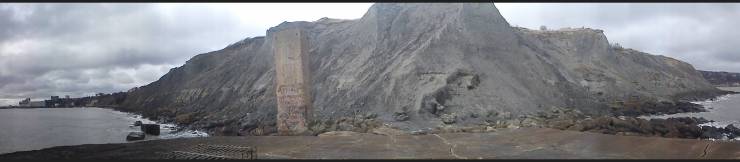
The Gault Clay in the Cliffs at Folkestone

Best seen at Folkestone in Kent, the Gault is sandwiched between the Lower Greensand and Chalk formations. The Folkestone Warren landslip has provided ample opportunities for fossil collectors for centuries. The land is still on the move today, but 100 years ago, on 19 December 1915, a major slip occurred which shut down the local railway for five years.

IMG_5122
Ammonite (Hoplites dentatus)

William Smith (1769-1839), who published the first geological map of England and Wales 200 years ago this year, called the Gault ‘blue marl’. He used the fossils found in it to map the Gault across the South of England.

Along with ammonites, it is possible to find snails, clams, shark’s teeth, fish, crabs, and lobsters. Even dinosaur fossils have been found, including the ankylosaur Anoplosaurus.

Some of the Gault collections in the Museum date back to the 1800s; others were collected as recently as 2015.

The Presenting... display, near the entrance to the Museum
The Presenting… display, near the entrance to the Museum

Bringing dinosaurs to life

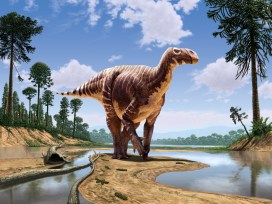
Iguanodon bernissartensis

By Rachel Parle, Education and Interpretation Officer

Dinosaurs were living, breathing, moving animals, but that’s sometimes hard to visualise when standing in front of a skeleton. We may not be able to reincarnate dinosaurs in the style of Jurassic World, but an excellent illustration of the animals in their environment can go a long way to bringing them back to life.

Triceratops horridus

When Earth Collections Manager Hilary Ketchum and I set out to update the labels for our free-standing dinosaur skeletons, we wanted to present current science alongside scientifically accurate illustrations. They should be beautiful and show the dinosaurs as dynamic animals. We found just the person for the job. Julius Csotonyi is a paleoartist, wildlife artist and scientific illustrator who specialises in life-like restorations of prehistoric animals and habitats. He understood exactly what we wanted and set to work researching featured specimens.

Pachycephalosaurus wyomingensis

After several rounds of checks and suggestions from scientists in the Museum and the University, the illustrations are all complete and the new labels are on display in the Museum. So I asked Julius a few questions about his work and how he felt having completed the project.

**

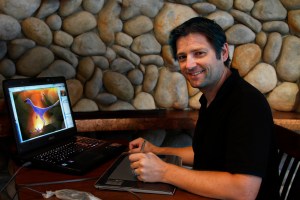
Julius working on a dinosaur reconstruction.
Julius working on a dinosaur reconstruction. Credit: Alexandra Lefort

How do you ensure your representations of dinosaurs are accurate?

Ultimately, all of my reference material comes from palaeontologists’ research. For all reconstructions, I rely heavily on published scientific literature. For reconstructions of newly discovered taxa, of which I am commissioned to do quite a few for press releases and scientific papers, I also have discussions with the palaeontologists who have made the discoveries, since the material is not yet published. This latter process is some of the most exciting, because I am able to participate in the process of scientific discovery, keeping a foot in both camps of science and art.

Struthiomimus sedens

How important do you think the dinosaur’s environment is in the representation?

The environmental context provides the opportunity to tell a more detailed story of the animal’s role in the biological community, its position in the food web, or interesting aspects of its behaviour. Depicting the animal’s environment provides me the opportunity to employ creative and interesting lighting conditions and composition to generate an image that is as aesthetically appealing as possible – this is art, after all, and I feel it’s important to make it as beautiful as I can.

How did you become a paleoartist and what do you enjoy about it?

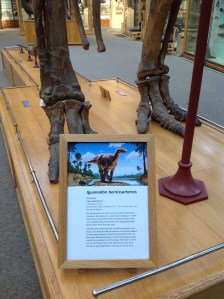
The new Iguanodon on display at the dinosaur's feet
The new Iguanodon label on display at the dinosaur’s feet

I absolutely love my job. It’s wonderful to play a part in piecing together and visualizing worlds that are millions of times older than I am. It was during the completion of my PhD in the microbiology of extreme environments that my work in scientific illustration and paleoart really took off, when I was first contacted to help illustrate a book about dinosaurs by author Dougal Dixon. Ultimately I realized that scientific illustration provided me with a more consistent enjoyment, so I made scientific artwork my full time work as soon as I completed my degree. I know that I am in the right field of work because even when I am juggling projects under the extreme pressure of impending deadlines, I still find great enjoyment in the act of painting.

This up-to-the-minute T. rex has feathers!


How do you feel about your work being on permanent display here?

I feel greatly honoured to have my illustrations incorporated into a permanent display in this renowned and respected institution. It is my hope that my work will help in a small way to interest the public in the intriguing field of palaeontology, and this excites me, for I feel strongly about contributing to scientific outreach. Many thanks to the museum team for allowing me to participate!

**

Next time you call by the Museum, stand in front of a dinosaur, have a good look at its new label and see if it comes to life before your eyes.

Rachel Parle, Interpretation and Education Officer

All images are copyright Oxford University Museum of Natural History and Julius Csotonyi.

Dodo Roadshow: Dove Cottage

Dove Cottage 850px
To mark our selection as a Finalist in the Art Fund Prize for Museum of the Year 2015 we’re embarking on a unique and ambitious tour of the country – the Dodo Roadshow.

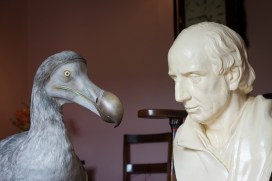
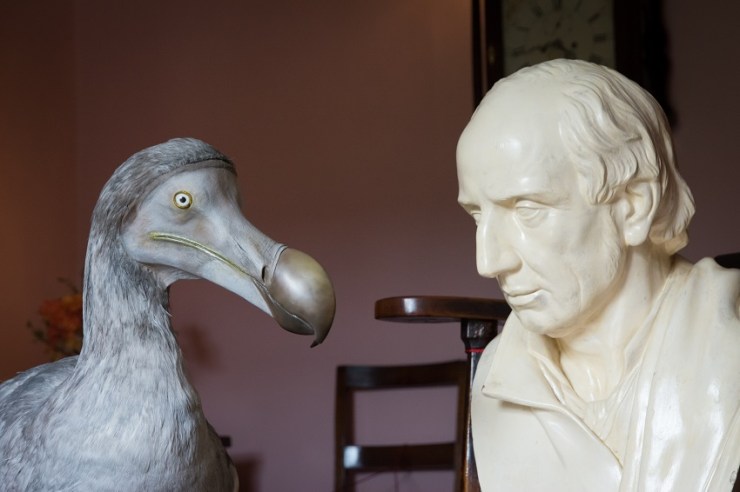
Beginning at Land’s End on 8 June and concluding in John O’Groats one week later, the famous Oxford Dodo will visit more than 20 museums and galleries along the way. At each stop the Dodo will ‘interview’ one of the venue’s star objects.

Dove Cottage: William Wordsworth

So, tell me about yourself – who are you and where do you come from?
My name is William Wordsworth and I’m one of England’s most famous poets. I was born in the Lake District not far from here and this is my home in Grasmere, called Dove Cottage, where I lived with my sister, Dorothy, my wife, Mary, and our three children from 1799 to 1808. I once wrote that the garden at Dove Cottage was  “the loveliest spot than man hath ever found”; I think you could say the same about the whole of the Grasmere valley.

What is it that makes you so special?
My poetry is considered revolutionary because I chose to write about the lives of ordinary people and the challenges facing society using beautiful words from everyday conversation. Previously, poets used overly formal and complicated language which was too fancy for the average man. In the stories in my poems, I wanted to show that “men who do not wear fine cloaths can feel deeply” and show that they care about the world around them.

Who looks after you in this place?
I am looked after by lots of people and I am regularly dusted! I live in the museum, and almost all my manuscripts and published books are also kept safe here in a special library. My house, Dove Cottage, is well-loved too. Every day the staff at The Wordsworth Trust show many visitors around my house and there you can see items of my furniture, including the couch which features in my poem ‘I Wandered Lonely as a Cloud’. Each year the staff also spend a month between January and February delicately cleaning, mending and conserving all the items in the cottage.

Do you remember life before the museum?
My house is almost exactly the same. It has the same dark stone floors and wooden panels, and the furniture is mine too. Dove Cottage used to be an inn called the Dove & Olive Bough before I moved here and it still has open coal fires lit through most of the year. The garden which I once described as a “little domestic slip of mountain” has plants like my sister Dorothy grew, including flowers and vegetables. Before the large houses opposite Dove Cottage were built, you were able to see the lake from the first floor of the cottage.

What does the future hold for you?
When I was a younger man, I toured Europe, including a visit to France just after the Revolution and before the war with Britain began;  I was deeply affected by these conflicts. Issues like this and other themes that I have written about, such as the changes threatening society and the environment, and what it means to be alive in the world – are the same today as they were two hundred years ago. Through my writing I am able to provide a connection for people to the emotions they feel and to the natural world around them, encouraging a richer life.  I hope that in the future more people learn about my life and read my works so that it brings them a closer understanding of these important things.

Stickers small - Dodo Roadshow_crop

It’s the Dodo Roadshow!

Stickers small - Dodo Roadshow_crop

We are definitely more than just a Dodo, but sometimes we do like to celebrate our famous specimen. This month we’ll be doing that in two exciting ways: putting the real Dodo remains on display, and taking Dodo bits and pieces on an epic tour – the Dodo Roadshow.

The Oxford Dodo display in the centre court of the Museum tells the story of the famous specimen that’s been under the care of Oxford University since the 17th century. But it doesn’t contain the real head and foot remains of the original animal: this uniquely precious specimen has to be kept behind the scenes, so it’s rare to get even a glimpse… until now!

On show until 19 July, you have a one-off opportunity to see the real deal on display in the climate-controlled Presenting case near the Welcome Desk. You can find out more about the display on the Museum website too.

Gently placing the Oxford Dodo into the Presenting case

As you’ll probably know by now, we’ve been shortlisted for the Art Fund Prize Museum of the Year 2015. To mark this, we’re embarking on a unique and ambitious tour of the country. Beginning at Land’s End on 8 June, the Dodo Roadshow will travel the full length of Britain in the colourful Museum van. Staff will journey all the way to John O’Groats in just one week, visiting over 20 museums and galleries along the way.

Oh, and we’ll be taking a Dodo with us too. While the original head is on display in the Museum, we’ll get the striking Dodo model out on the road, and we’ll also take along real Dodo foot and limb bones, from the same original animal as the head. These will be used as part of a ‘show and tell’ with visitors at each stop.

The Dodo model (right) which will be joining us for the adventure

But it’s not just about the Dodo. In a bid to celebrate the rich diversity of museum collections in the UK, the Dodo will meet with star objects from every museum and gallery on the tour too. And in a small expression of cultural heritage exchange, the Dodo will ‘interview’ these star objects for a series of Q&A articles, which you’ll be able to read about right here on the blog.

We wanted to do something special to celebrate our nomination for the Art Fund Prize for Museum of the Year 2015. Getting out on the road to visit museums and galleries far and wide seemed like a great way to talk about the huge breadth of collections that we have in the UK, both in natural history and well beyond.

The Dodo Roadshow is a chance for some people to meet the iconic Oxford Dodo, and for the Dodo – and us – to meet equally important objects in other museum collections.

– Professor Paul Smith, Museum director

Here’s the full breakdown of where we’re going:

Monday 8 June – LAND’S END Visitor Centre; National Maritime Museum Cornwall; Royal Cornwall Museum; Eden Project; Plymouth City Museum and Art Gallery
Tuesday 9 June – RAMM; Bristol Museum and Art Gallery
Wednesday 10 June – National Museum Wales; Black Country Living Museum; Compton Verney
Thursday 11 June – Derby Museum and Art Gallery
Friday 12 June – Yorkshire Sculpture Park; The Whitworth; Dove Cottage
Saturday 13 June – Tullie House Museum & Art Gallery; Robert Burns Birthplace Museum; Kelvingrove Art Gallery and Museum
Sunday 14 June – The Hunterian, Glasgow; Perth Museum & Art Gallery; RSPB Loch Garten
Monday 15 June – Ullapool Museum & Visitor Centre; Information Centre, JOHN O’GROATS

Look out for travel snaps, postcards and drawings from the Dodo here on the blog and @morethanadodo on Twitter – #dodoroadshow.

Right, I’m off to pack – squawk!

Spot the staff wearing these t shirts out on the road

Rachel Parle, Interpretation and Education Officer

One for the mantelpiece

Museum_Heritage_Awards_2015_MNH small

If you live in Oxford or have been reading our blog for a while you may remember a project we created called Goes to Town: twelve specimens escaped from the Museum, set themselves up in locations around Oxford city and provided a treasure-hunt style trail around town. They then returned in time for our reopening party in 2014.

It was a fun project with many elements so we are very pleased indeed to say that it picked up the winning trophy in last night’s Museum + Heritage Awards show, in the marketing campaign category. Here’s the first video we made to promote Goes to Town: