Wildlife photographers

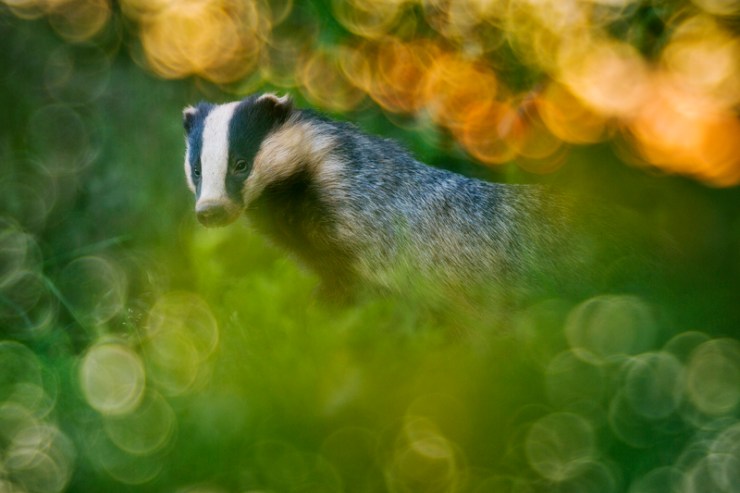
Badger dream scene Copyright: Marc Steichen
Badger dream scene
Copyright: Marc Steichen

Wildlife Photographer of the Year – 16 July-22 September
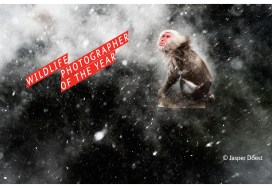
We’re excited to announce that the prestigious Wildlife Photographer of the Year exhibition is returning to the Museum this summer for the first time in over a decade. It will be on show, for free, in the Main Court from 16 July to 22 September, so make sure you get down here to see it.

This global showcase of the very best nature photography has inspired us to launch a little wildlife photography competition of our own…

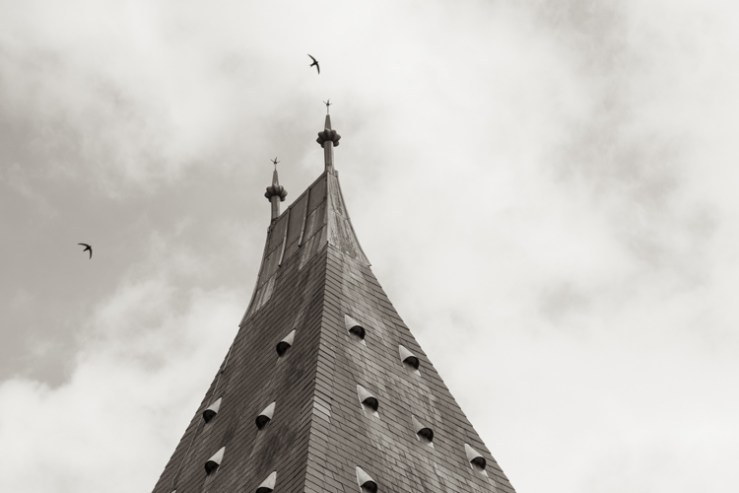
In celebration of the swifts that return to nest in the Museum’s tower each spring, we are running the Summer Swifts photo competition. Send us your best photograph of this summer’s swifts on the wing, either around the Museum’s tower or near you, and the winning image will be put on display alongside Wildlife Photographer of the Year in the Museum from mid-August. Not bad eh?

The picture below is not from Wildlife Photographer of the Year, but is my hastily-grabbed effort to capture the swifts. I imagine many of you can do better. Email your entries to communications@oum.ox.ac.uk by 15 August and we’ll let you know who’s won shortly after. Needless to say the images must be your own and not break anyone’s copyright, and you grant us permission to print and display them in the Museum until 22 September. Good luck!
IMG_2173
Swifts swoop around the Museum tower

Wait, there’s more… To coincide with Wildlife Photographer of the Year here we’re also offering a unique adult Day School titled Imaging Techniques in Modern Natural History – a Hands-On Guide. This takes place on Saturday 20 September and costs just £60.

It’s a practical course in digital imaging that will give you access to the Museum’s imaging equipment and specimens to learn about electron microscopy, 3D laser scanning, multiplane microscopy and macrophotography, as well as a poke around behind the scenes. Places are limited so for more info and to book email education@oum.ox.ac.uk pronto.

Scott Billings – Communications coordinator
Lost & Found

Lost & Found

One of the tasks of a University museum – and indeed all museums – is to communicate often complex and detailed academic knowledge to a non-specialist audience. There are lots of creative ways for us to go about this, from capturing children’s interest in nature and natural history through well-structured schools and family sessions, to the careful interpretation of specimens and subjects in exhibition displays. Another route is to collaborate with artists who can respond to and present the collections in a different manner.

We’ve been running a collaboration like this in our Life Collections since 2011, working with local artist Jane King. Jane has more recently teamed up with another Oxford-based artist, Neil Mabbs, and together they have formed Pale Blue Dot, a not-for-profit arts-science partnership that aims to raise public awareness about environmental and social concerns through exhibitions, publications and events.

IMG_1599
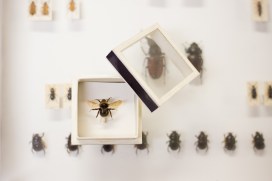
Jane picks out a great yellow bumblebee (Bombus distinguendus)

The first of these events is a multimedia installation called Lost & Found, running at the North Wall Arts Centre in Oxford from 28 May – 13 June. For this project Jane and Neil have worked with head of Life Collections Darren Mann and Amoret Spooner in the Museum, along with Professor Dave Goulson at the University of Sussex.

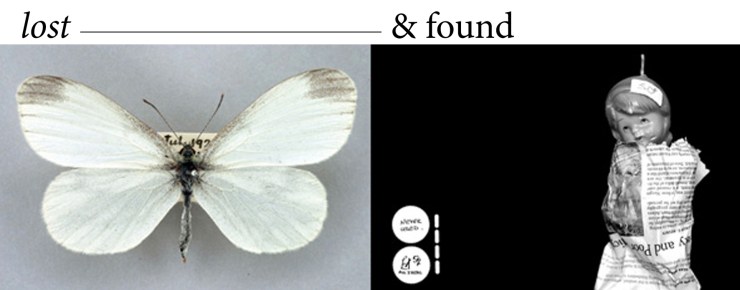
The Lost & Found exhibition asks whether consumerism is causing the extinction of millions of the planet’s species and the ecosystem services they provide. It uses a variety of material, including mixed media prints, photography, film and projection, 3D display, live planting, textiles, and artists’ books.

Artwork is supported by ‘Evidence Tables’ containing specimens from the Museum’s collections, as well as the results of the latest scientific research in the area. It is part of an effort by Pale Blue Dot to communicate complex scientific messages to a wider public audience.

Amoret explains the idea behind the project:

It focuses on the pollinators and decomposers that provide humans with some of the most tangible benefits in terms of ecosystem services.

The pollinators are a group of almost 500 species of UK bees, hoverflies, butterflies and moths. Specimens from the collection are being displayed in cases to represent many of the species, as well as being utilised as source material for the artwork.

Pale Blue Dot’s Lost & Found aims to raise awareness of some of the research carried out by scientists here at the Museum that visitors wouldn’t normally hear about.

Jane and Amoret researching bee specimens

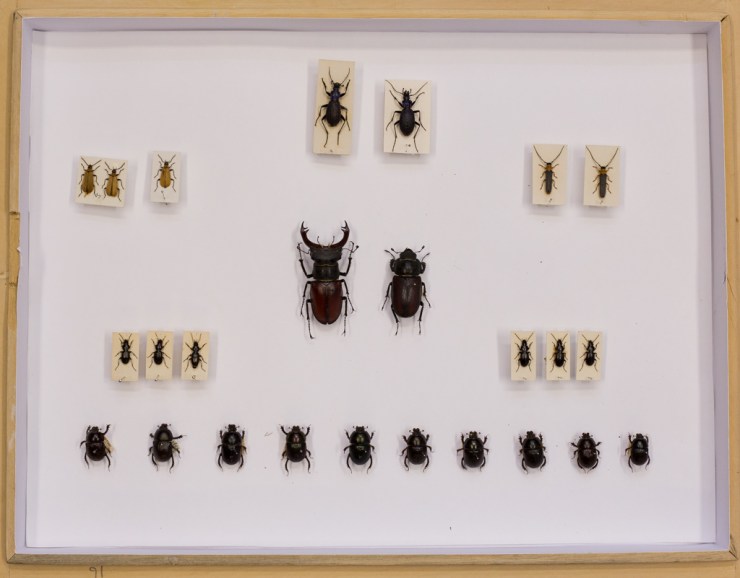
Darren’s photographs of dung beetles and his research papers on the role of dung beetles in the environment are featured. Dung beetles’ daily task of dung recycling helps increase crop yields by speeding up the release of nutrients into the soil, as well as reducing the spread of farm animal parasites and infections caused by biting insects. One of the pieces made by Jane is an artist’s book – Beetle Book – which highlights this vital ecosystem service that beetles provide to humans.

Many of our beetle, bee, moth and butterfly specimens will be on display in the Lost & Found exhibition at the North Wall, so head over there from 28 May to check it all out.

IMG_1615

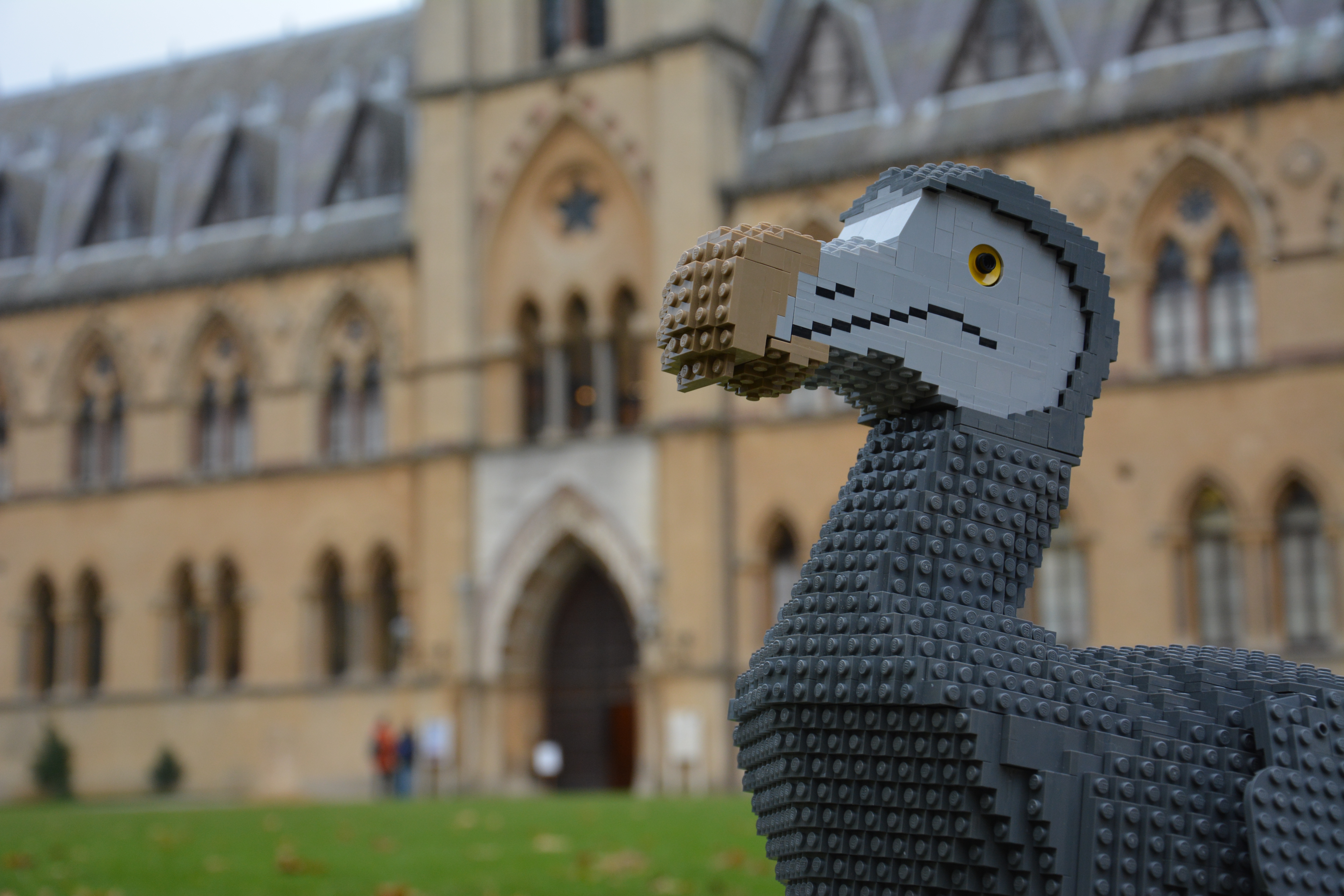
Lego dodo

DSC_0217

Back in late 2013, I was outside the Museum when I spotted this fantastic Lego dodo standing proudly on the lawn. After speaking to his keepers, I discovered that he was to become part of an exhibition at Milestones Museum in Basingstoke, and this was his publicity shoot. It’s fitting that the Lego dodo came to visit the home of the famous Oxford Dodo; we have the most complete remains of a single dodo anywhere in the world!

The Lost World Zoo dodo on the Museum lawn

Milestones is a living history museum, which is part of the Hampshire Museums service, and has fascinating Victorian streets you can wander and an Edwardian pub you can relax in. The latest addition to the Museum is Lost World Zoo, an exhibition of lifesize Lego models of extinct creatures. You can see giant dragonflies, come face to face with a woolly mammoth and even meet a whole flock of our favourite birds… dodos!

The dodo visits famous Oxford landmarks

They’re also running a variety of exciting family activities, including Lego figurine making. But if you can’t make it to one of those sessions, you could use this great short video to make your own mini dodo.

This weekend is your last chance to walk among these Lego creatures, as the exhibition closes on Sunday 27th April. So get down to Milestones before the dodos disappear again!

Rachel Parle, Interpretation and Education Officer

A slice of science with your cuppa

IMG_1084

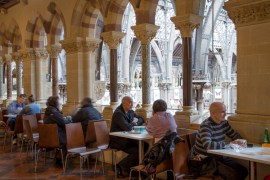
The view from the Museum’s upper gallery has always been spectacular; it’s the best place to admire the roof’s decorative iron work or to spot the dinosaurs lurking below. But add a great cup of coffee and a slice of cake to the experience and it steps up to a new level of pleasure. So it’s been fantastic to see so many happy visitors enjoying a break in our brand new café, Mortons at the Museum.

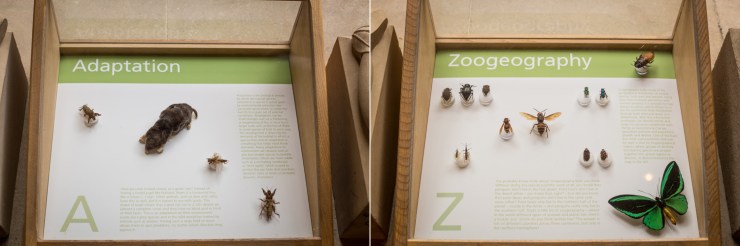
IMG_1127But we know that our visitors are a discerning bunch and are keen to learn, even when they’re enjoying elevenses, so we’ve installed a new display that runs the length of the upper gallery. A-Z is a taster of 26 natural history topics for you to get your teeth into.
From A for Adaptation to Z for Zoogeography, the alphabetical adventure whizzes past terms as diverse as Nocturnal and Living Fossil. It’s designed so that you can take a pick and mix approach to whet your appetite, before devouring the large-scale displays around the Museum.

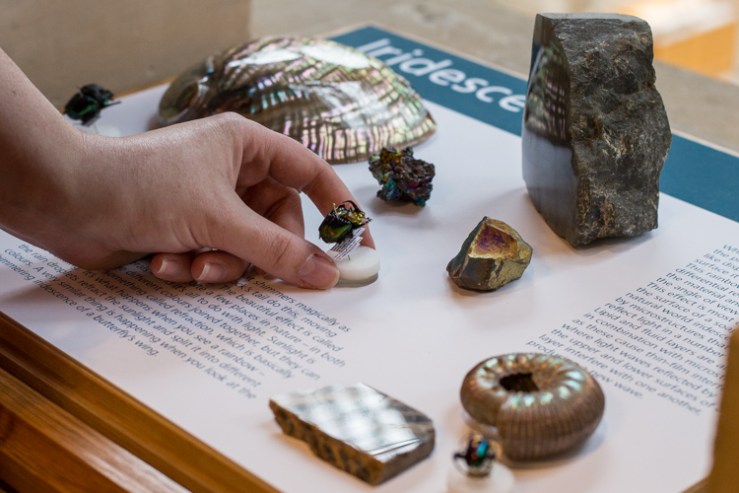
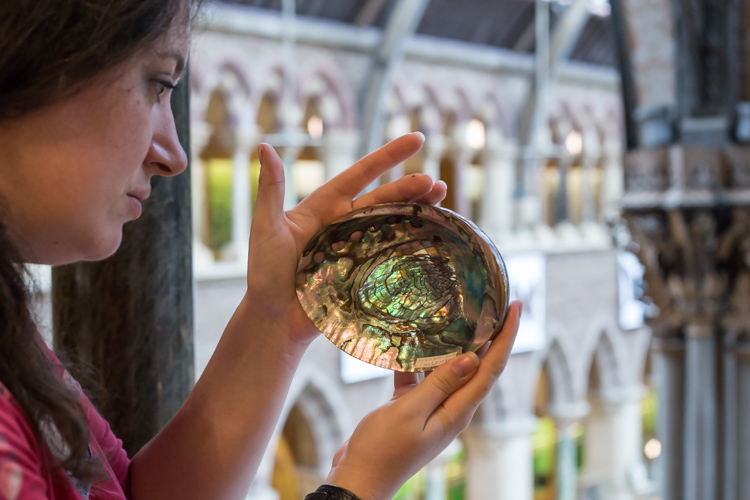
Zoë Simmons examining an abalone shell ready for the Iridescence case.
Zoë Simmons examines a Haliotid shell for the Iridescence case.

Zoë Simmons, of the Museum’s Life Collections, curated A-Z. She says that “One of the greatest challenges of the project was working on a display that encompasses such a wide range of subjects and crosses all disciplines of the Museum’s collections. I learnt a lot whilst researching and writing up the text for these displays.

“My favourite case is Iridescence. Not only is it full of beautiful rainbow-hued objects, but it has examples from all areas of the collections. There’s a fossilised ammonite, peacock ore, a Nectarinia bird, a jewel scarab and a Haliotid shell. It’s wonderful to be able to put a truly multi-disciplinary case together, as the opportunity is rare.”

A to Z

Each case has two levels of interpretation; a shorter, more light-hearted piece of text pitched at an average 10 year old visitor (though enjoyed by big kids too!), plus a more in-depth explanation for those who prefer a bit more science with their snacks.

IMG_1122
Lovely cakes in the new Café.

Tea and Types, cake and Camouflage and sandwiches and Stromatolite seem to sit well together. Next time you’re experiencing museum fatigue, join us for a little nibble of natural history up in our brand new café.

Bon appétit.

Rachel Parle, Interpretation and Education Officer

A little piece of history

Glass tiles

Regular readers of our closure blog, Darkened not Dormant, will know all about our Goes to Town project, where twelve plucky specimens escaped from the Museum for an eight month holiday in venues all around Oxford city centre. Like any good treasure hunt, the Goes to Town trail presented a competition which promised a valuable prize…

The framed fragment of roof tile, presented to the Goes to Town competition winners

Each of the twelve specimens carried two ratings, one for Danger and one for Rarity. To enter the competition, trail hunters needed to find all the displays and then tell us which specimen was rated most dangerous and which most rare. The most dangerous was the Snowy Owl, the sharpest living predator on the trail; and the rarest were the animals from Alice’s Adventures in Wonderland which are, of course, completely fictional. If you entered without checking all the specimens and guessed that the Dodo would be the rarest then we caught you out – sorry!

Winners also got a cuddly dinosaur.
Which is best – piece of glass, or cuddly dino?

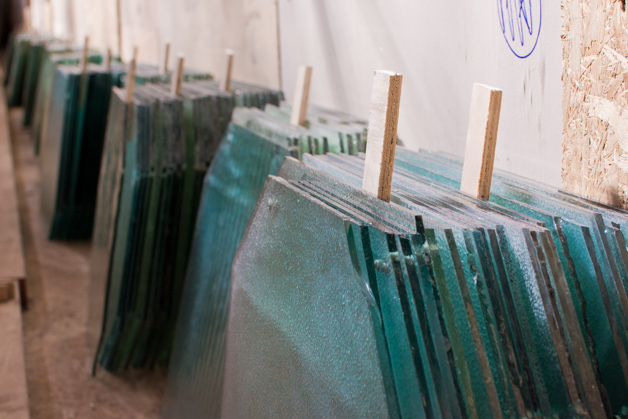
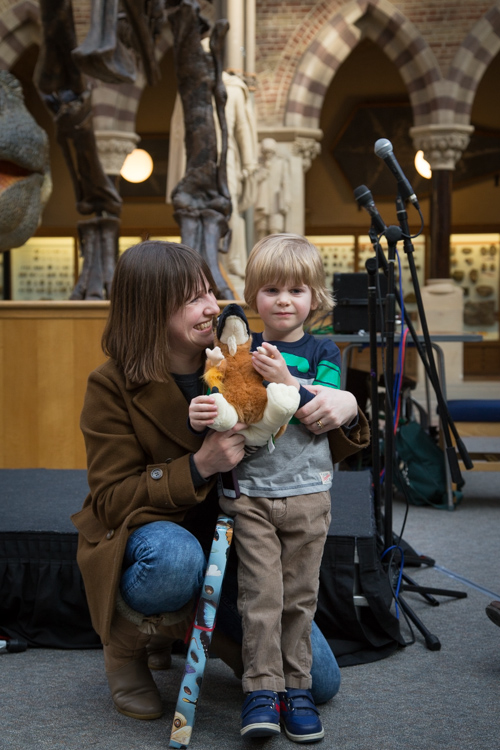
Around 80 people entered the competition and three winners were chosen at random. We held a little award ceremony on our reopening day on Saturday 15 February, where all three winners attended to receive their prizes. And the prizes were quite special. One was a cuddly dinosaur toy (always special, right?) and the other was a small framed, cut fragment of one of the glass tiles from the Museum’s roof.

The whole reason for our closure last year was to have the original Victorian roof repaired, so we felt that it was a fitting prize to present a little piece of the fabric of the roof – a little piece of history – to the winners. Congratulations again to the three winners and we hope those small fragments of the Museum are now hanging proudly on three walls somewhere in Oxford.

IMG_0883
Adults get the cuddly dino too, of course.
Museum directo Professor Paul Smith presents the prizes
Museum director Professor Paul Smith presents the prizes.

Breakout!

8.Ident

I bring you breaking news from the Museum of Natural History. As you all know, the Museum has been closed for over a year and, during that time, a number of our specimens have been popping up in unlikely places around Oxford city centre.

The Goes to Town project has seen a penguin in the fish mongers, a bank vole in the bank and a book worm in a book shop. All was going swimmingly until today.

3.RachelSeriousWe’ve been receiving reports from several of our Goes to Town venues that there’s been a breakout. The snowy owl has vanished from the University Church, the edible insects have escaped from the Turl St Kitchen and a white rabbit is on the loose from the Central Library. There’s trouble afoot.
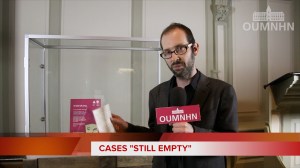
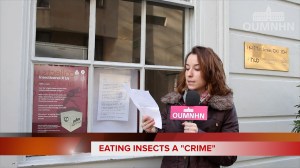
We’ve put together a special bulletin of Oxford University Museum of Natural History News.

Scott Billings at St Mary the Virgin Church
Scott Billings at the University Church

Reporters Bethany Palumbo, Jess Suess and Scott Billings joined me to bring you the latest story direct from the scene.

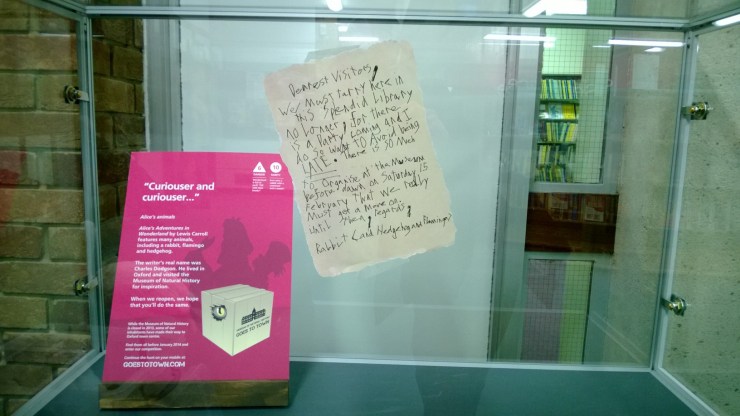
The mystery has been give an even more intriguing twist by the appearance of letters left behind by the escaped specimens. Each creature has its own motive for abandoning its case, but there is a definite theme throughout; they’re all coming home!

A note left behind by the white rabbit, Oxford Central Library
Bethany Palumbo at Turl St Kitchen

As each report unfolds, it’s clear that the specimens have escaped in order to return to the Museum, ready for our re-opening on Saturday 15th February.

So, who is behind this mass escape? Watch the report video to find out.

Jessica Suess at Oxford Central Library

The Museum of Natural History will be the place to be on Saturday 15th February. Even the Goes to Town specimens don’t want to miss out on the action! Join us then, dawn till dusk.

Rachel Parle, Interpretation and Education Officer