Tests of time: Foraminifera and Radiolarians in science, art and 3D

Doctoral researcher Elaine Charwat is exploring the value and meaning of models and casts in the Museum’s collections as part of her PhD. She has recently been studying some fabulous models that help to visualise and understand some of the very, very smallest of specimens…

By Elaine Charwat

The first time I encountered a Radiolarian was in a book – Ernst Haeckel’s (1834-1919) weird and wonderful Kunstformen der Natur (Art Forms in Nature, 1899-1904). It took comparative morphology – comparing the shapes of organisms – to new giddy heights, scientifically, philosophically and artistically. I felt that giddiness when looking at page after page crammed with crustaceans, orchids, hummingbirds, moths and even bat faces, all exquisitely arranged to celebrate their symmetries, the evolution and kinship of their shapes and forms. It also made visible organisms that are normally all but invisible.
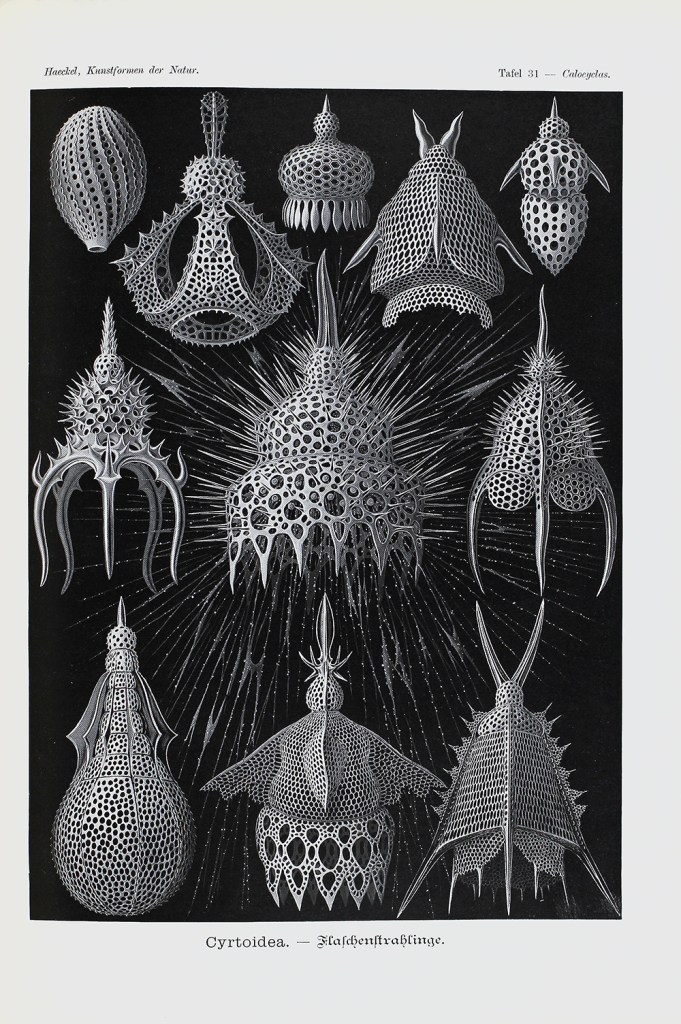
Illustration of Cyrtoidea (table 31) from Kunsterformen der Natur (1899 – 1904) by Ernst Haeckel. By permission of the Linnean Society of London.

Foraminifera and Radiolarians are microscopic sea-dwelling organisms. Species may be found as fossils dating from Cambrian times, ca. 500 million years ago, right up to living specimens today.

To Haeckel, they were living proof of Darwin’s theory of evolution, and for his own belief that morphology was the key to understand the actual processes of evolution, catching it in the act. However, these organisms had two big disadvantages – their unwieldy taxonomy, or the way they are classified, and their minute size: they were difficult to examine and display.

Illustrations of Radiolarians, (table 28). from Die Radiolarien (1862) by Ernst Haeckel. By permission of the Linnean Society of London.

Through his illustrations, Haeckel widely popularized them – triggering a Victorian craze for microscopes and microorganisms, as well as influencing art nouveau art and architecture. But there were limits to what an illustration could communicate. Models stepped in, representing these organisms in ways illustrations could not.

Detail from Haeckel’s Kunstformen der Natur (1899 – 1904)

One defining feature of Radiolarians and Foraminifera is their shells – called “tests”. Variations in shapes of the tests not only indicate that they are different species, but also, excitingly, provide clues about space and time. The tests of Neogloboquadrina pachyderma, for instance, record ocean temperature over geological timescales – their shells coil to the left when water temperatures are relatively cold, and to the right when it is warmer. The potential for research into climate change is obvious. Foraminifera are also important “signature fossils”, helping geologists to determine geological strata.

You really need to see them in glorious 3D to appreciate these tests across geological time, to understand their complex, beautiful shapes. And I felt a similar twang of excitement to my first encounter with them through Haeckel when discovering these extraordinary models here in the Museum as part of my PhD research.

Václav Frič (1839-1916) was a natural history dealer based in Prague. He developed a series of 100 plaster of Paris models of Foraminifera (1861), as well as the stunning papier-maché models of Radiolaria (listed in his catalogue of 1878). He worked closely with Ernst Haeckel.
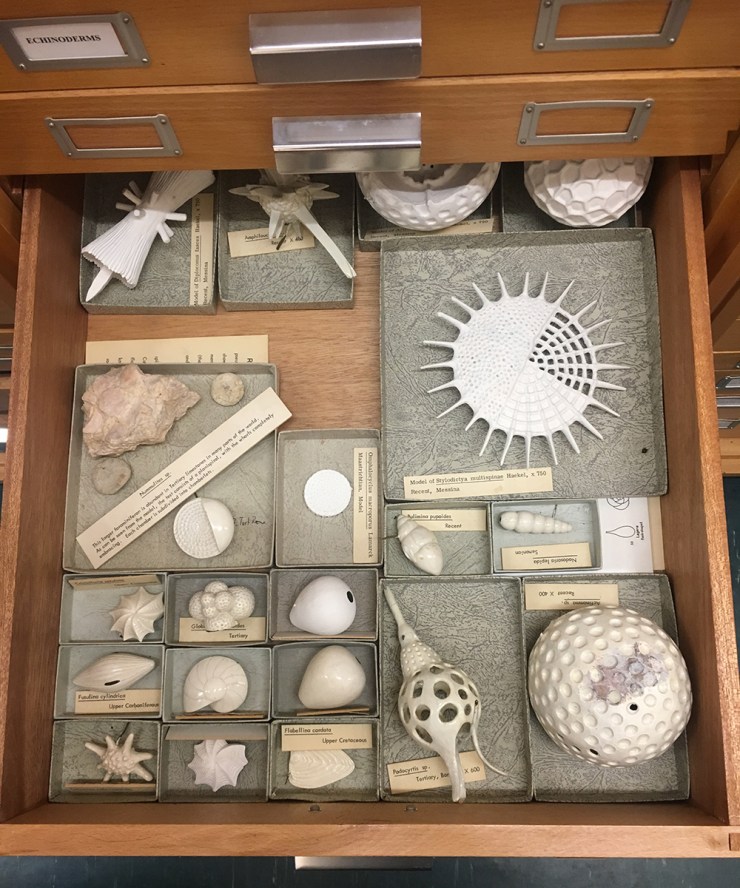
A selection of Frič’s models in the Museum’s stores

The Frič models oscillate between visible and invisible, illustration and model, art and science, philosophy and theory. They bear witness to a key period in the history of science when they were used to give tangible shape and proof to Charles Darwin’s poignant phrase:  “[…] from so simple a beginning endless forms most beautiful and most wonderful have been, and are being, evolved.”

Through the models we can “grasp” microorganisms that have been around for over 500 million years; organisms that truly have stood the tests of time.

Birds of paradise

By Eileen Westwig, Life Collections Manager

The latest in our Presenting… series of single-case displays takes a look at one of the world’s most spectacular groups of birds – Paradisaeidae, or the birds of paradise.

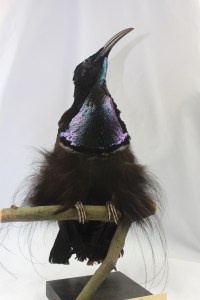
A beautiful male Magnificent Riflebird (Lophorina magnifica)

The first bird of paradise to arrive in Europe was a skin that came to Spain in 1522. Many of these early skins were prepared by native hunters without wings or feet to better show off the bird’s spectacular plumage. Upon arrival in Europe, the apparent lack of wings and legs led to the myth that these birds originated from paradise and floated high in the skies, only to fall down to earth after their death.

Birds of paradise are members of the family Paradisaeidae, which contains more than 40 recognised species. Their closest relatives are crows and jays, of the Corvid family.

They inhabit the rainforests of Papua New Guinea, Eastern Indonesia and Eastern Australia and mainly feed on fruit and some insects. Hybridisation, when two birds of different species crossbreed, is quite common and can explain why many of the early described species were so “rare”.

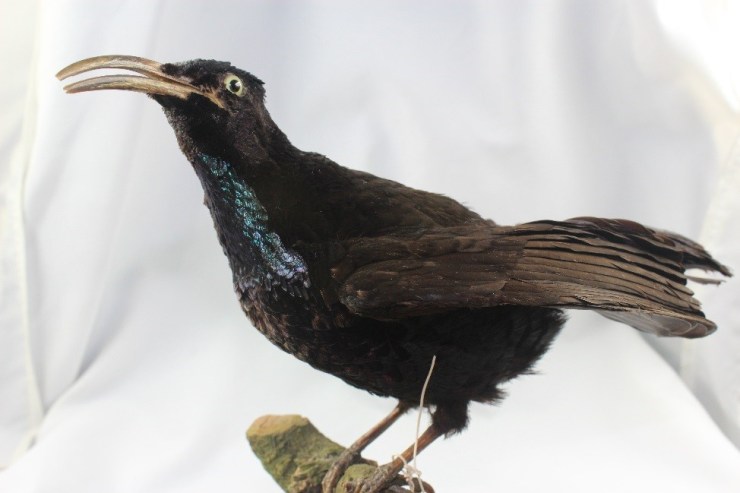
Male Paradise Riflebird (Lophorina paradiseus) showing off iridescent plumage on its chest
Female Paradise Riflebird (Lophorina paradiseus) without colourful plumage, which helps to blend into the environment

Most species of birds of paradise are sexually dimorphic, meaning males exhibit the spectacular plumage these birds are best known for, whilst females have much less ornamentation and coloration. The male’s display feathers are highly specialised and have evolved from basic feathers. Like all feathers, they are shed and regrown every single year, which puts quite a strain on the males.

One of the first few Westerners to see these birds in their native habitat was naturalist and explorer Alfred Russel Wallace. He described the encounter, from a 19th-century Westerner’s point of view, in Narrative of Search after Birds of Paradise (1862) as:

Nature seems to have taken every precaution that these, her choicest treasures, may not lose value by being too easily obtained. […] In […] trackless wilds do they display that exquisite beauty and that marvellous development of plumage, calculated to excite admiration and astonishment among the most civilized and most intellectual races of man…

The Presenting… Birds of paradise case will be on display until 3 September 2019.

Exceptional Chinese fossils come to Oxford in new partnership

by Imran Rahman, Deputy Head of Research

China is world-famous for its unique and exceptionally preserved fossils, which range from some of the oldest animals on Earth, to spectacular feathered dinosaurs. We are therefore very excited to announce that the Museum, along with other institutions from across Europe, is a partner in a major new venture with Yunnan University in China: the International Joint Laboratory for Palaeobiology and Palaeoenvironment.

Collaboration between this Museum and Yunnan University dates back to the 1990s, driven by the work of Professor Derek Siveter – a former Senior Research Fellow and current Honorary Research Associate at the Museum. He collaborated with Professor Hou Xianguang, director of the International Joint Laboratory for Palaeobiology and Palaeoenvironment, to study fossils from the internationally renowned Chengjiang biota, which was discovered by Hou Xianguang in 1984.

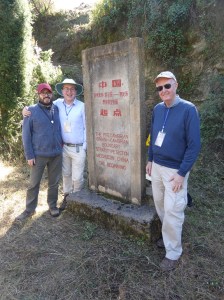
Museum researchers Duncan Murdock, Jack Matthews and Derek Siveter (l-r) visit the Precambrian-Cambrian Section

The Chengjiang fossil site is important and exciting because it preserves both the soft and hard parts of a range of early animals. This fossil record captures the rapid diversification of life about 520 million years old – in an event referred to as the Cambrian explosion. Derek Siveter was instrumental in a successful bid to have the Chengjiang biota designated a UNESCO World Heritage site in 2012, preserving it for future generations.

In December 2018, Museum researchers Duncan Murdock, Imran Rahman and Jack Matthews travelled with Derek to Kunming, China, for the first meeting of the International Joint Laboratory for Palaeobiology and Palaeoenvironment. The lucky researchers spent three days on field trips to the region’s most spectacular fossil sites, including Lufeng World Dinosaur Valley and the Chengjiang biota itself, followed by two full days of scientific talks and discussions.

The International Joint Laboratory is funded by the Ministry for Education of China and includes the University of Leicester, the Natural History Museum, London, the University of Munich, and the Bavarian State Collection of Zoology, along with Oxford University Museum of Natural History and Yunnan University.

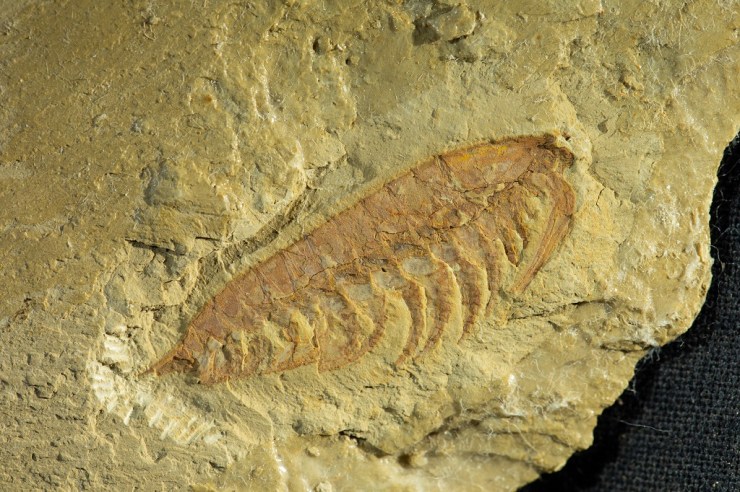
The arthropod Haikoucaris ercaiensis. Sometimes referred to as a ‘short-great-appendage’ arthropod, Haikoucaris had a pair of prominent grasping appendages adjacent to the head (right-hand side of this image). Credit: Scott Billings
The arthropod Leanchoilia illecebrosa. Sometimes referred to as a ‘short-great-appendage’ arthropod, Leanchoilia illecebrosa had a pair of prominent grasping appendages adjacent to the head (right-hand side of this image). Credit: Scott Billings

A significant first outcome of this new partnership will be the loan of iconic Chengjiang fossil specimens from Kunming to Oxford for our First Animals exhibition which opens on 12 July and runs until February 2020. Most of these fossils have never been outside of China before, and some have never been seen by the public before. We invite you to visit First Animals to see these exceptional fossils first hand!

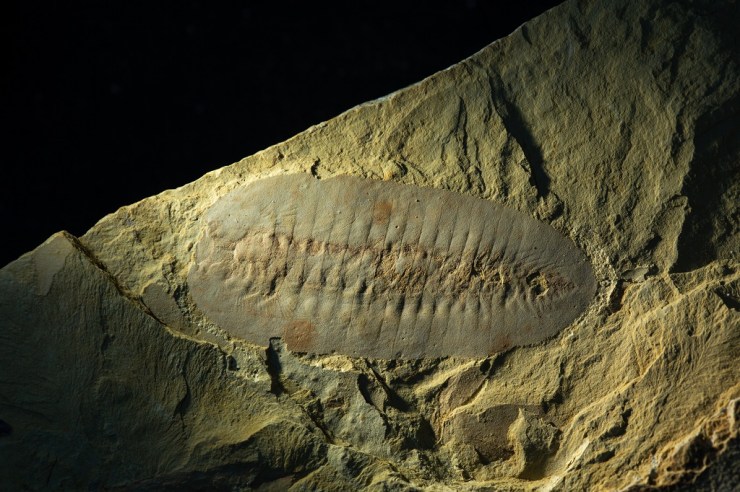
The arthropod Saperion glumaceum. Saperion had a flattened, segmented body and jointed appendages (not visible in this specimen). Credit: Scott Billings.

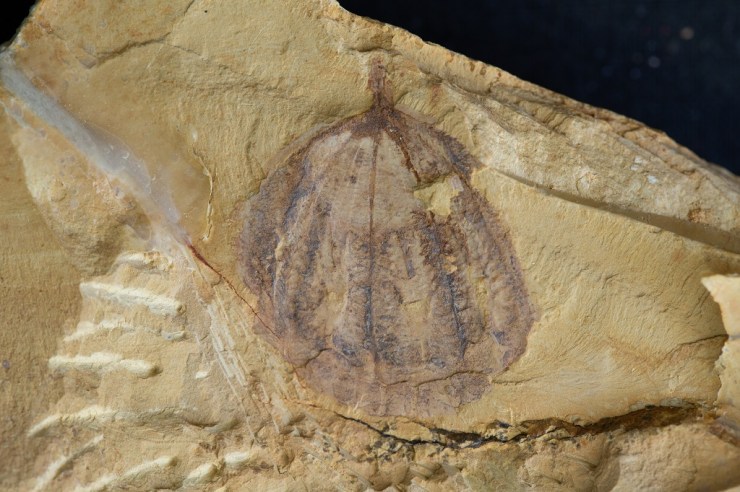
Top image: The comb jelly Galeactena hemispherica. Unlike modern comb jellies, which are soft-bodied animals, Galeactena and its relatives had hardened ‘spokes’ on the sides of the body (appearing as dark bands in this photograph). Credit: Scott Billings.

Petri dish to puppetry

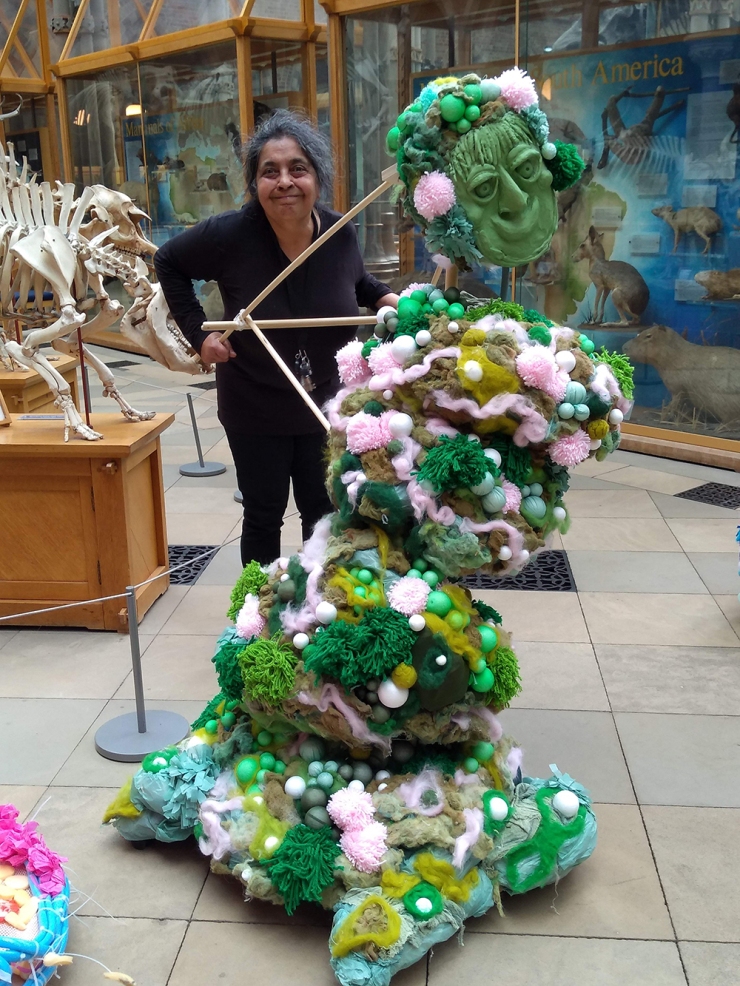
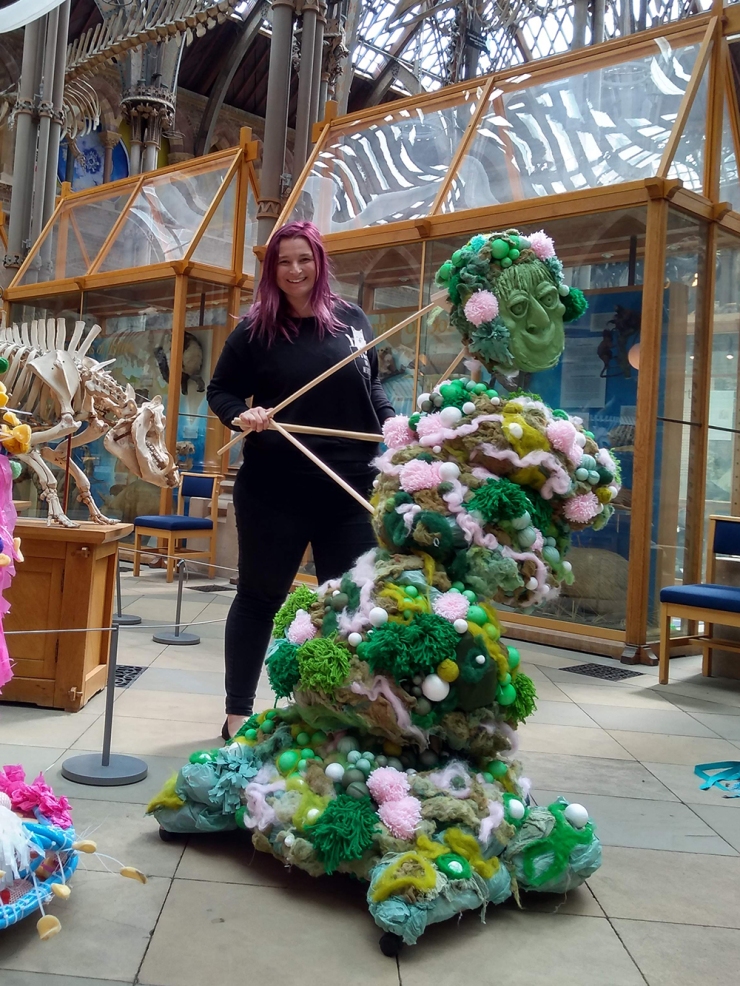
Spheres, spirals, rods, corkscrews… bacteria come in strange and beautiful shapes. Our Bacterial World exhibition (19 October 2018 – 28 May 2019) tells the untold story of life on a microscopic scale, and a recent Museum project brought together a research scientist, a group of school students and an artist to explore the patterns, textures and forms of beautiful bacteria. This science and art collaboration led to the creation of three fabulous bacteria-inspired puppets.

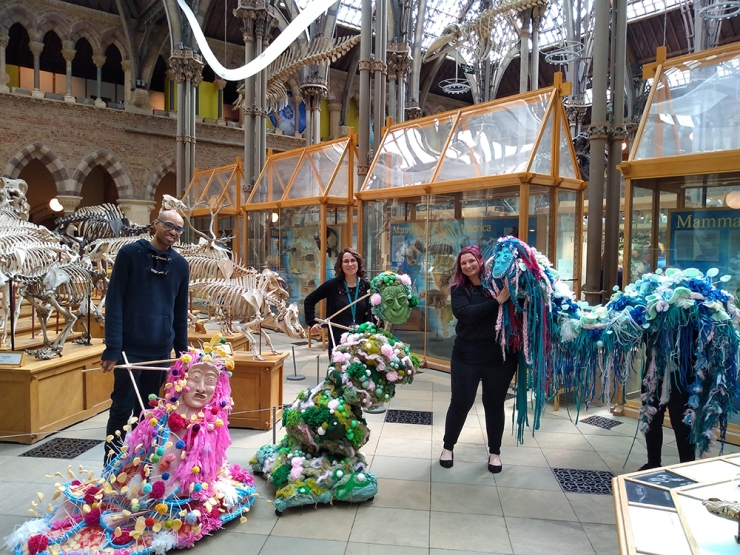
Volunteers and puppets in the museum
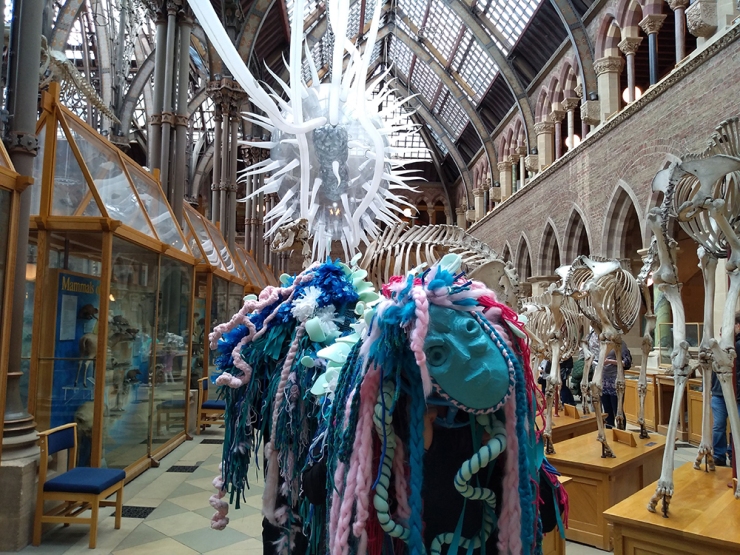
The puppets let loose in the Museum. Volunteers Tayo, Chantelle and Humaira (hidden behind the blue puppet!), with Carly from the Museum’s public engagement team.

Our Public Engagement team worked with Iffley Academy, a school for students with special educational needs and disabilities in Oxford. The pupils were from the brilliantly-named ‘Jackson Pollock’ class and they fully embraced the bacteria theme, through museum visits, workshops and classroom activities.

As well as visiting Bacterial World, the students had a workshop with Dr Frances Colles, a microbiology researcher from the University of Oxford, where they learnt about the importance of bacteria in their lives. As well as working with the students to create their own bacteria superheroes, Fran talked about her own work and took part in a Q&A, where the students made the most of quizzing a real, live scientist.

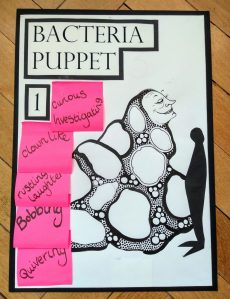
One of the character boards that Georgina created with the students

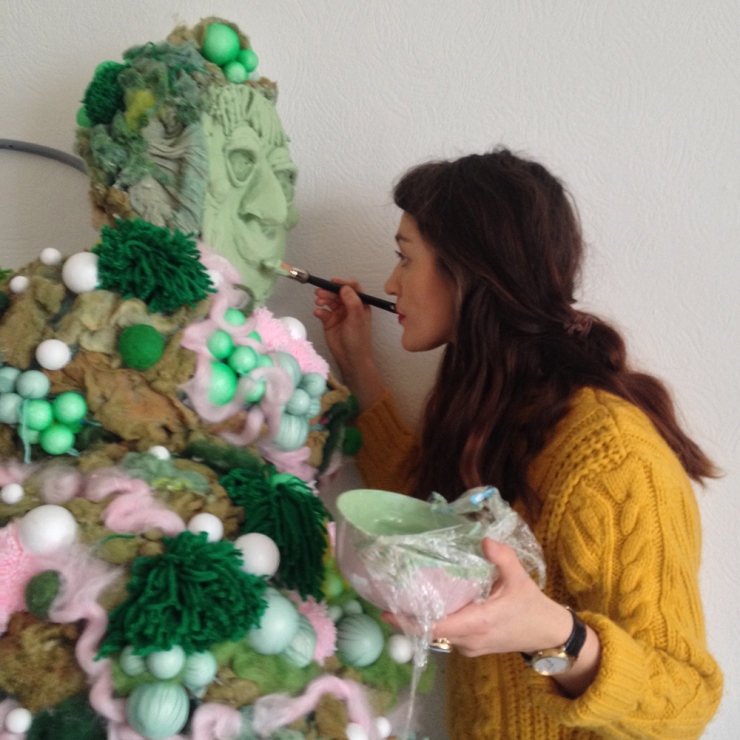
Next, the students spent two days with artist and puppet-maker Georgina Davy, who gave them the chance to experiment with a variety of textiles and techniques, including Japanese shibori dyeing, fringing, plaiting and knotting. The children even created latex faces to ‘personalise’ the bacteria. The pupils worked with Georgina to gather ideas and create mood boards and ‘characters’ for each puppet. She then used these individual pieces to build three giant, bacteria-inspired puppets.

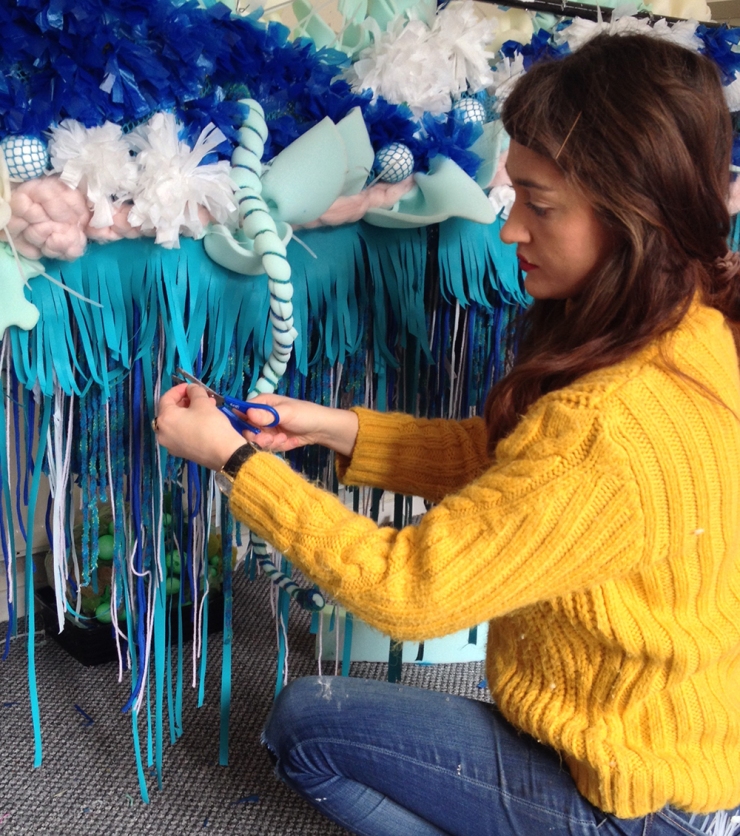
Georgina Davy in her studio, working on the bacteria puppets

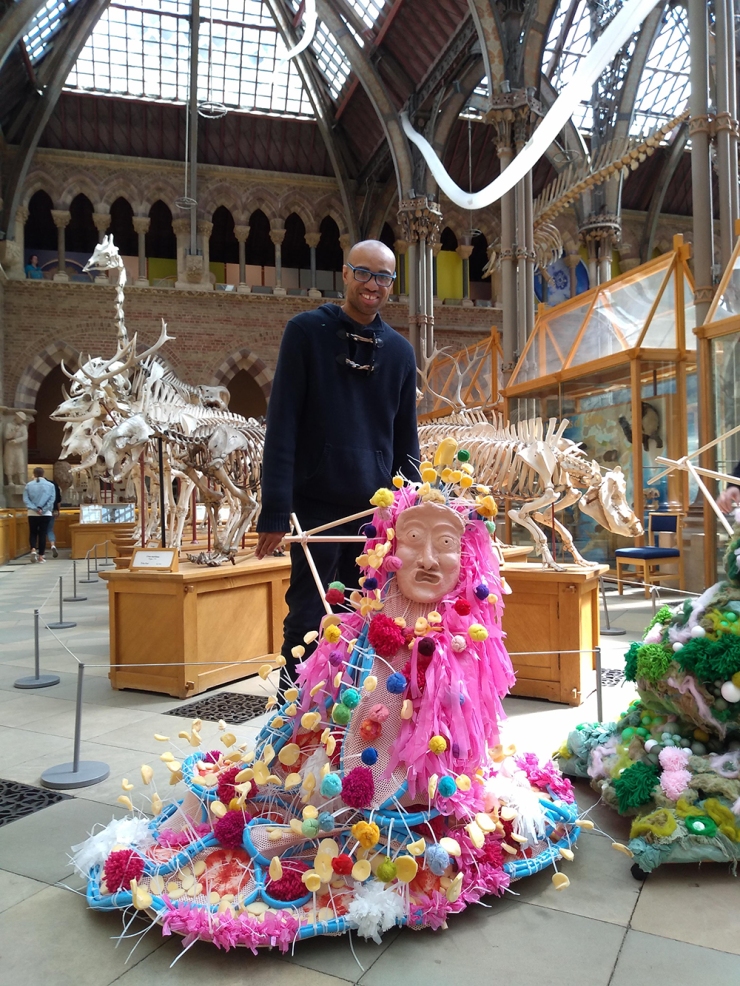
Just like the real bacteria that inspired them, the final puppets all have distinctive appearances and styles of movement. One is tall, green and plodding, another is pink, bobbing and quivering. The long, winding Chinese dragon-style puppet is slinky and searching. An artistic interpretation of bacteria, in motion.

Georgina Davy got a lot out of the collaboration and says:

This project has been the most unusual and marvellous project that a puppet maker could work on. Drawing upon scientific information from museum and academic staff that is enhanced and brought to life by students’ imaginations.

This project is unique in that the physical 3D puppet outcomes come from an almost entirely invisible world. Bacteria operate on an unfathomable microscopic scale. I am still finding it remarkable trying to envision this microscopic galaxy of bacteria taking place around us everyday in riots of colour, shape and movement. We cannot see the surreal bacteria forms that wriggle, bounce and swell around us, but they are there, some even tumbling around in forms like Chinese calligraphy. Their secret world is only unlocked by the microscope.

Once the puppets had been revealed to (and played with by) the students, they were transported to the Museum for the finale of the project – a public performance. On Saturday 11 May, three brilliant volunteers, Humaira, Tayo and Chantelle, showed off the work of Georgina Davy and the Jackson Pollock class to Museum visitors. The puppets twisted, shook and wiggled through the aisles, accompanied by percussion – drums and shakers courtesy of volunteers and visitors joining in with the performance.

If you’d like to see more about the Beautiful Bacteria project, we’ve put together a display in the Museum’s Community Case, where you can see original works by the Iffley Academy students. Until 6 August 2019.

The Beautiful Bacteria project was funded by BBSRC.
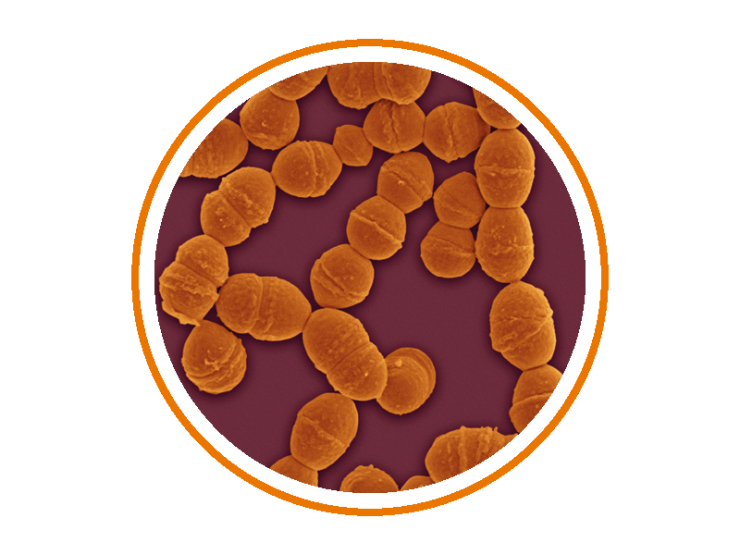
 

Bacteria that changed the world: Leuconostoc

In our Bacterial World exhibition we offer a selection of ten bacteria that have changed the world, some in profound ways. In this series of short fact-file posts we present one of the ten each week. This week’s bacteria are…

Leuconostoc
– the food-fermenters

Where they live
Vats of bubbling syrup in sugar factories first yielded samples of Leuconostoc. In 1878, a scientist called Philippe van Tieghem found and studied the bacteria, which people use to make fermented food all over the world.

Why they are important
Leuconostoc bacteria play a part in creating traditional dishes in many countries, including sauerkraut, kimchi, kefir and sourdough bread.

How they are named
Van Tieghem named Leuconostoc after another bacterium that he thought it resembled. Today, however, new bacteria are named according to rules that are governed by the International Committee on Systematics of Prokaryotes.

How they work
In a pickled food dish like sauerkraut or kimchi, Leuconostoc converts the sugars in vegetables into lactic acid, preserving them and leading to a characteristic sour taste. A similar process takes place in the starter culture for making milk into kefir, and for giving sourdough bread its flavour.

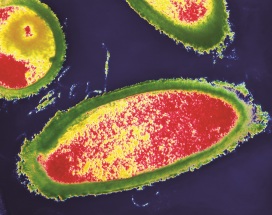
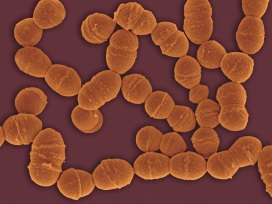
Top image: Coloured scanning electron micrograph (SEM) of Leuconostoc citreum. Copyright: Science Photo Library

Bacteria that changed the world: Lactobacillus acidophilus

In our Bacterial World exhibition we offer a selection of ten bacteria that have changed the world, some in profound ways. In this series of short fact-file posts we present one of the ten each week. This week’s bacteria are…

Lactobacillus acidophilus
– the gut-guzzlers

Where they live
Lactobacillus acidophilus is one of the hundreds of species of bacteria that live in your gut. This particular species is found all through the gut from your mouth to your anus.

Why they are important
In your gut, this species digests lactose in milk, splitting it into the simpler sugars glucose and galactose. People suffering from diseases such as HIV and cancer tend to have abnormal levels of Lactobacillus in their gut – either too many bacteria, or too few.

How they are named
Lacto is Latin for milk and bacillus refers to the rod shape of these bacteria. Acidophilus means ‘acid-loving’ in Latin – this species makes sure that its home remains slightly acidic by releasing its own acid, which helps to keep other bacteria at bay.

How they work
Not only does Lactobacillus acidophilus produce sugar from milk, but it may also produce tryptophan – an essential nutrient that we cannot produce ourselves.

Top image: Coloured transmission electron micrograph of the Gram-positive rod-shaped bacteria Lactobacillus acidophilus. Copyright: Science Photo Library