Adam and the Edmontosaurus

Edmontosaurus re-instate 011
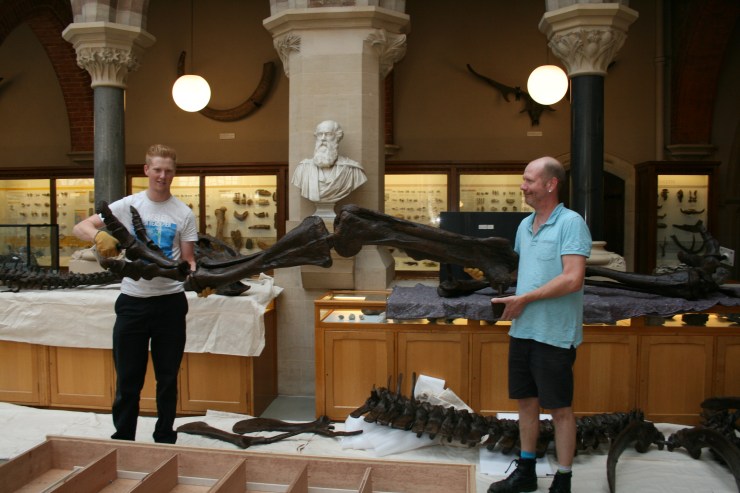
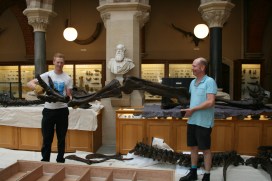
Adam (left) and Pete carrying a hind leg, presided over by the statue of Henry John Stephen Smith, Keeper of the Museum 1874 -1883

Fossil Fridays don’t get much bigger than this. This morning a team from the Museum have started the process of reinstating our large Edmontosaurus cast. The 49 pieces that make up the skeleton were brought back into the Museum after going out on the road, and now sit ready and waiting in the middle of the Museum.

For many of the team, lugging dinosaurs around is an everyday challenge, but one member of staff is very new to this sort of thing. Meet Adam Fisk, our new apprentice who joined the Museum only 2 weeks ago. Working alongside his supervisor Pete Johnson, he’s already helped with all sorts of tasks around the building, such as removing old display panels and fixing lights, but this one has to be a new experience.
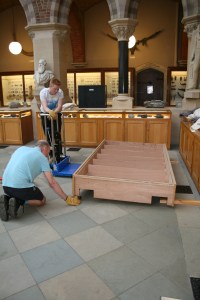
Returning the Edmontosaurus base to the museum court with supervisor Pete Johnson
Returning the Edmontosaurus base to the Museum court with supervisor Pete Johnson

Adam is fresh into the Museum following his GCSEs this summer and he says it all feels like a dramatic change of scene;

Only 8 weeks ago I was sitting in a classroom – now look at me stride!

The Edmontosaurus was dismantled back in June and went to the Cheltenham Science Festival with Professor Phil Manning of Manchester University. It was displayed in the ‘Dinozone’ exhibition, which received 14,000 visitors over 6 days.
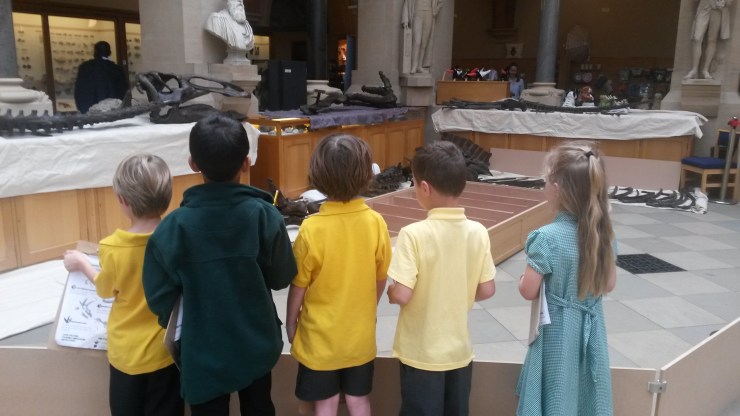
The Edmontosaurus bones attract attention from a visiting primary school.

The cast is made up of 15 sections (plus 34 ribs) which bolt together. First to go on are the back legs and pelvis, then the spine and the skull, followed by the upper limbs. Lastly, the 34 ribs can be carefully slotted into place. The giant puzzle of fitting it altogether will begin on Monday.

Here’s how Pete describes Adam’s Edmontosaurus experience:

One small step for A-dam, one giant leap for apprentice-kind!

Rachel Parle, Interpretation and Education Officer

One million and one

Daisy and George_crop

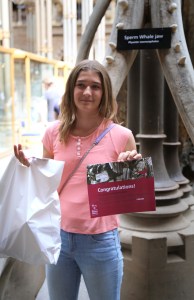
Meet Daisy. She’s a very special visitor. We enjoy welcoming each and every one of the people who come through the doors; from just round the corner or right across the globe. But Daisy stands out because she’s the millionth person to step inside since we re-opened in February 2014. Yes, 1,000,000 visitors in just 18 months! Ready and waiting with certificate and goodie bag, we ambushed the 13 year old and her family as they arrived this afternoon.

Daisy with goodie bag and certificate

Daisy and her brother George have travelled a long way for their first visit to the Museum. They live on the outskirts of San Francisco, California, and are spending summer with their grandparents in Cassington, just outside Oxford. Daisy says she loves exploring the variety of museums in her home town, so was excited to start looking around what she called the “impressive” museum. George (visitor 1,000,001) likes “museums with exciting things”, so we hope he finds enough to excite him here!

Since February 2014, many of our 1 million visitors have joined in with our plentiful programme of public engagement projects. We aim to entice the widest possible range of ages and interests.

Taxidermy Creations workshop

Hundreds of family friendly events have educated and entertained the little ones, with new programmes for the under 5s and the ever-popular half term extravaganzas.

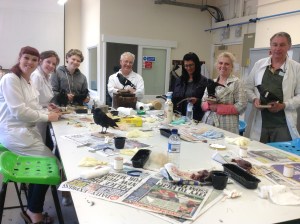
But the last 18 months has seen much more on offer for our adult audiences. Who says grown-ups don’t like getting messy and making something to take home? The popularity of the taxidermy workshops in June 2014 proved that they love nothing more.

School children have poured in for secondary and primary sessions alike. With evolution now featuring on the primary curriculum, we’ve been working with teachers to support them in this new area and developing a brand new primary workshop called ‘Evolve, Adapt, Survive’.

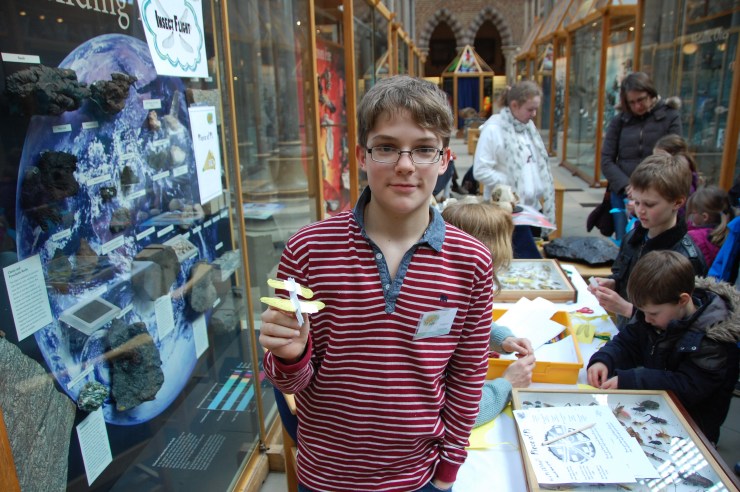
We know that curiosity doesn’t end when the school bell rings. Natural History Investigators, a new science club for 14-16 year olds, has given young people special access to museum collections and staff expertise on Saturday mornings. Achieving a national Crest Award in recognition of their achievements was the icing on the cake.

Natural History Investigators doing a spot of their own public engagement

Fashion shows, contemporary science lectures and late night pub quizzes were some of the eclectic public events on offer.

So Daisy is number 1 million and we were delighted to meet her today, but she represents all of our visitors. It’s the quality that really matters to us, not just the quantity!

Rachel Parle, Interpretation and Education Officer


Mad about minibeasts


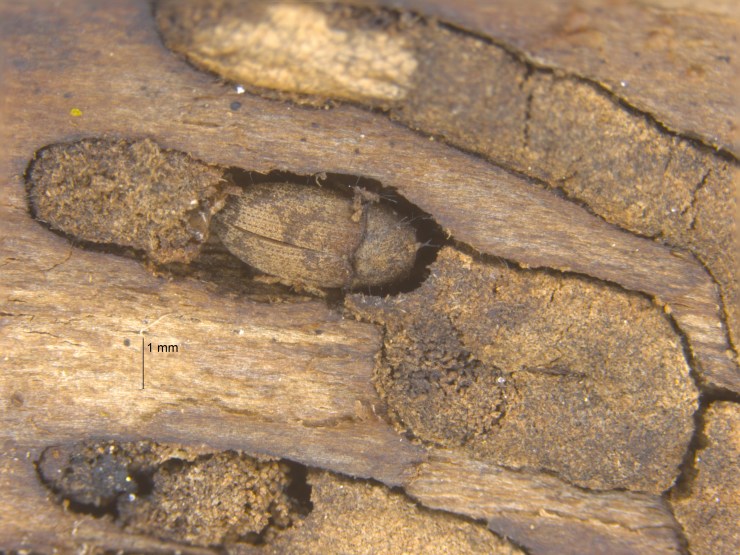
Bark_beetles1

Minibeasts are everywhere, and there are millions of them! These little invertebrates can be found in every environment on the planet.

Woodlands are great places to look for minibeasts as they are home to a large number of specialist species. This is because a wood contains a diverse range of habitats including dead wood, open areas such as grassy glades, the tree canopy and understorey layers where the smaller woodland plants can be found, as well as leaf litter and rich soils.

If you fancy going on a hunt for some minibeasts yourself, here are a few things you could look for in different kinds of habitats.

Dorcus parallelipipedus
Lesser Stag Beetle (Dorcus parallelipipedus)
Lesser Stag Beetles, like their larger relatives the Greater Stag Beetles, are dependent on decaying wood. The larvae can take two or more years to develop in the old wood and the adult lives for about two years. They are mainly active at night but can sometimes be seen by day or tempted out in the early evening by a sweet treat such as maple syrup.

Beautiful butterflies such as the Speckled Wood, Brimstone and Hairstreaks can be found flitting around in woodland glades, visiting flowers and looking for mates.

Speckled Wood
Speckled Wood Butterfly (Pararge aegeria)
Bumblebees are also frequent visitors. There are 24 species of bumblebee in the UK but there are only about eight that are commonly seen. When a bumblebee has visited a flower it leaves a chemical message to tell the other bumblebees that it has been there and not to bother investigating as the nectar has already been plundered.

There’s plenty more to discover too, from pseudoscorpions to the importance of aphids in the food chain of many ecosystems…

If you’d like to learn more then come along to Wytham Woods in Oxford at 10am on 22 July or 26 August and help us see what we can find in a 90-minute guided walk around the woods. The event is free, family friendly (ideal for children 7+) and an expert will be on hand to help with minibeast identification too. For more information and to book email ceri.watkins@oum.ox.ac.uk.

Ceri Watkins – TCV Natural Talent Trainee


Dodo Roadshow – #ILoveMuseums

DodoNeedsYouWriting

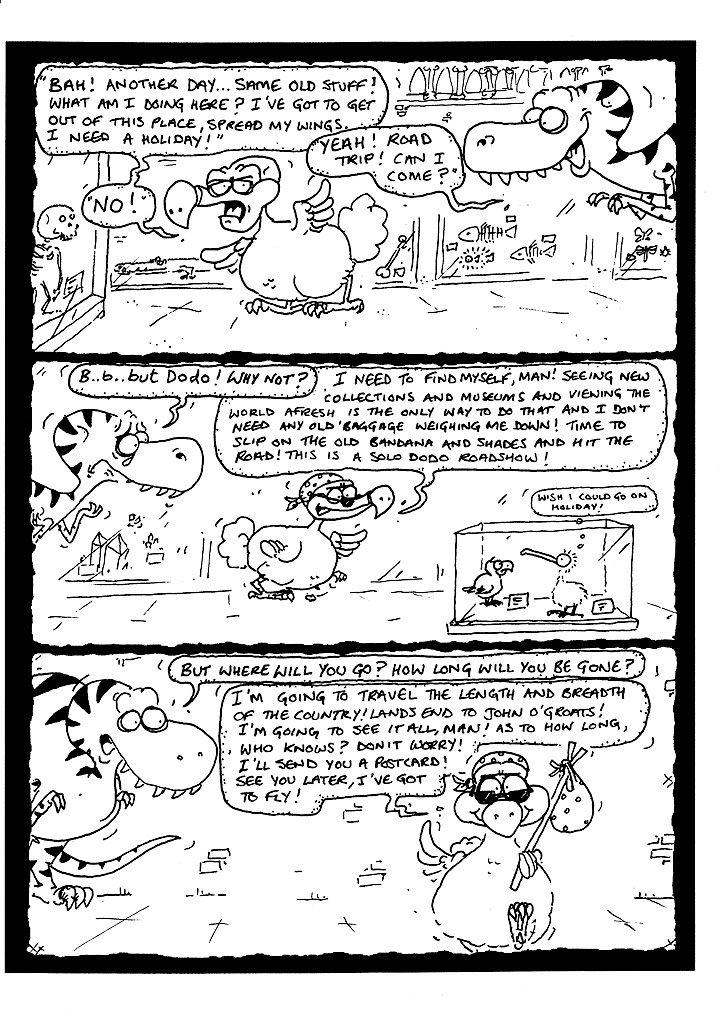
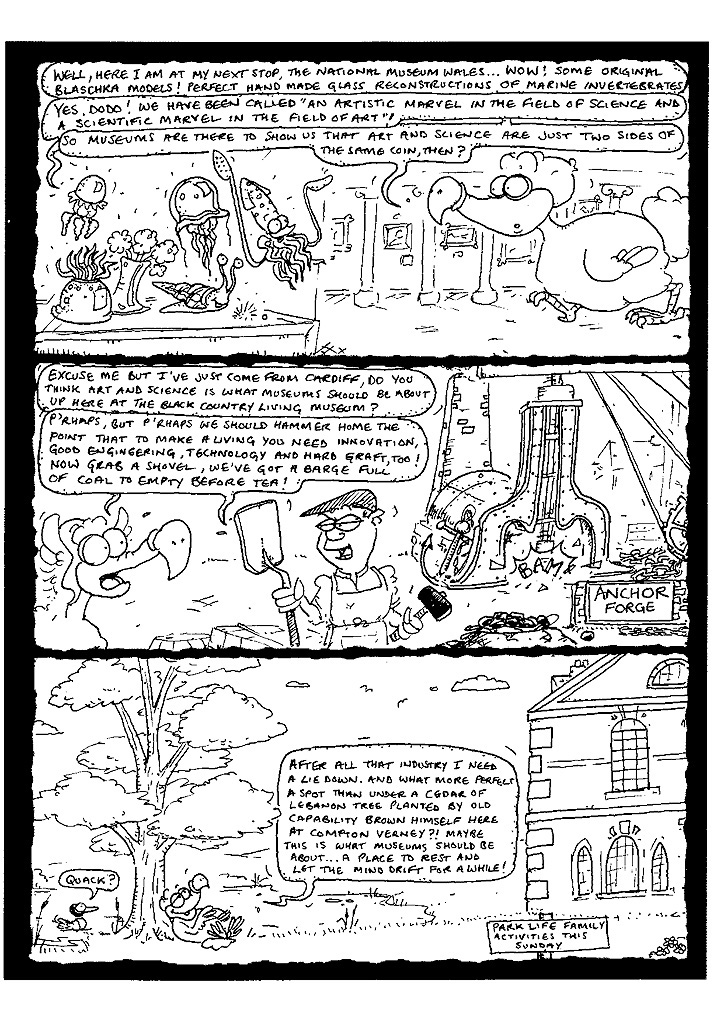
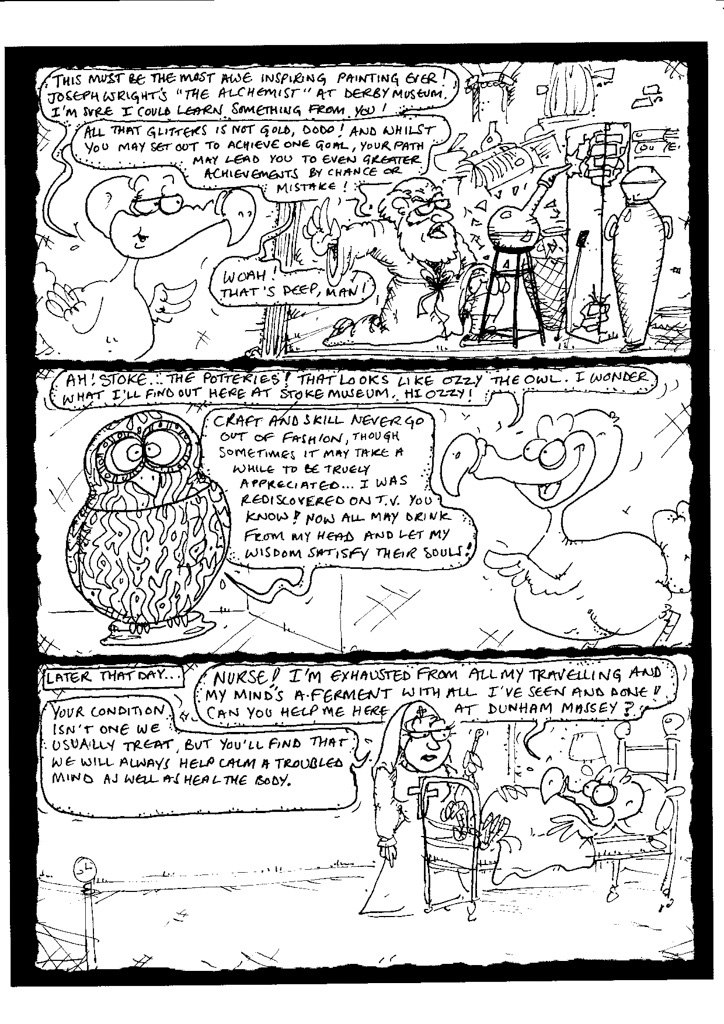
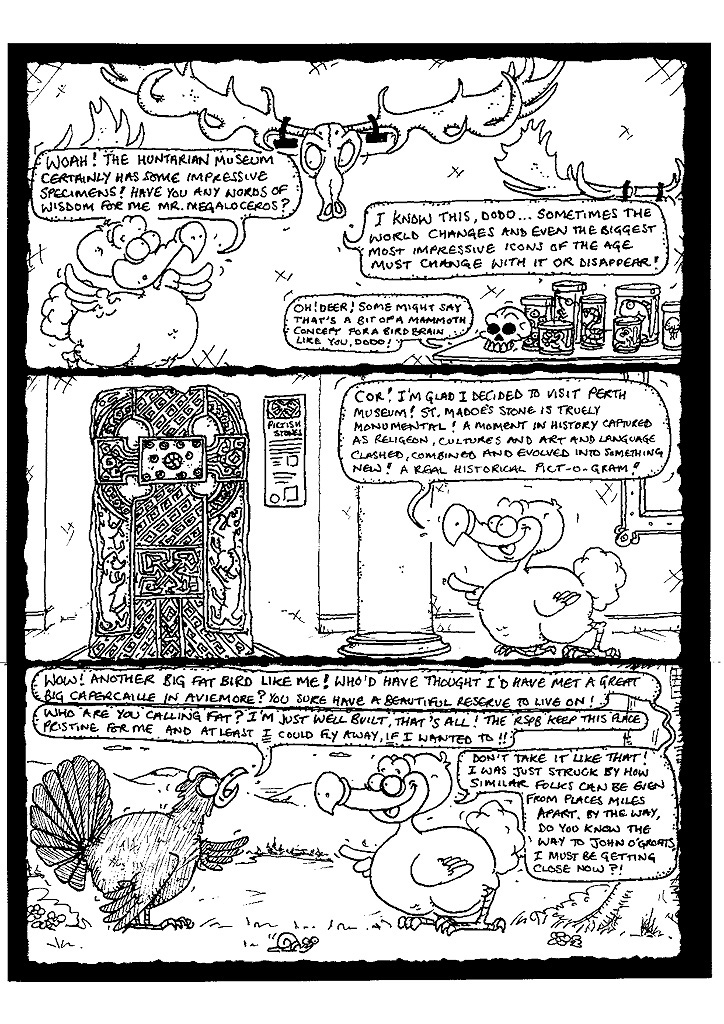
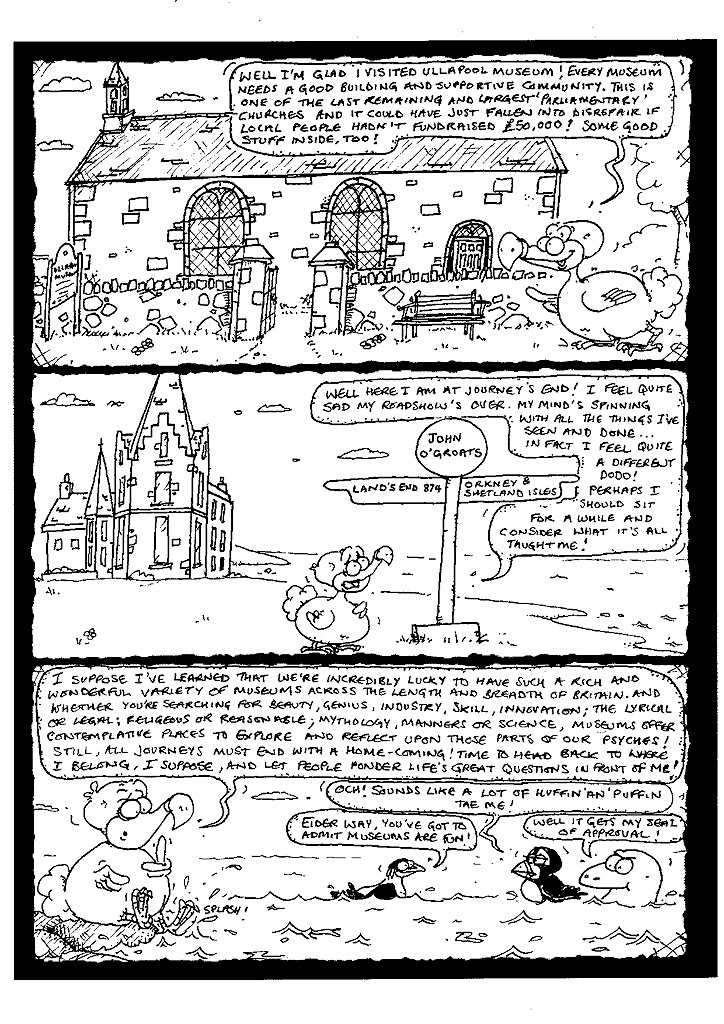
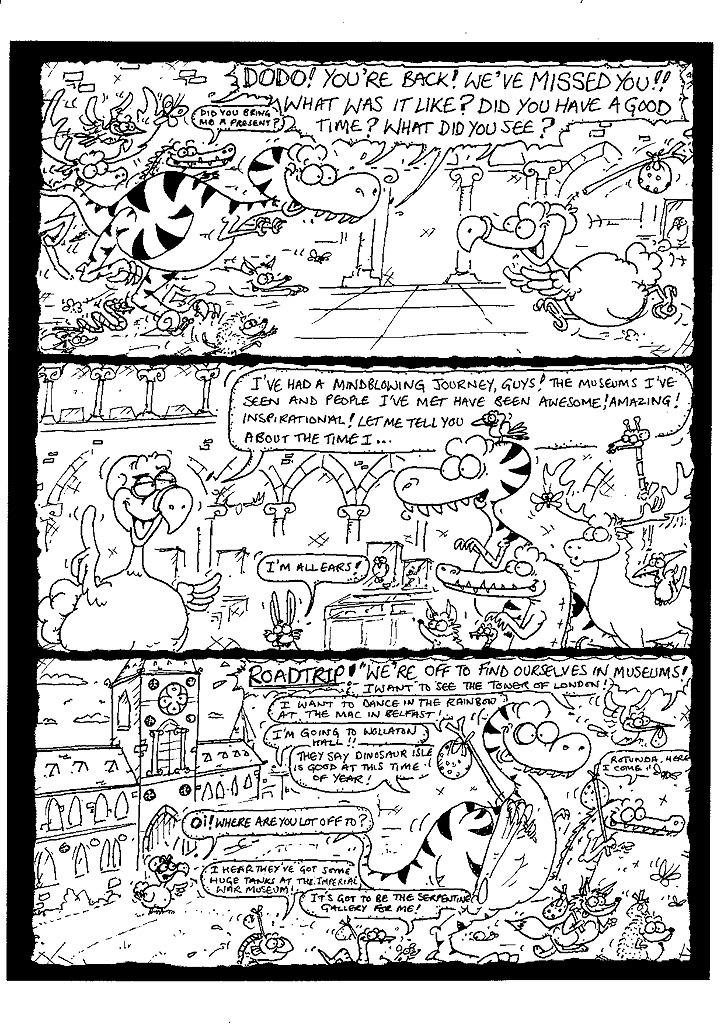
So, it’s been one hell of a trip man. In a bid to shake off the cobwebs and ‘find myself’ I set out on an epic Roadshow from Land’s End to John O’Groats. The Dodo Roadshow, no less: all mine, but also everyone else’s…

I found so much more than I could have bargained for: monuments to nature, relics of industrial might, extinctions recent and past, and a whole load of philosophical perspective. I am a changed Dodo.

ILoveMuseums_Logo_EPS_CMYK_Blue

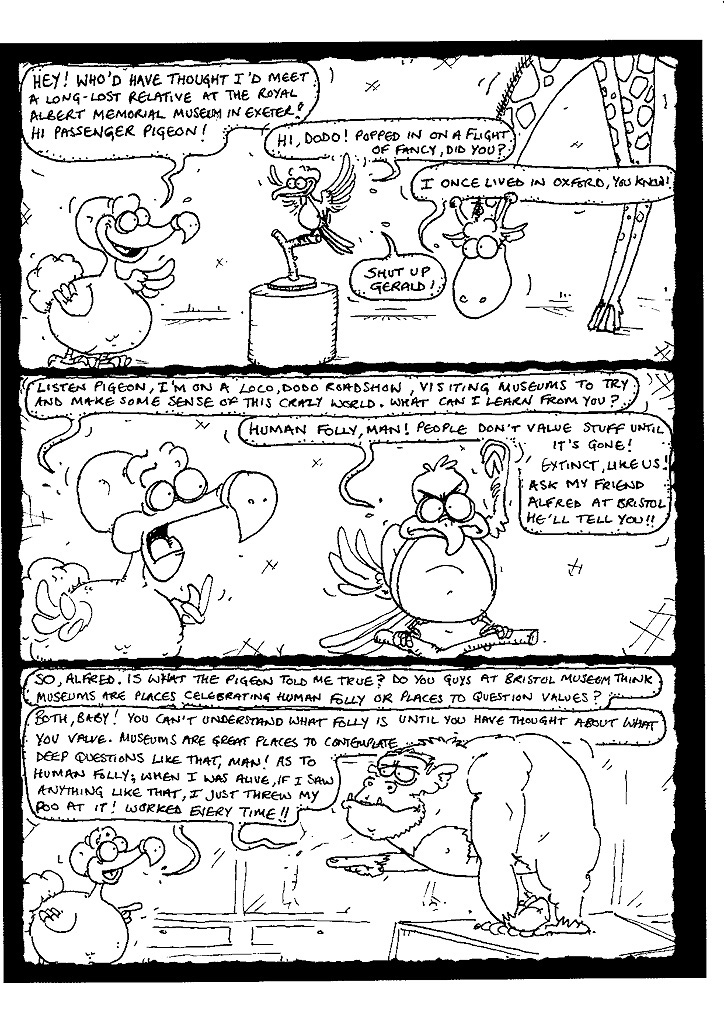
And this is what I have learnt – museums are powerful, important and brilliant. They are full of wonder, learning, curiosity, surprising viewpoints and fun discoveries. To find out why, read my full story in the cartoons below (thanks to Chris Jarvis for capturing the essence).

And then I need your help. I need you to head on over to ilovemuseums.com and put your name to the campaign. I may be an old bird-brain, but I know that we should stand up for our museums – I’ve seen ’em man and they’re really something special. Squawk!

The Dodo.

Dodo Roadshow: Ullapool Museum

Ullapool Museum 1 x

To mark our selection as a Finalist in the Art Fund Prize for Museum of the Year 2015 we’re embarking on a unique and ambitious tour of the country – the Dodo Roadshow.

Beginning at Land’s End on 8 June and concluding in John O’Groats one week later, the famous Oxford Dodo will visit more than 20 museums and galleries along the way. At each stop the Dodo will ‘interview’ one of the venue’s star objects.

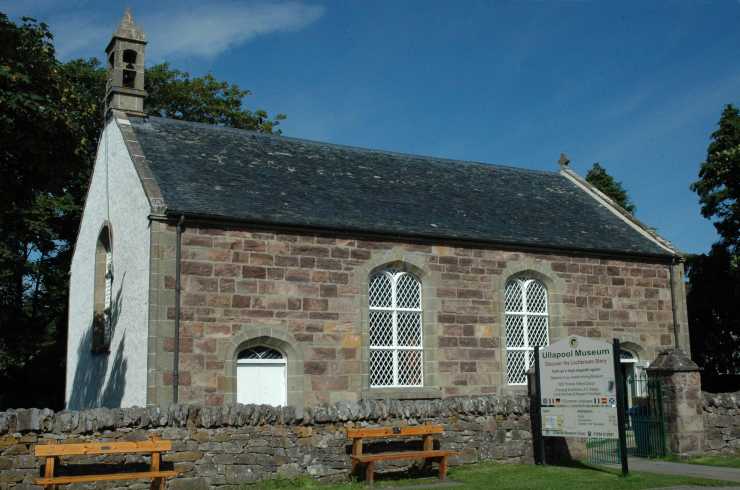
Ullapool Museum: Telford Parliamentary Church

UllapoolSo, tell me about yourself – who are you and where do you come from?
I am a very special building. I was built as a church here in Ullapool in 1829 and Thomas Telford, one of Britain’s most celebrated engineers, designed me. I was built as a Parliamentary Church, after the government of the day decided that more places of worship were needed in the thinly populated and scattered parishes of the highlands of Scotland.

What is it that makes you so special?
I am unique; although thirty-two Parliamentary Churches were built, I’m the only one still standing that remains true to Telford’s original design. I still have the original décor and fittings, and the only gallery still surviving. I have a very special role, as I am the building that also houses the museum’s collection and I provide a place for visitors to come and learn about the history of Lochbroom.

Who looks after you in this place?
I am looked after by a wonderful group of volunteers. Some of the team help to conserve me, and work to maintain my walls and all the special features inside. Other volunteers are involved in helping to fundraise to help keep my doors open to the public. Some of the team also work on interpreting my history and give tours to visitors.

Do you remember life before the museum?
My life before being a museum building was very different. As a church, I was used to being full of people congregating every Sunday and I was a busy hub for village life. The last service that was held here was a wedding in 1935. After that, my walls fell silent until 1995, when I became the Ullapool Museum. My doors are now open to visitors and my walls tell the stories and the histories of the people of Lochbroom.

What does the future hold for you?
Because I am a Grade A1 listed building, it costs a great deal to conserve me and to keep my doors open to visitors. My volunteer team spend a lot of time helping to raise money to care for me. Everyone hopes that I can continue to be here to help tell the stories of the people of Lochbroom for many years!

Stickers small - Dodo Roadshow_crop

Dodo Roadshow: RSPB Loch Garten

Richard Crossley
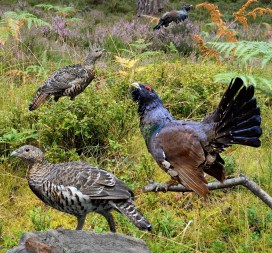
Capercaillie from the Crossley ID Guide Britain and Ireland – Creative Commons

To mark our selection as a Finalist in the Art Fund Prize for Museum of the Year 2015 we’re embarking on a unique and ambitious tour of the country – the Dodo Roadshow.

Beginning at Land’s End on 8 June and concluding in John O’Groats one week later, the famous Oxford Dodo will visit more than 20 museums and galleries along the way. At each stop the Dodo will ‘interview’ one of the venue’s star objects.

RSPB Loch Garten: Capercaillie

RSPB Loch Garten 850pxSo, tell me about yourself – who are you and where do you come from?
I am a capercaillie and my home is the magnificent National Nature Reserve, Abernethy Forest. I am very lucky to live here, as it is the largest remnant of the Caledonian pine forest, which is full of tasty blaeberry for me and my chicks to feed on. My name means ‘horse of the woods’ in Gaelic: some humans think that when I do my impressive display call it sounds like the hooves of horses on cobbles.

What is it that makes you so special?
I’m special for many reasons! Where do I start? I’m very rare here in Scotland. There are only around 1,000 of me left but back in the 1970s there were as many as 20,000 of capercaillies like me! I’m also very good at a special dance called lekking. I strut around, with my beautiful tail fanned up and I make a sequence of click and pop sounds, showing off to the ladies and trying to outdo the other male capercaillies at the lek. I’m very beautiful too, with a striking red eye marking, and glorious iridescent feathers on my front. I’m also the largest grouse in Scotland.

Who looks after you in this place?
Here at Abernethy Forest I’m looked after by the RSPB. They know how special my dance is and they know how upset I get if my lek is disturbed by curious humans who want to take a peek at my fancy moves. Therefore, they ask people to watch me lek at a safe distance, hidden from my view by a hide at a special event called Caper-Watch. The RSPB also know that I fly into deer fences which can kill me, so they make sure there are no deer fences here at Abernethy. Something else the RSPB is doing to look after me is making my home bigger and better, by expanding the forest and opening up the canopy in parts of the forest where it is too dense.

Do you remember life before RSPB Loch Garten?
I don’t remember but my ancestors tell me lots of stories about before Abernethy was a nature reserve. They tell me about how people used to shoot capercaillies!  And that there was less blaeberry around for them to eat.

What does the future hold for you?
The future looks uncertain for me; there aren’t many of us capercaillies left now…and we have gone extinct in Scotland before! But the RSPB is doing lots to help me here at Abernethy, and visitors too are helping by keeping their dogs on leads during the breeding season, coming to Caper-Watch to see me without disturbing me and joining as RSPB members. So hopefully things will get better for capercaillies.

Stickers small - Dodo Roadshow_crop