Carnivore conservation

A new choose-your-own-adventure board game created by researchers from the University of Oxford’s Department of Zoology puts players centre-stage in a global carnivore conservation challenge. The educational game is launching a Kickstarter fundraising campaign today and here co-designer Dr Cedric Tan tells us all about it…

Have you ever wondered what it’s like being a conservation biologist? We have spent the past year creating and testing a brand new board game – The WildCRU Game: Global Carnivore Conservation – that reveals some of the challenges faced by conservationists, the animals themselves, and the indigenous people who live with them. We’re now looking to get the game out to schools and communities all across the world with a £40,000 Kickstarter funding campaign featuring lots of rewards and discounts for our backers.

The game has been co-designed by Jennifer Spencer and myself to appeal to non-scientists and people of different ages. Players work together cooperatively as WildCRU researchers to gather the resources to complete carnivore conservation projects across the globe.

Stories in the game are taken directly from the real experiences of the WildCRU team. Players must decide what to do in choose-your-own-adventure-style encounters to gather the equipment, personnel, and transport resources they need for their projects.

In developing this game, we chose six varied WildCRU projects including the Hwange Lion Research project, based in Zimbabwe, and the famous water vole study in the UK, to show players the breadth of WildCRU’s research.
– Co-designer Jennifer Spencer, WildCRU

Multiple choice research questions are also based on real WildCRU research; they reveal more about the environment of each project – the flora, herbivores, competitor carnivores, and study species of the study sites. With the additional pressure of Global Events, players will learn about how difficult wildlife conservation projects can be.

It has been great to see that the game appeals to both kids and adults. People have found it to be an immersive experience in which players experience the challenges of real people, real situations and real research. We also hope that the game will provide local families with the opportunity to learn about the wildlife around them, and how to live in harmony alongside it.

Through the game and our other education efforts we’re hoping to increase environmental awareness and to introduce a wide variety of people to the science and processes behind real-world conservation.

Images and video: Laurie Hedges (lauriehedges.com)

Movers and settlers

Our new exhibition Settlers, which opens today, shows that the history of the people of Britain is one of movement, migration and settlement. Here, exhibition writer Georgina Ferry finds that Britain has been receiving new arrivals since the last Ice Age.  

In Britain following the Brexit vote, the word ‘migration’ has taken on an emotional and political charge. A new exhibition opening today takes a long-view of the movement of people, looking in particular at how migration has formed the British population.

Settlers: genetics, geography and the peopling of Britain tells the story of the occupation of Britain since the end of the last Ice Age, about 11,600 years ago. From this perspective, today’s pattern of movement into and out of the country is only the latest in a long history of alternating change and stability that has made the people of Britain who they are today.

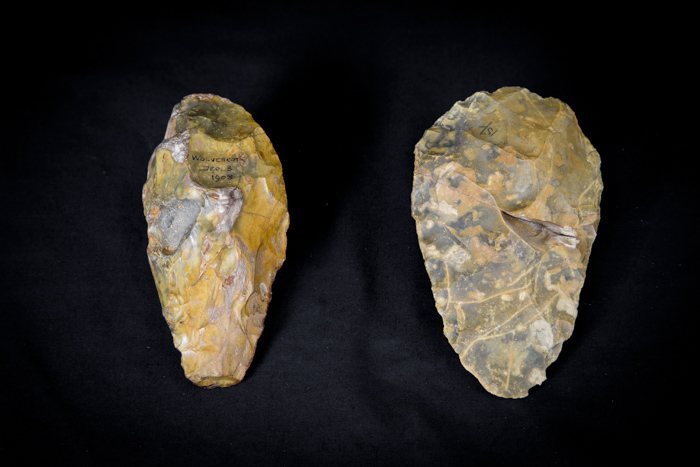
Hand axes from Wolvercote, Oxford
About 340,000 – 300,000 years ago, when conditions were slightly warmer than at present, Neanderthal hunters lived alongside a channel of the Thames near Oxford where the village of Wolvercote now stands. They made flint hand axes – all-purpose butchering, digging and chopping tools. They hunted animals now extinct in Britain.

Tracing these movements has been a fascinating detective story, with clues coming from many different types of evidence. The starting point for Settlers is a remarkable study carried out by Oxford scientists, who used DNA samples from contemporary British volunteers to trace the origins of the people who settled Britain between the end of the Ice Age and the Norman Conquest of 1066. One striking finding is that the bonds that unite Celtic communities in Cornwall, Wales and Scotland are largely cultural – genetically these groups are quite distinct.

Drinking horn finial of copper alloy and glass, 9th century – Northern Ireland. The Ashmolean Museum, University of Oxford

The genetic evidence adds a new dimension to the archaeological story, based on artefacts left behind by our ancestors, or other historical signposts such as place names. For example, although occupying Roman armies left us the names of their forts and cities, they don’t seem to have left much of their DNA. They came, saw and conquered, but didn’t stay in large enough numbers to make a genetic impact on the native British population. In contrast the Anglo-Saxons, who arrived after the Romans withdrew, left a strong genetic signature everywhere except Wales and the Scottish Highlands.

It took 2,000 volunteers and software that can distinguish tiny differences to arrive at the various regional clusters that came out of the study. When you visit the exhibition, you can play a fascinating interactive lottery game to see just how unlikely it is that genes from any specific ancestor of more than a few generations will still be in your DNA.

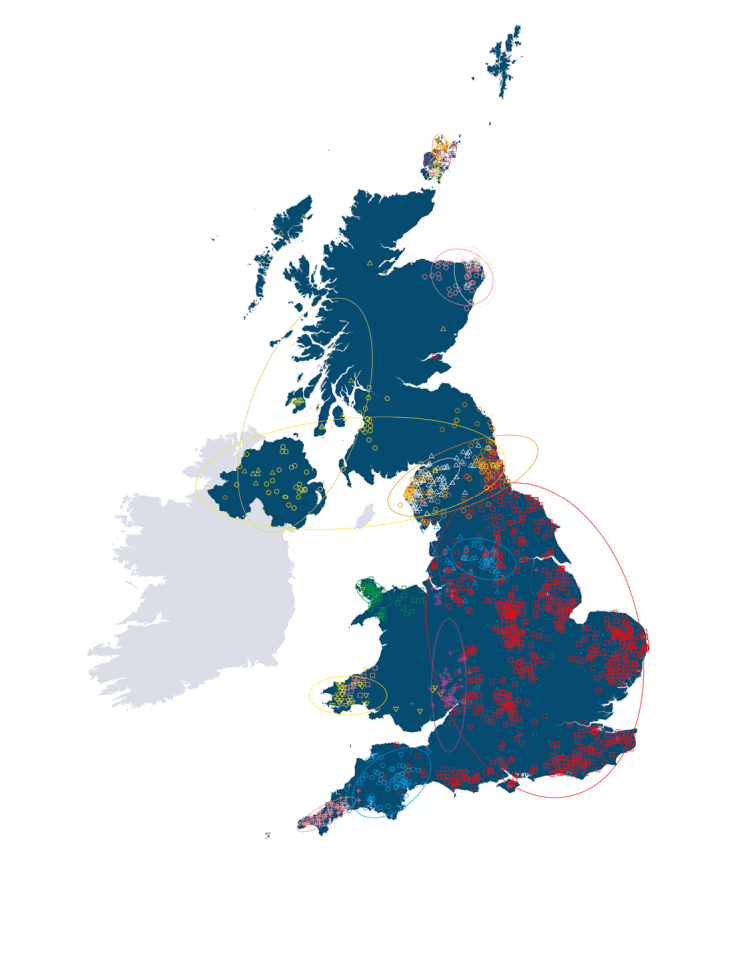
This map, created by the People of the British Isles study, is the result of comparing patterns in the DNA of a carefully selected sample of around 2,000 modern British people. It provides new evidence about links between genetic ancestry and geographical origins.

The story of movement and settlement doesn’t stop in 1066. Researchers in Oxford’s School of Geography have plotted census data since 1841 against global events, from the persecution of Russian Jews to the enlargement of the European Union, to illustrate the ebb and flow of people from and to Britain that has produced the current population mix. Another interactive lets you compare your own family’s journey with those of all the other visitors.

We will have to wait until the census of 2021 to know what a difference Brexit will make, but we can be sure that people will be arriving and leaving for a lot longer than that.

www.oum.ox.ac.uk/settlers

What’s in a name?

By Duncan Murdock, research fellow

Whether it’s the Physeter macrocephalus (Sperm Whale) whose jaw greets our visitors, the Apus apus (European Swift) which spend the summer nesting in the tower, or the Raphus cucullatus (Dodo) on our Museum’s logo, all animals, plants, fungi and microbes, living and extinct, have scientific names – or at least once they have been properly described in a scientific paper they do. Usually found tucked away on specimen labels, scientific names carry much more significance than just a convenient means of reference.

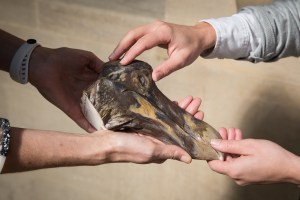
The jaw of the Sperm Whale (Physeter macrocephalus)

The scientific name, also known as a binominal or Latin name, consists of two basic parts, and should be written in italics. The first part is the genus (the plural is genera), which refers to anything from one to thousands of kinds of creature that are more closely related to each other than anything else. Genera are always capitalised, such as Panthera (big cats).

The second part is the specific name, written in lower case. Together these define one species; for example a tiger is Panthera tigris. Sometimes, subspecies or varieties are written after the species name, such Panthera tigris tigris, which is the Bengal Tiger. They can also be abbreviated by replacing the genus with just an initial followed by a full stop, hence the ever-popular T. rex, or Tyrannosaurus rex.

T. rex in the Museum’s centre court

Some binomials are pretty easy to decipher: no prizes for working out Gorilla gorilla*. Others can seem pretty cryptic or even positively confusing – Puffinus puffinus anyone? Yep, that’s right, the Manx Shearwater**. Nevertheless, once translated they are often enlightening as to the appearance, distribution, behaviour, or history of the critter in question.

Here are a few examples. Ailuropoda melanoleuca, meaning ‘black and white cat-foot’, describes the appearance of the Giant Panda pretty well; Megaptera novaeangliae, or ‘giant-wing of New England’, alludes to both the anatomy and chequered history of the humpback whale; and while Pteropus vampyrus, or ‘wing-footed vampire’, is a bit of a misnomer for the flying fox, which is a large fruit-eating bat, it does reflects our changing understanding of the animal.

Gorilla gorilla, the Western Gorilla
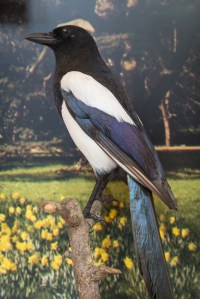
Magpie (Pica pica)

Some names are elegantly concise: Pica pica, the magpie. Some are tongue-twisters: Phalacrocorax carbo, the Great Cormorant. And some, such as Synalpheus pinkfloydiare entertaining. But they are all more than just names; they are the most visible aspect of the science of taxonomy.

Carl Linnaeus (1707-1778) first formalised the system we use today, which has allowed us to divide all the many species into not just genera, but a nested hierarchy of ever-more inclusive groups.

With this system we can not only be sure we are using a common language to precisely refer to the right species, but we can also then ask questions about how the staggering diversity of life that we see evolved. And from this we start to build ‘a tree of life’. But this will be the subject of a future article…

* Bonus points for knowing it’s the Western Gorilla, as opposed to Gorilla beringei, which is the Eastern Gorilla.

** Common Puffins, by the way, go by the delightful name Fratercula arctica, the ‘little friar of the north’.

Is it real? – models, casts and replicas

One of the most common questions asked about our specimens, from visitors of all ages, is ‘Is it real?’. This seemingly simple question is actually many questions in one and hides a complexity of answers. 

In this FAQ mini-series we’ll unpack the ‘Is it real?’ conundrum by looking at different types of natural history specimens in turn. We’ll ask ‘Is it a real animal?’, ‘Is it real biological remains?’, ‘Is it a model?’ and many more reality-check questions. Here’s your final installment…

There’s nothing like standing under a huge T.rex skeleton, staring up at its ferocious jaws, to get the blood pumping. Visitors often ask “Is it real?” and look rather deflated when they find out it’s a cast. So why do we include casts, models or replicas in our displays, if they don’t have the same impact as the real deal? The truth is that they’re valuable additions to museum displays, allowing the public to engage with specimens that would otherwise be hidden behind the scenes.

Please touch! A cast of the famous Oxford Dodo helps visitors explore this fragile specimen.

On any visit to the Museum, you’ll come across labels that tell you the object you’re looking at is a cast. It could be a dinosaur skeleton, a brightly coloured fish, an amphibian specimen or even the head of the Oxford Dodo. But what is a cast? Casts are made by taking a mould of bones, or sometimes whole animals, then filling that mould with resin, plaster or fibre glass to make a copy. They can be incredibly accurate or lifelike.

It’s extremely rare to find whole dinosaur skeletons, and very difficult to mount heavy fossils (weighing tonnes) onto large armatures. Our Tyrannosaurus rex is a cast of the famous Stan, found in South Dakota, USA, and one of the best preserved skeletons of its kind in the world. But the “real” Stan is kept at the Black Hills Institute of Geological Research, so the only way we can offer the breath-taking experience of standing beneath a T. rex here in Oxford is by using a cast.

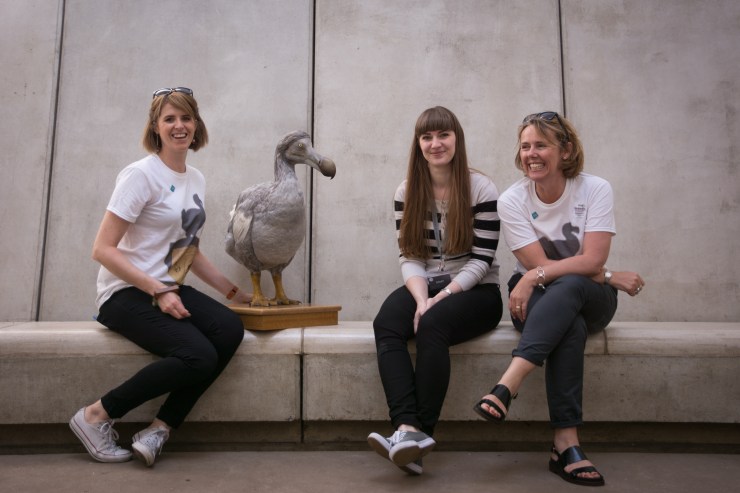
The Dodo Roadshow in 2015 would have been a lot less fun without our life-size dodo model

Even Stan has some bones missing, so sometimes casts are made up of several individual skeletons. Copies can also be made to give the impression of a more complete skeleton. For example, if a left bone is missing, a mirror of the right hand bone can be created. We call these specimens “composites”.

Animals such as fish and frogs aren’t easy to taxidermy; their skins shrivel, dry out, lose their colour and crack. Painted casts are a good way to show what these animals look like.

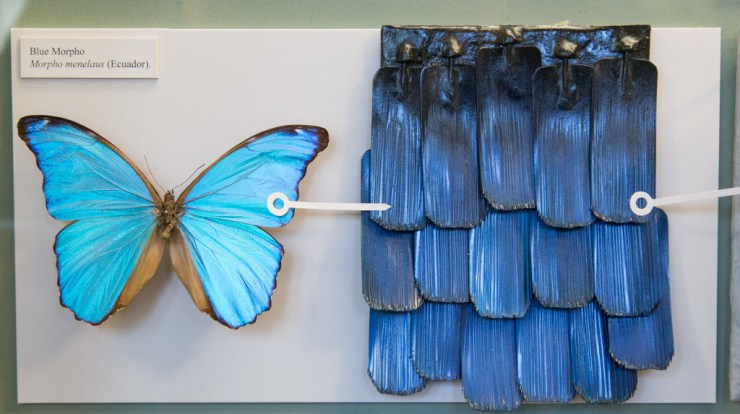
A model allows us to show the intricate scales of this Blue Morpho butterfly up close.

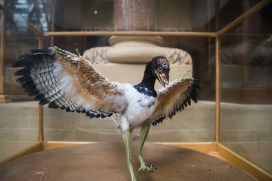
Models, such as the giant insects on the upper gallery and the Archaeopteryx in the Evolution of Flight display (at the top of this post), are very clearly not real. These are made by model makers to show something that can’t be seen or shown with real specimens. The giant insects are a way of showing the detail of very small creatures. The palaeontological models show what we think extinct animals might have looked like in life. They’re hypothetical models based on the latest scientific research, which can change very quickly, and always have an element of artistic assumption or speculation in the details.

In this series we’ve talked about taxidermy, skeletons, fossils and more, but these are just a few of the kinds of specimens we have on display. There are also nests, plastinated models, microscope slides and dioramas, which all have a mix of real and non-real elements. When you are looking around the Museum try to think about which specimens are real and which aren’t… and how does that make you think about the specimen?

Read the other posts in the Is it real? series here.

All about Alzheimer’s

University of Toronto research fellow Jacqueline Zimmermann recently ran one of our Brain Spotlight events as part of the Brain Diaries exhibition programme. To mark World Alzheimer’s Day today, here Jacqueline tells us about the neurophysiology of Alzheimer’s disease and the risk factors we can actively reduce to lead happier, healthier, and longer lives.

Almost all of us have in some way been affected by Alzheimer’s disease, which makes the quest for a cure that much more personal. An estimated one in nine people over the age of 65 will develop the disease, and this risk also increases with age, according to the World Alzheimer’s Report in 2015.

Brain Spotlight
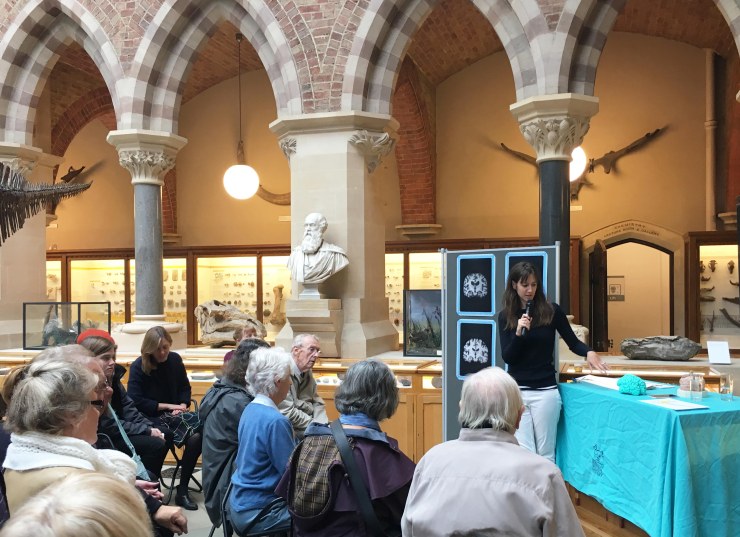
Jacqueline Zimmerman’s Brain Spotlight on Saturday 16 September as part of the Brain Diaries exhibition series of events.

Due to chemical toxins, and increased longevity, the incidence for Alzheimer’s disease is on the rise. But the good news is that there is a lot that you can do to reduce your risk. At the John Radcliffe Hospital in Oxford, hundreds of scientists are currently working towards identifying the cause and the solution to the disease.

At the Brain Spotlight event at the Museum I presented images of ageing brains, and explained how brains affected by Alzheimer’s have reduced volume in the temporal lobe and the hippocampus, regions critical for language and memory respectively. Diseased brains will also often show reduced frontal lobe volume, which may reflect the changes in personality and the ability to engage in planning which area associated with Alzheimer’s. The overall volume of the brain is also reduced in sufferers because cellular changes lead to the death of neurons.

Brain Atrophy in Alzheimer’s disease
Brain Atrophy in Alzheimer’s disease. Note: overall brain volume is reduced, hippocampal regions and frontal regions are particularly affected, and ventricles are enlarged. Image: http://www.lookfordiagnosis.com

Recently, a number of genes have been identified that are related to early onset Alzheimer’s, which is quite rare and much more hereditary than late-onset Alzheimer’s. At the Nuffield Department of Clinical Neurosciences, where I am a visiting researcher, we are investigating a late-onset Alzheimer’s risk gene called Apolipoprotein 4 (APOE4), looking at how it relates to subtle cognitive impairments in middle-aged people. Working with the Oxford Biobank we are trying to determine which cognitive assessments may be most effective in predicting these impairments.

Jacqueline Zimmerman
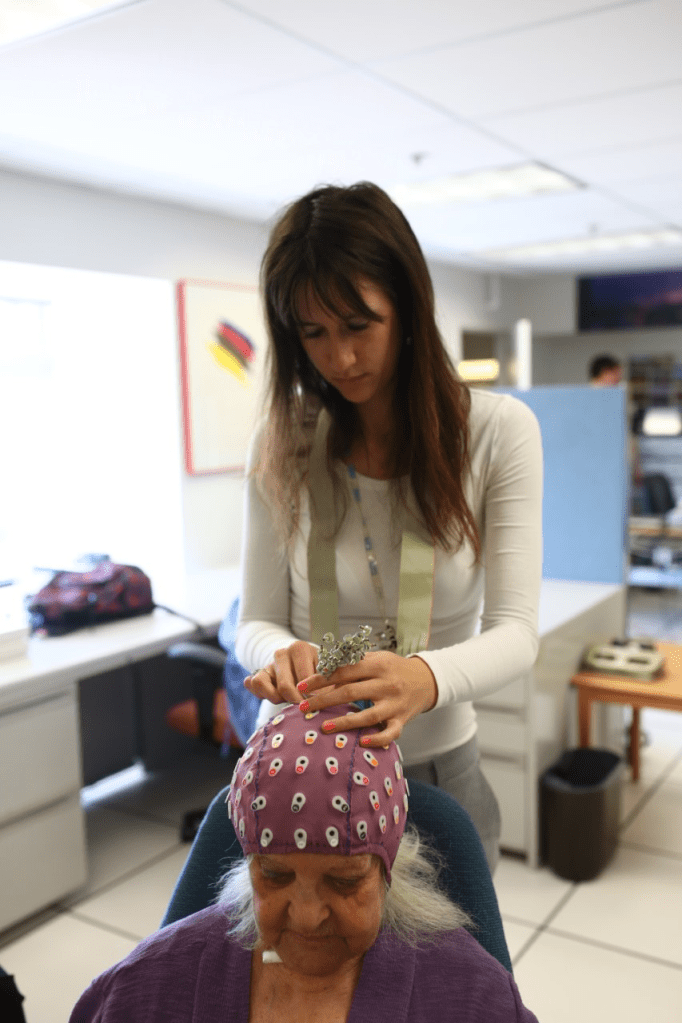
Functional brain imaging using electroencephalography at Rotman Research Institute in Toronto. Image: Rotman Research Institute

Although some of us may be more susceptible to Alzheimer’s than others, there are a number of environmental factors that contribute, including air pollution or additives in our food, like nitrogen-based chemicals which are used to preserve and flavour processed foods. It is important to reduce cholesterol in the diet, eat plenty of fruits and leafy greens, and engage in frequent physical and mental exercise.

Though there is speculation about the effectiveness of ‘brain games’ and how they translate into improvements in cognition in the real world, there are certainly large benefits of keeping your brain active.


The ancient mariner

Helen J. Bullard is a PhD candidate at the University of Wisconsin–Madison whose research aims to tell the historical and cultural stories of the horseshoe crab. After visiting the museum, and reading the story of our Natural History After-School Club member’s horseshoe crab fossil find, Helen offered to write a guest post for the blog about these amazing, ancient mariners…

You’re reading this, so I’m guessing you like museums. But have you ever heard of living fossils? Animals such as sharks and crocodiles are often referred to as ‘living fossils’ because they appear pretty unchanged from their ancient fossilized relatives. Of course, by definition, you can’t be both alive and a fossil. But fossils allow us to become primary eyewitnesses to ancient life; we can literally see what life used to look like, how cool is that? They can also dole out some pretty valuable advice, if we just choose to listen.

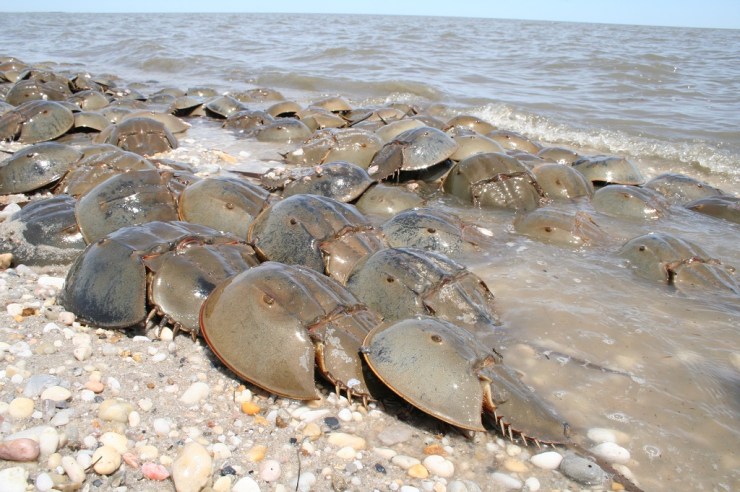
This summer during a visit to England, I spent some time at the Museum studying another so-called living fossil, the horseshoe ‘crab’. The horseshoe crab is not actually a crab, but is instead more closely related to spiders, scorpions and ticks. In fact, they are the closest living relatives of the extinct trilobites. But unlike their famous trilobite cousins, horseshoe crabs have survived all five of Earth’s major mass extinction events. Today, as a direct result of their ability to survive, the four remaining species of horseshoe crab play a vital role in global medical safety.

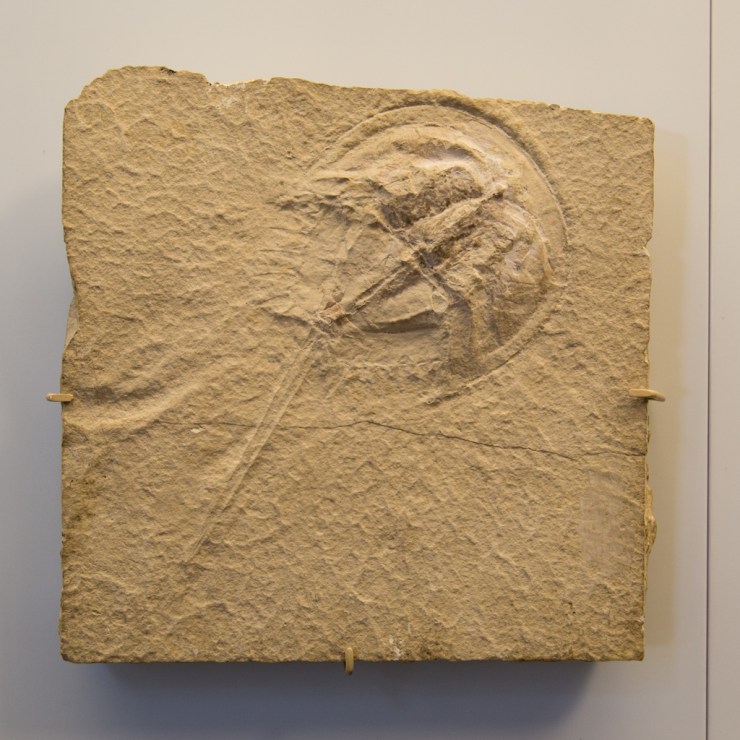
The Museum’s fossil specimen of Mesolimulus walchi, from the Upper Jurassic (163-145 million years ago), Solnhofen Germany, shows how little the form of the horseshoe crab has changed since

Not only do living horseshoe crabs look very similar to their early relations, they are also able to survive surprisingly severe injuries that often leave them missing body parts. Being able to see, through fossil evidence, how little their form has changed over time has helped to uncover the answer to this secret superpower. It lies in a very special life-saving trick that the crabs have kept for millions of years: a coagulating blood protein.

Horseshoe crabs on display in the Museum may provide food for thought for visitors

The blood of the horseshoe crab is able to clot quickly if bacteria are introduced, preventing infection, and saving the crab’s life. Since this discovery in the 1970s, this life-saving protein has been extracted from horseshoe crab blood and used in human medicine to test the safety of vaccines, medical laboratories, intravenous drugs, implants, and much, much more. The chances are that you owe a great deal of gratitude to the horseshoe crab.

But after all that surviving, horseshoe crabs, like many species, are now struggling for survival. They are losing their spawning grounds because of coastal development, industry, housing, marinas and coastal defense structures; they are collected and killed by the millions for bait, and bloodlet in their hundreds of thousands for medical use every year. It is likely that horseshoe crabs will not survive much longer.

But don’t despair. Museums are critical because they hold collections that can unlock knowledge about environmental change, and we can use that knowledge to protect life. Of course, horseshoe crabs are not alone in telling their stories through the fossils they leave – natural history museums are full of stories in stone, bones, pollen, and other traces. If you want to learn about and protect biodiversity, visit your local museum, or support organisations like Oxford’s Environmental Change Institute.

And to help the ancient horseshoe crab itself, join in with the efforts of the Ecological Research and Development Group – the crabs have saved us, so let’s return the favour.