Presenting… Darwin’s Insects

IMG_4273

A new year, a nice new display case. You may already be familiar with the Presenting… series that we’ve been running since March 2013; it started as a way to showcase treasures from the Museum’s collection during our closure year. Something changing and engaging to see as you passed through our darkened museum into the Pitt Rivers. Since re-opening early in 2014, we’ve celebrated significant natural history anniversaries, shared some of the staff’s favourite objects and put on joint displays with other departments in Oxford University. Now, for 2015, Presenting…  is getting a make-over.
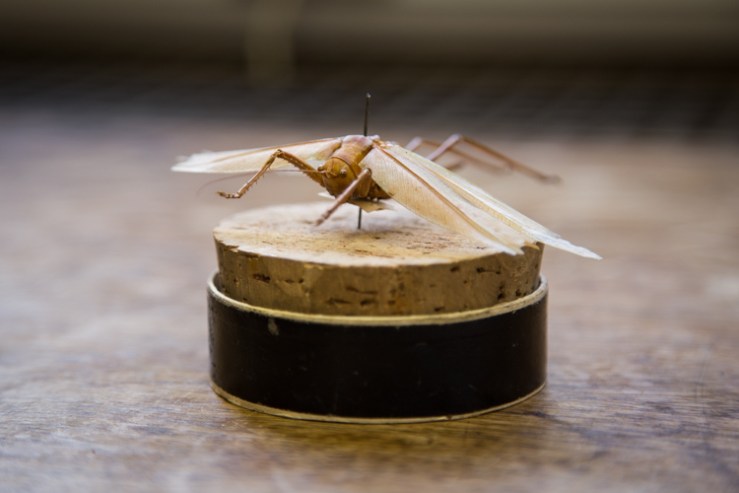
Bush cricket, family Tettigoniidae
IMG_4268
Amoret from Life collections installs a letter from Darwin to Hope

Today we’ve installed a brand new Presenting…  display, in a posh new case. With humidity control and UV protection, this standard-leading unit gives us the opportunity to showcase some of the really special and fragile specimens from the collections. We’re launching tomorrow with a display of insects collected by none other than Charles Darwin.

As well as showing off some specimens collected by the great man in Australia and Tasmania, Darwin’s Insects will tell the story of his close friendship with Frederick William Hope (1797–1862), founder of the Hope Department of Entomology in this Museum. Hope was one of the most eminent entomologists of his time and when Darwin collected insects he often turned to Hope to help identify them.

Preparing specimens in the Life collections

Darwin’s journey on HMS Beagle began in 1831 and towards the end of the trip he travelled around parts of Australia and Tasmania observing and collecting many species, including the insects you can see on display. They’re displayed in pill boxes similar to the type Darwin would have used to collect the specimens originally, and you can see Darwin’s handwriting on the tiny labels.
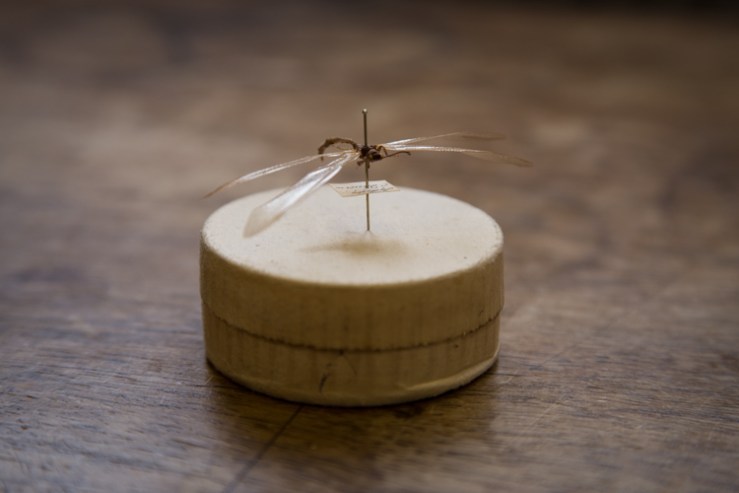
Ant lion, family Myrmeleontidae

Alongside the pinned insects, you can see one of Darwin’s letters to Hope, sent in 1837. He mentions insects that he collected between January and April 1836, which include the specimens on display. He is asking for Hope’s assistance, because so many of these insects are unknown to science. Hope was always keen to help identify new species and in another correspondence, from 1834, he promised to give Darwin “all assistance in my power” with this task.

The insects and letter will be on display from tomorrow (10 January) until 8 March. Pop in and take a look!

Rachel Parle, Interpretation and Education Officer
Humpback in action

IMG_4010

The sight of a huge Sperm Whale jaw soaring up to the roof is a familiar welcome to our visitors. But this spectacular specimen now has a companion. Resting against the opposite side of the cast iron column is a Humpback Whale skull.

9 mandibleThe skull was donated back in the 19th Century by well-known scientist Professor Eschricht of Copenhagen.

Over the decades the specimen has been displayed in all sorts of places and positions around the Museum – laid flat on the floor, upright and on top of cases. Last year, as part of our Once in a Whale project, the specimen joined our other whale skeletons in undergoing some much-needed conservation treatment. You can find out the story of its big clean-up on the project blog.

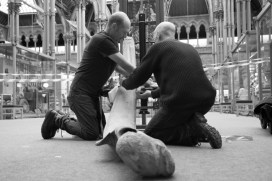
The skull is now displayed beautifully on a stand – but it was no mean feat to get it there. Bill Richey, the Museum’s Cabinet Maker, and Peter Johnson, Workshop & Maintenance, have carefully moved the specimen from the corner of the Museum where it was undergoing conservation treatment, reconstructed the complex structure and built a bespoke stand to support its huge weight. Here’s a step by step guide to rebuilding a Humpback Whale skull:

1 Base_smallFirst, Bill used his years of experience in the Museum to build a display stand that perfectly held the complex contours of the bone. He scribed around the base of the skull, making a layer of MDF to fit each curve. Once he was confident of the perfect fit, he screwed them all together (see left photo), before returning to the workshop to square it all up, sand and paint the finished thing. He added a cushioning layer of Plastazote foam to the top surface, which would touch the skull.

Now to move the skull to its new location…

3 moving_small

Because Bill and Pete had no idea how heavy the specimen would be, they decided not to take any risks and used the lifting machine to carry the weight. Keeping the specimen and themselves safe throughout the process was the most important thing.

Once they’d lowered the skull down to the floor, they used ratchets to hold it in place and secure the new base, using pieces of Plastazote foam to protect the sharp edges of the bone.

5 moving_small

They then used the lift to tilt the skull into an upright position… to the point of no return. Bill says at this moment he was thinking;

I just hope it doesn’t crush Pete!

6 upright_small

7 upright_small

There was a sense of enormous relief at this point – the skull was upright, stable and fully supported by the new base. But Pete explained that the pressure was heightened throughout the process, because it was all so public. As it took several days, a lot of the work had to be done during normal opening hours, leading to a lot of intrigued visitors watching with great interest. No room to make a mistake without it being very obvious!

10 mandible_small

With the skull now safely in its new location, the construction began. Fitting the jaw bones was a serious jigsaw puzzle – working out which bits slotted in where and how to secure them safely to the column without any further damage.

IMG_4018

To everyone’s relief, the Humpback Whale skull is now sitting proudly in its new stand, beautifully mirroring the neighbouring jaw. I’m sure Pete and Bill are hoping it won’t need moving again for quite some time…

Final photo_small

Rachel Parle, Interpretation and Education Officer

Crab in the lab

After_small

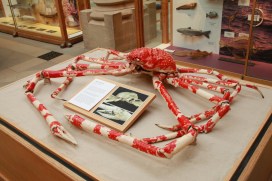
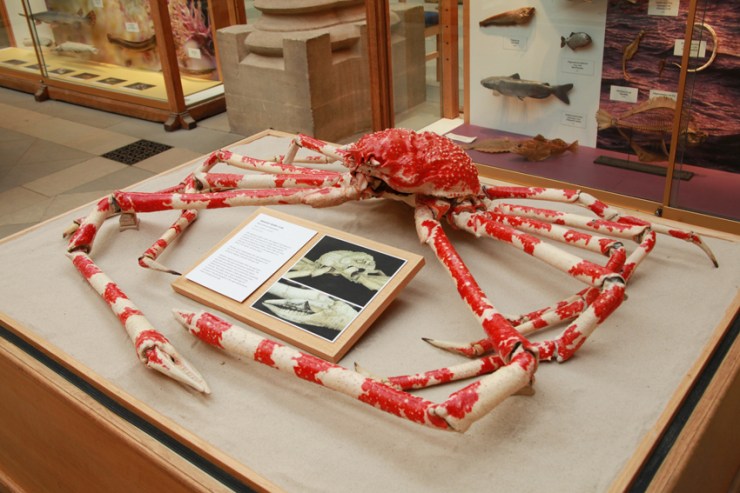
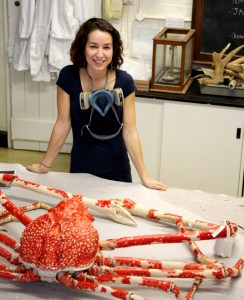
One of the most loved specimens in the Museum is the enormous Japanese Spider Crab. It’s been on display for over 100 years, so it’s unsurprisingly shown serious signs of deterioration. In July, staff in our Life collections decided that the crab should come off display and undergo conservation treatment. Bethany Palumbo, Conservator in Life Collections, took charge of this famous specimen.

The spider crab looking washed out after 100 years on display

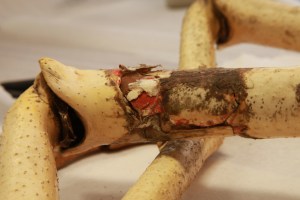
The most obvious damage was the loss of colour – the natural carotenoid pigments had completely faded due to decades of continuous light exposure under the glass roof. However, once it was taken into the laboratory for a closer look, Bethany soon realised that there were actually many areas that were fake, composed of old materials such as acidic cardboard, newspaper and even carved wood.

Some of the old filler material in a leg

These restoration efforts were causing more harm than good, deteriorating and damaging the natural shell material. The whole specimen was loosely held together with animal glue, PVA adhesive and, in some areas, tough wire which was cutting through the shell.

The first step for our conservator was to check the Museum database for information about the specimen, such as when it was donated and by whom. But unfortunately the specimen has no record, nor is it accessioned into the Museum’s collection. Although frustrating, this was important information. As it had no scientific data, Bethany could give this specimen more extensive conservation treatment, without compromising its scientific or historic integrity.

Bethany decided that treatment would consist of cleaning, the removal and replacement of old, deteriorating fill material and the restoration of colour to the shell, making the specimen true to life. These treatments, with the exception of the cleaning element, would be completely reversible.

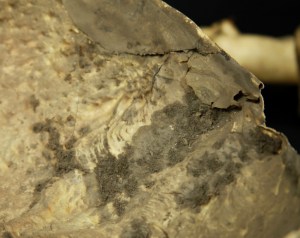
Dirt build-up on the underside of the shell

Work began by taking the specimen apart to clean and treat each section. Sections were gently vacuumed and a moist cloth used to wipe away 100 years of embedded grime. Bethany removed old fill material, softening it with water vapour to allow it to be easily peeled away.

Newly filled and coloured leg

The next task was to create replacements for the missing sections. Bethany used a combination of acid-free tissue and closed-cell polythene foam. Intricate areas like the claws proved more challenging. Replacements were sculpted free-hand from Plasticine, moulded in silicone and finally cast in Jesomite composite plaster. They now look pretty close to the real thing and are a big improvement on the old wood and paper versions.

Replacement parts made from Jesomite plaster

Before it was ready to go out on display Bethany replaced the faded colour. Japanese Spider Crabs are bright red and white in life, but ours had become washed out beige.

Conservator Bethany with the finished Spider Crab

Photographs of Spider Crabs were used as a reference for the colours, and Bethany also spoke to crustacean experts in the Museum to make sure it was accurate. She used an airbrush and acrylic inks, selected for their high UV resistance. The shell was coated with a barrier layer to allow the ink to be removed in the future, if needed.

Airbrushing the specimen was the most time consuming element, as it required multiple layers and various brushing techniques to make the crab look true to life. Once completed, Bethany gave the crab a final protective coating, providing good water resistance, ready for the next time it needs a good clean!

Rachel Parle, Interpretation and Education Officer

On the wing

Jones 2

Since the 1920s the Museum has had in its care an original, unpublished manuscript containing over 1,500 beautifully detailed and colourful paintings of butterflies and moths. Known as Jones’ Icones, this one-of-a-kind work was created in the late 18th century by amateur Lepidopterist and retired London wine merchant, William Jones.

The paintings depict over 760 butterflies and moths from the collections of some of the most eminent naturalists in London at that time, including the founder of the Linnean Society, Sir James E. Smith and entomologist Dru Drury, as well as Jones’s own specimens.

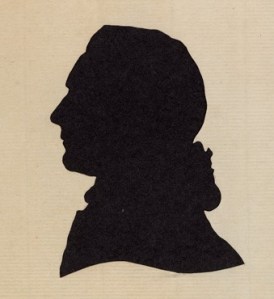
A silhouette of William Jones

In addition to being a beautiful work of art, Jones’ Icones is also an extraordinarily important document in the history of entomology and insect collecting in Britain. At the time Jones was making these paintings, many of the specimens he was depicting were being brought to Europe and described for the first time, most notably from Australia and the Oceanic region. Jones meticulously recorded these specimens through his paintings, and his work remains the only record of many of these important collections, a large number long-since destroyed, lost, or divided among private collectors.

The Icones was also consulted by a student of Linnaeus, Johann Christian Fabricius – the man credited as the first to describe over 10,000 insects. It is believed that Fabricius named over 200 species from the images in the Icones, citing Jones’ work in his publication Entomologica Systematica in 1791.

Large Copper from Jones Collection at the Museum
Large Copper butterflies (Lycaena dispar) from Jones Collection at the Museum

In spite of this manuscript’s huge importance to the history of entomology in Britain, it has never been made available beyond the reading room of the Museum’s archive. So now, after almost a century of failed or abandoned attempts, Jones’ Icones is available for all to see!

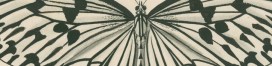
A plate from the Jones' Icones
A plate from the Jones’ Icones

As part of an HLF funded project, Flying Icons, which has been running since April 2013, all six volumes of Jones’s Icones have been digitised and made available online. A website at www.jonesicones.com has also been developed in order to promote this amazing manuscript and the related collection here at the Museum.

This website also serves another very important function: to solicit help from keen amateurs and experts worldwide to help identify all the species represented in Jones’ Icones. Identification is the first step in tracking down extant specimens of some of Jones’ paintings. It may even change our understanding of the history of the science of entomology. Can you help? If you think so, request an account and we’ll set you to task!

If you’d like to read more about Jones’ Icones – and see some large scale prints – then head to the current exhibition in the cafe area of the Museum.

Kate Santry – Head of Archives and Library

Jones

Birdsong

IMG_8469

The Museum’s historic Huxley Room has had many uses over the years; in 1860 it held the famous Great Debate – the first public discussion of Darwin’s new theory of evolution – and now it is home to many thousands of specimens from the Museum’s entomological collections.

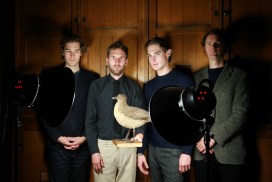
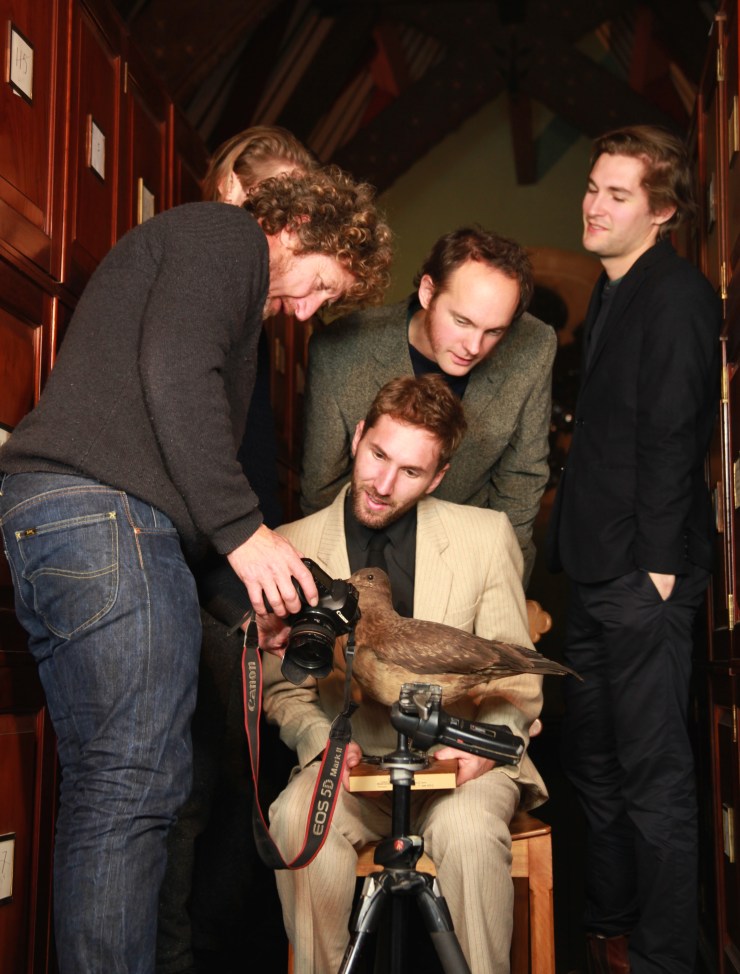
But yesterday it became the backdrop for a photo shoot with Oxford band Stornoway, who are getting ready to release their third studio album in early 2015.

IMG_8442

Seen here holding a bird from the Museum’s collection, the band admitted to an ornithological obsession. Singer, lyricist and guitarist Brian Briggs says;

[the new album has] a strong bird theme to it, including field recordings of around 20 different species of birds. We have a bit of a bird thing – I did my PhD on Ducks at Oxford University, which is how I met bandmate Jon.

He says that they love the Museum of Natural History and have a particular interest in quirky locations around Oxford. They’ve just played a sold-out show at the Sheldonian Theatre and will be back for a second night on Thursday 13th November.

We always love playing to our home crowd – we have a bit of a history of unusual venues in the city and the Sheldonian has got to be the most exciting of those – we were the first pop band to play in there when we did our previous gig there in 2009.

Perhaps we can convince them to bring their guitars next time they come to see us…

IMG_8454

Bethany Palumbo, Conservator of Life Collections

Whale tale

dolphin
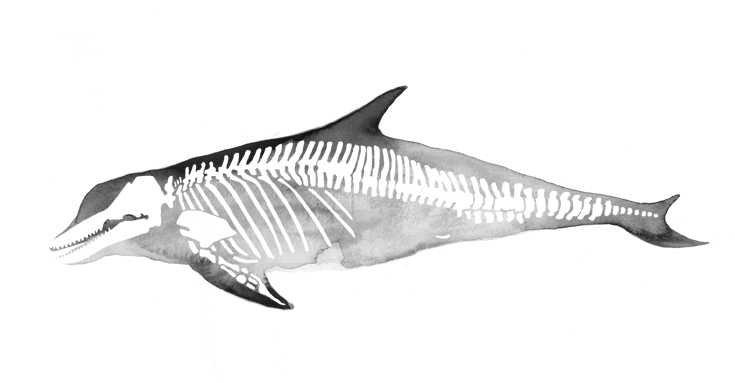
Bottle-nosed Dolphin (Tursiops truncatus)

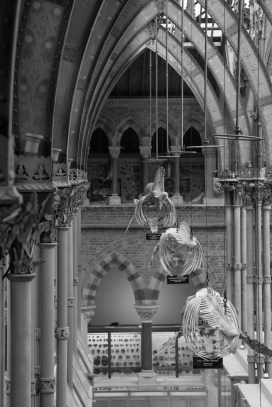
One of the most uplifting projects here over the past year or so (literally, as you’ll see) has been the conservation work on the five whale skeletons suspended in the court. The skeletons are beautiful, the process was intricate, and the whole thing was rigorously documented on our accompanying Once in a Whale blog.

The work inspired filmmaker Robert Rapoport to record some eerily captivating footage of our conservators at work, and the project itself was Highly Commended in the Museums + Heritage Awards.

Northern Bottle-nosed Whale (Hyperoodon ampullatus)

At completion, the whales were raised once again into the vaulted space, but this time rearranged in size order and staggered in their distance from the ground. Each has its own spotlight, creating an impressive display, especially once darkness falls outside.

But there was a final element to the displays that has just been installed: information panels containing details about each of the species suspended above, along with drawings and paintings created for us by artists Nicola Fielding and Claire Duffy.

Claire’s paintings of the whales have been used in a scaled schematic of the display, each ‘fleshed out’ to give an impression of the whale in its full form; and Nicola’s accurate recreations of the skeletons are featured in a second panel which gives details of the conservation project itself.

A schematic drawing of the whales suspended in the court, along with further information about each species

Nicola is something of an old hand when it comes to making drawings for the Museum – her work is featured on lots of our family trails already. But the whale project seems to hold a special place in her heart:

I could write a short essay about how much being involved in the whale project meant to me. I’ve always been mesmerised by cetaceans and by the mythical status they can have. In a museum, hanging alongside dinosaur skeletons, they can seem like something we only know from pictures and imaginings. But cetaceans are of course still living, breathing and can be found in all corners of the worlds oceans. Even around the UK there are so many species to be found.

So I was really excited to be involved in a project that would allow the Museum to make the most of its incredible skeletons, and to make sure all the knowledge we do have about them is shared.

Whale aisle interp v32
One of the panels in the whale aisle gives details of the conservation project

We hope the new information panels at each end of the whale aisle will encourage visitors to look up and perhaps share in Nicola’s wonder for these amazing creatures, many of which were almost hunted to extinction during the periods of intense industrial whaling.

Finally, if if you like the look of these paintings, there’s a last chance to see some of Claire Duffy’s other work in her Avifauna show at the Old Fire Station in Oxford, which runs until Saturday 8 November.

Scott Billings – Public engagement officer