The Etymology of Entomology

Honorary Associate Dr George McGavin and Assistant Curator Darren Mann of the HEC will both be putting in an appearance on the BBC Radio 4 program ‘The Etymology of Entomology‘ which is being broadcast this Saturday, the 9th of March at 10:30 (BBC Radio 4 FM: 92.5–96.1).

“Zoologist Dr. George McGavin delves into the strange and often bizarre names given to the planet’s insects.

There are an estimated 10 million living insect species, with new specimens being discovered almost daily. Entomologists are turning to ever more imaginative names, referencing everything from literary figures, celebrities and politicians to playground puns.

George takes us into the complex and intriguing world of the taxonomist. From the 18th century father of modern taxonomy Carl Linnaeus to the present day, he explains why naming the things that surround us is the foundation of all science.
There are flies named Pieza kake and S. beyonceae (after the singer); beetles with political connections – A. hitleri, A. bushi, A. cheneyi and A. rumsfeldi; and some entomologists have even named discoveries after romantic conquests. Unsurprisingly, names can prove controversial but, once set, are difficult to change.”

We hope that this will be a fun introduction for anyone who has questions about how and why we name species in the way that we do. We will be writing blog posts in the future that tackle the subjects of taxonomy and classification in both the broader sense and the minutiae so for the moment, let us leave you with a selection of our favourite fun names of insects and animals:


EDIT: An article about the radio show has now appeared on the BBC News website in the Science and Environment section.


    A date for everyone’s diary


    <!–[if !mso]>st1:*{behavior:url(#ieooui) } <![endif]–>
    We are pleased to announce that we will be hosting the BENHS for their Member’s Day/AGM on the 23rd of March.

    “The Society was founded in 1872 as the South London Entomological and Natural History Society and since its inception has always included amongst its members many of the leading entomologists of the day.

    The objectives of the Society are the promotion and advancement of research in entomology with an increasing emphasis now being placed on the conservation of the fauna and flora of the United Kingdom and the protection of wildlife throughout the world”.

    The department has in the past, greatly enjoyed hosting the BENHS and other societies for a variety of different events and we hope that this occassion will be as entertaining as the others. We expect it to be a busy day, with staff dividing their time between the lecture theatre, the collections and socialising with members. We will be on hand to try and answer any questions people may have about the collections or entomology in general as well as to make sure that there is plenty of tea and biscuits avaliable to help fuel the thinking.

    Details of the meeting, which is open to members and non-members alike, can be found below. 

     ~
    BRITISH ENTOMOLOGICAL & NATURAL HISTORY SOCIETY
    AGM and Members’ Day Programme Saturday 23rd March 2013
    Hosted by the Oxford University Museum of Natural History
    Parks Road, Oxford, OX1 3PW
    All of the meeting is open to both members and non-members, although only members are allowed to vote on any motions put to the AGM.
    Exhibits of live or dead insects, photos, literature, posters etc. will be most welcome. Please display these in the lecture theatre when you arrive. They may then be viewed and discussed during the lunch break.
    Within the UK, the Hope Entomological Collections are second in size and importance to the national insect collection at the Natural History Museum, London. The collection houses over 25,000 arthropod types, and comprises over 5 million specimens.  The collection includes many specimens of great historical interest from such sources as the Hope-Westwood and Verrall-Collin collections. 
    For those wishing to consult the collection during the day, please contact the department in advance: entomology@oum.ox.ac.uk

    .

    Programme for the day
    10.15   Arrive, coffee/tea, display of exhibits

    10.50   Welcoming remarks and introduction to the day

    11.00   Galls and their insects. Margaret Redfern (University of Sheffield and British Plant Gall Society)

    11.35   21st century insect arrivals in the UK.Sharon Reid (FERA)

    12.10   The effects of extreme fluctuating temperatures on aphid life history traits. Christopher Jeffs

                (University of Oxford). Student presentation

    12.30   Facing up to Beetles. Michael Darby (BENHS)

    12.50   Something different. Glenda Orledge (BENHS) Please bring a pen or pencil for this item

    13.00   Lunch and viewing of exhibits (bring your own packed lunch or forage in one of the nearby pubs or

    eateries)

    14.00   Society notices

    14.15   Annual General Meeting with elections, reports and Presidential Address (PTO for AGM notice)

    15.00   Extreme Insects. Richard Jones (BENHS). By special invitation of the President

    15.45   Conclusion of the AGM and Tea

    16.00   Tour of the entomological collections,led by Darren J. Mann

    16.45   Close of meeting

    There’s a fly on my nose!

    By Mike Ackland
    Honorary Associate of the HEC

    In September 2011, John Carr of Massachusetts, USA, posted photographs of an anthomyiid fly on the website diptera.info. This site has thousands of photos of flies, sent in by both diptera enthusiasts who are keen photographers, and experts who offer advice and possible identification.

    I recognised the anthomyiid as a species of Eutrichota, which has over 50 species in the Nearctic Region. Positive identification to species however generally requires examination of a specimen under a microscope. John, who is a very good photographer and naturalist, later added to his posting some very clear close-ups of various parts of a male specimen he had caught, and offered to send the specimen to me. This proved to be Eutrichota affinis (Stein), a species widespread in America and which is associated with the groundhog Marmota monax L. and may be found in and around their burrows. The larvae are considered to be facultative commensals probably feeding in excrement and debris in the burrows.

    A few other species of Eutrichota in North America have been associated with mammals including ground squirrels, Spermophilus tridecemlineatus (Mitchell), chipmunks, Tamias striatus (L.) and various species of gophers (Geomys spp.).

    In Europe other species of Eutrichota have been found around the burrows of the Alpine Marmot Marmota marmota L. There are seven species of Eutrichota in Britain, though no life histories are known. See Pont & Ackland, 1995 for more details of the flies found in the Alps (full reference below). I first met Adrian Pont (another Hope Department Honorary Associate) in the mid 1950’s in Leigh Woods near Bristol, where we were both collecting insects. So we have both been studying flies for over 50 years.

    Recently John Carr sent me two photographs of specimens of Eutrichota affinis on the head and nose of a groundhog. These were taken in Connecticut on 30th May 2009. The groundhog family was living in a culvert, and John reports that they later ate part of his sister’s garden!
    My thanks to John for permission to use these excellent photos.

    Diptera, Anthomyiidae, fly, Eutrichota, Eutrichota affinis, Marmot, Marmota monax
    There’s a fly on my nose!
    Diptera, Anthomyiidae, fly, Eutrichota, Eutrichota affinis, Marmot, Marmota monax
    Females of Eutrichota affinis (Stein)(Diptera: Anthomyiidae) on the head of the groundhog Marmota monax L.

    Reference
    Pont, A.C. & Ackland, D.M. (1995). Fanniidae, Muscidae and Anthomyiidae associated with Burrows of the Alpine Marmot Marmota marmota Linnaeus in the upper Ötz Valley (Tyrol, Austria). Insecta, Diptera. Berichte des naturwissenschaftlich-medizinischen Vereins in Innsbruck, 82: 319-324.

    A pdf version of the paper is avaliable HERE.

    Happy Birthday Darwin… and Darren!

    DSC_8112

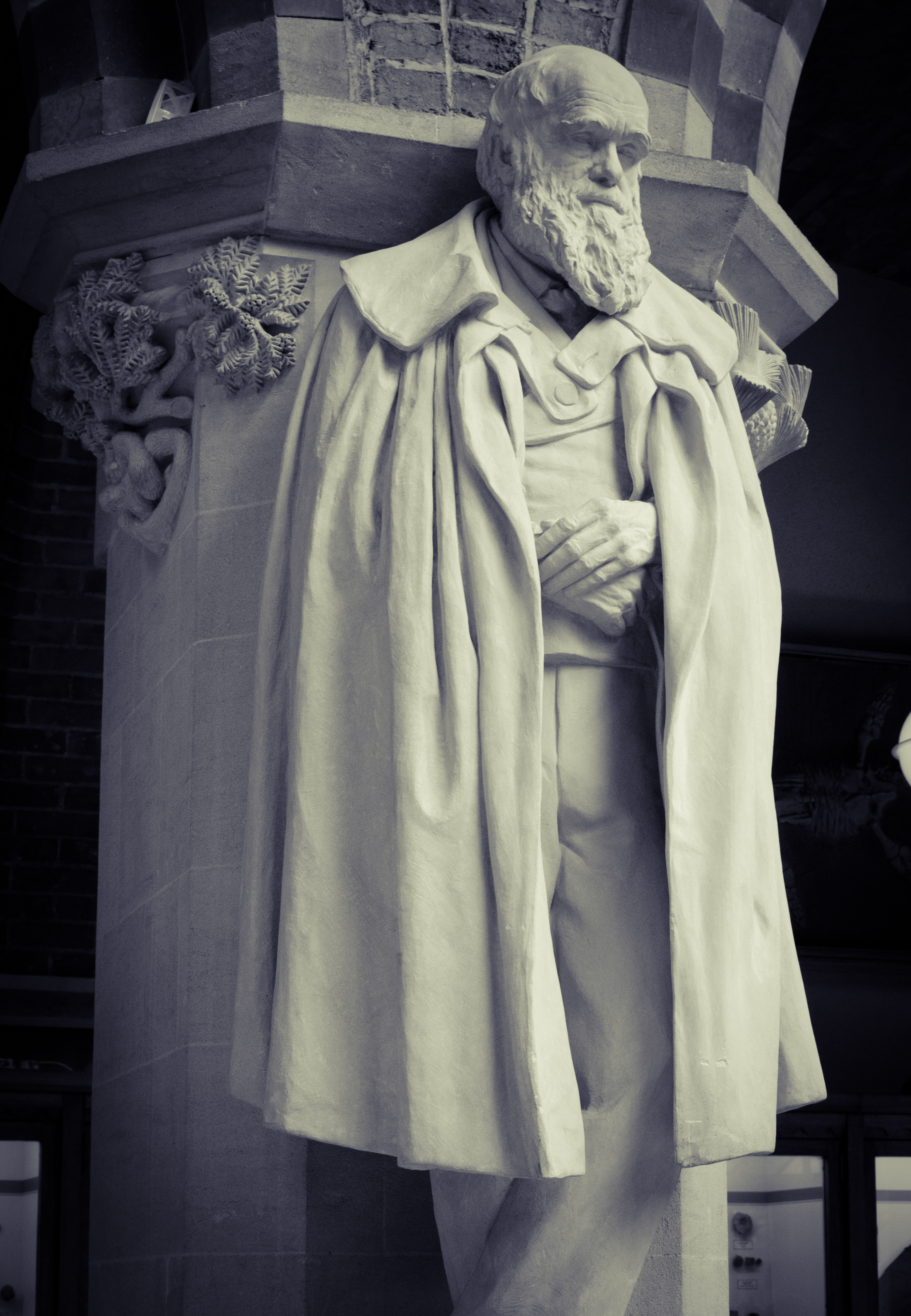
    We couldn’t let International Darwin Day slip by without a quick post. It’s the day that marks what would have been Charles Darwin’s 204th birthday. Here at the Museum of Natural History, Charles Darwin is an ever-present, incredibly important figure – we even have a statue of him in the court. Of course, this is hidden amongst scaffolding at the moment, so there’s a little reminder above!

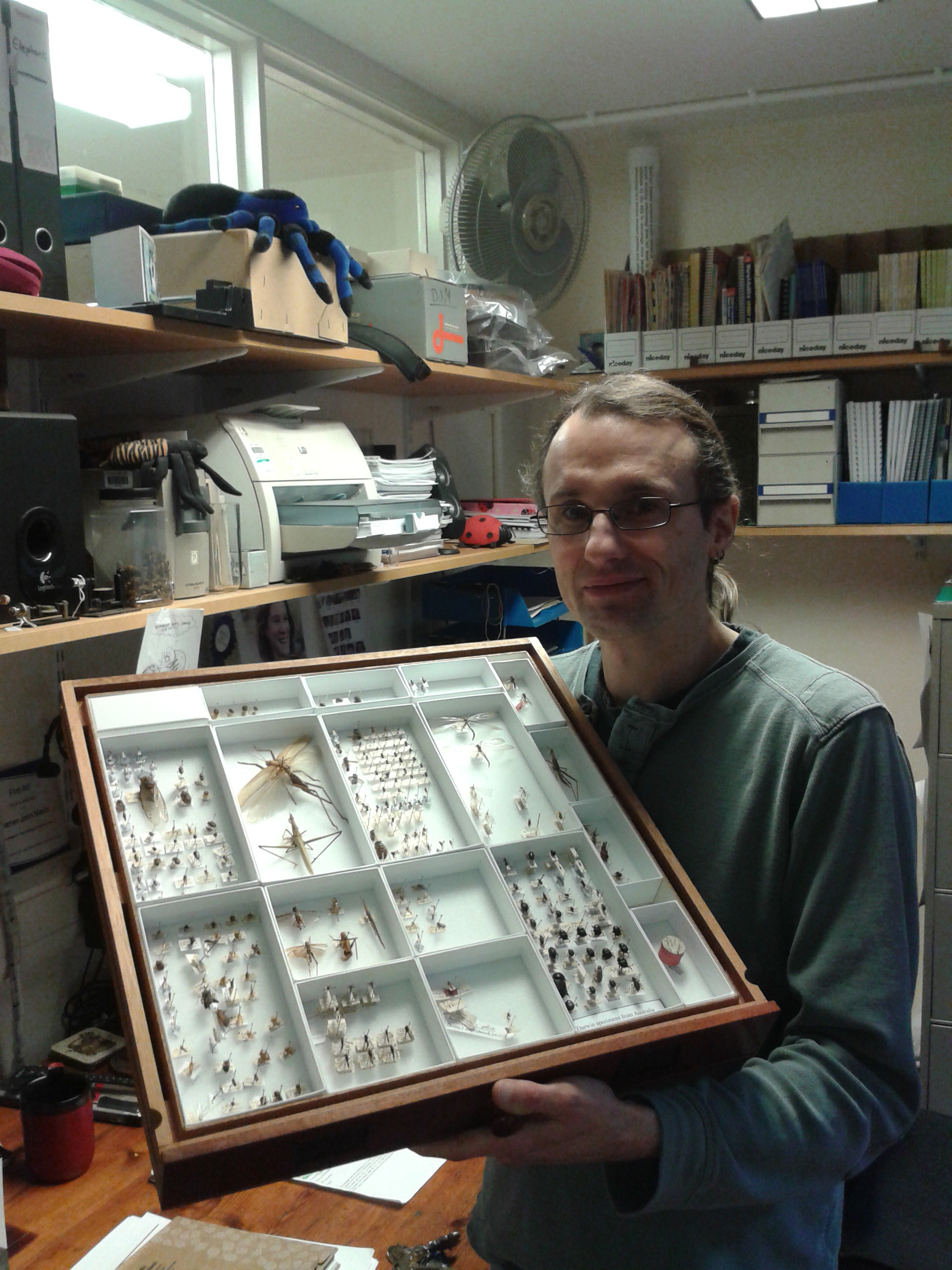
    But Darwin isn’t the only person to celebrate his birthday on 12th February;  it’s also the birthday of our Assistant Curator of Entomology, Darren Mann! Darren has been celebrating his birthday today by examining his favourite dung beetles. At school, his love of the natural world and their shared birthday even led to one of his teachers nicknaming him Darwin.

    Darren birthday 1

    Here’s Darren with some of the Museum’s rare insect specimens that were collected by Charles Darwin himself on his travels in Australasia. To find out more about what goes on behind the scenes in Entomology, follow their excellent blog.

    So, happy birthday Darren… and Darwin!

    Rachel Parle, Education Officer

    10th Coleopterists Day


    On February 2nd we hosted for the second year the annual national beetle (Coleoptera) enthusiasts day, with the fifty attendees coming from as far as Cornwall and Lancashire. The day kicked off with proper coffee, tea and biscuits and then a series of talks, followed by a tour of the entomology department and a dung beetle workshop. 


    The talks presented were a nice mix of professional, student and enthusiast and were enjoyable and entertaining. The talks were: Using traits to evaluate ladybird distributions – Richard Comont, CEH; Prionus coriarius in Richmond Park – John Lock; Suckers & sexual conflict in diving beetles – Dave Bilton, Plymouth University; Studying the ecology of British Oil Beetles – John Walters; New initiatives to support beetle recording in Britain – Helen Roy, BRC.

    Coleoptera, beetles, lecture, OUMNH
    Helen Roy presenting her talk on beetle recording in Britain
    The collections (thanks to Amoret Spooner) and Library (thanks to the Librarian Kate Santry) were accessible throughout the afternoon, and many took advantage of using the library (for the first time) and the collections to confirm identifications against our reference material or just to see the more unusual species and extract data. 


    The workshop ‘Dung Beetle Identification’ was a bit of squeeze in our teaching area, with a few too many enthusiastic coleopterists wanting to know how to identify the small and often difficult Aphodius

    Coleoptera, beetles, dung beetles, Scarabaeidae, British, identification
    Darren Mann presenting his workshop on dung beetle identification

    However, using our digital video set-up and monitor we managed to get through the entire dung beetle fauna, giving tips and tricks on their identification and interpretation of the key couplets, the stalwart coleopterists continuing until 8pm.

    Coleoptera, beetles, identification, course, Scarabaeidae, characters, morphology
    Darren Mann using the video microscope to show characters used in the identification of British dung beetle species