From Fossil To Flesh: Reconstructing a Phascolotherium

Following the completion of our Life, As We Know It redisplay project earlier this year, we are taking a look at some of the exceptionally skilled people who helped to bring it all together. In this article, taxidermist Alexandra Rose Cherrett tells us about the ‘unusual proposal’ that she received one day…

I was sitting at my studio desk ready to start the day with some admin. I often receive emails enquiring about commissions ranging from peoples’ pets to wild animals that have been found by the public, asking for them to be preserved after death through taxidermy. At the top of my inbox was an email with an “unusual proposal” from the Museum of Natural History in Oxford.

As a taxidermist I have been lucky enough to work on a wide range of animals over my short career, from kingfishers to vultures, hedgehogs to lemurs and many more in-between. Safe to say I was not expecting the request to taxidermy an animal that hasn’t walked the earth for 165 million years.

I was then introduced to Phascolotherium; a small, furry mammal that lived in the Mid Jurassic alongside Megalosaurus, the first dinosaur ever named and discovered, right here in Oxford, UK. A proverbial stone’s throw from the museum itself.

Now, I have always been rather obsessed with dinosaurs. My obsession and adoration for dinosaurs and wildlife has been evenly matched for as long as I can remember. Suddenly I found my Jurassic Park dreams were coming to life. An impossible task? I thought, “Life, uh…finds a way”.

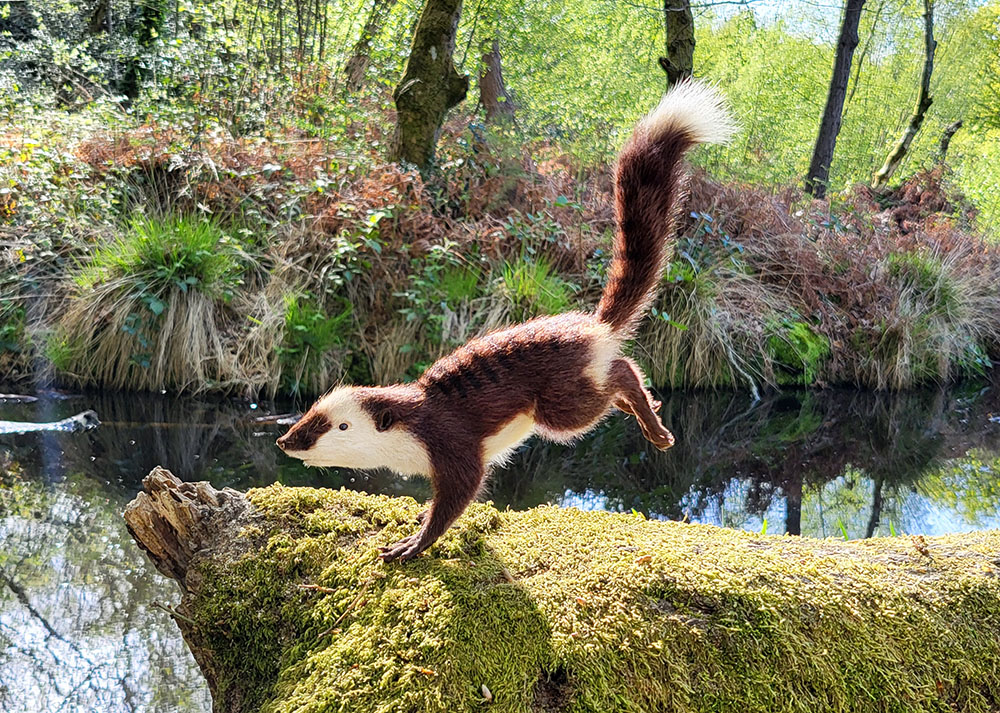
The first challenge was that only the jawbone and teeth of Phascolotherium had ever been discovered. I was given a reference image by Paleo artist, Julius Csotonyi, from which I primarily  worked.
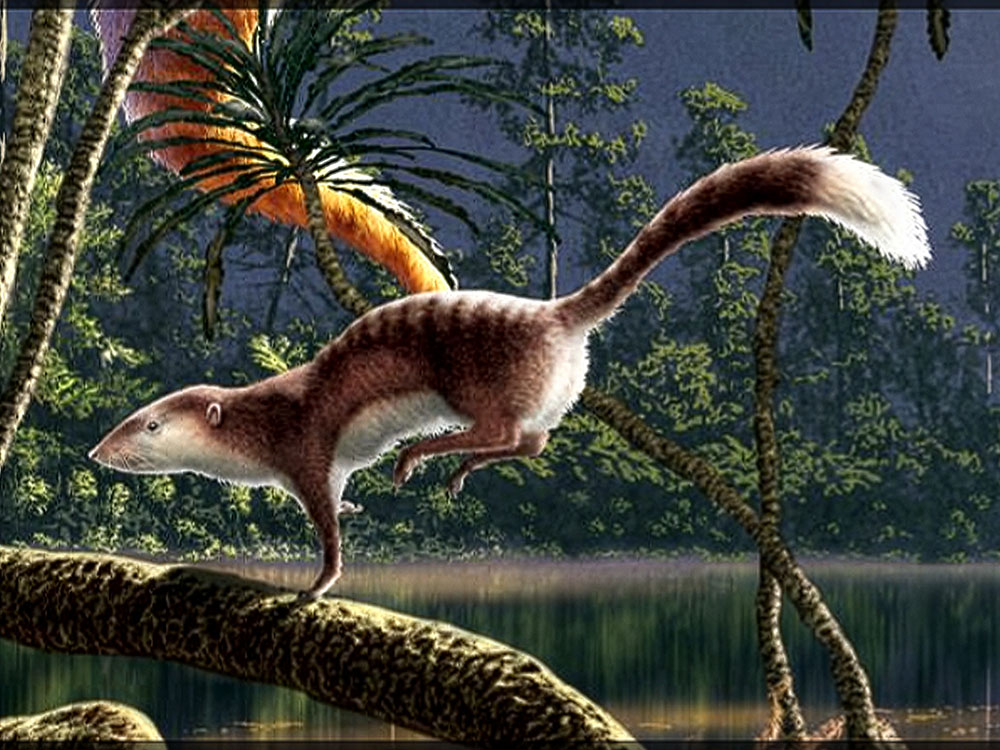
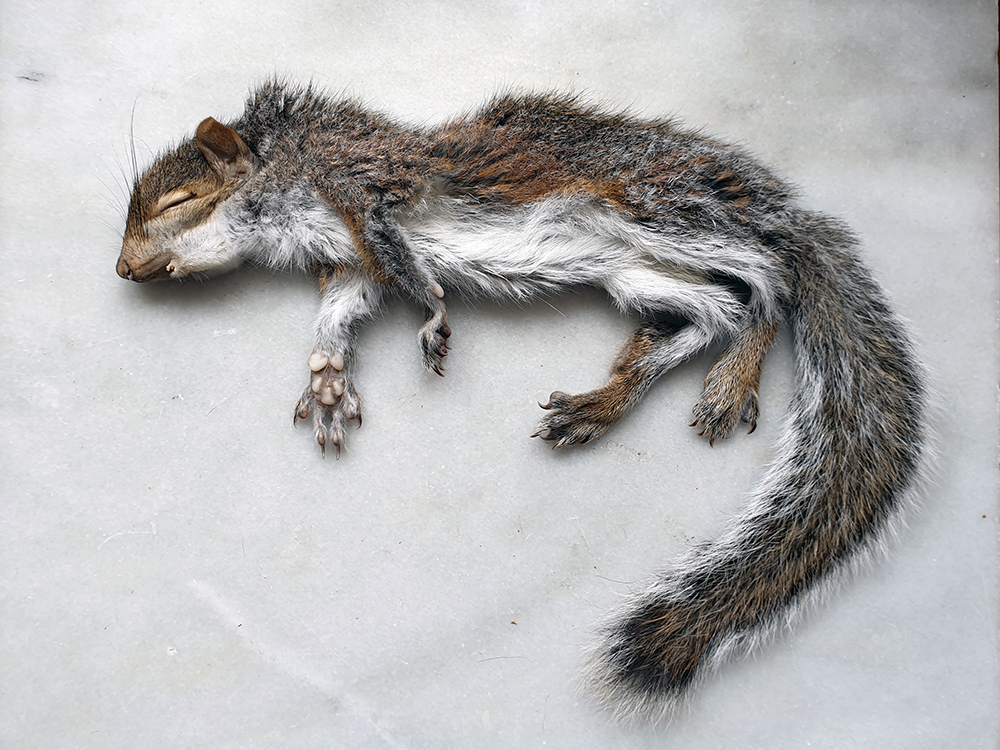
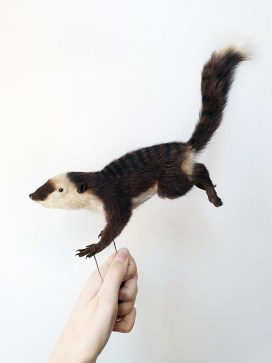
It was rodent-like in nature, with an elongated head, a lithe body and a long, plumed tail. My first thought was to use a squirrel as the base as the limb structure and body shape were so similar. I knew I had a pair of juvenile grey squirrels in my freezer that could be the perfect size, one was donated as a cat kill and the other perished at a wildlife rescue.

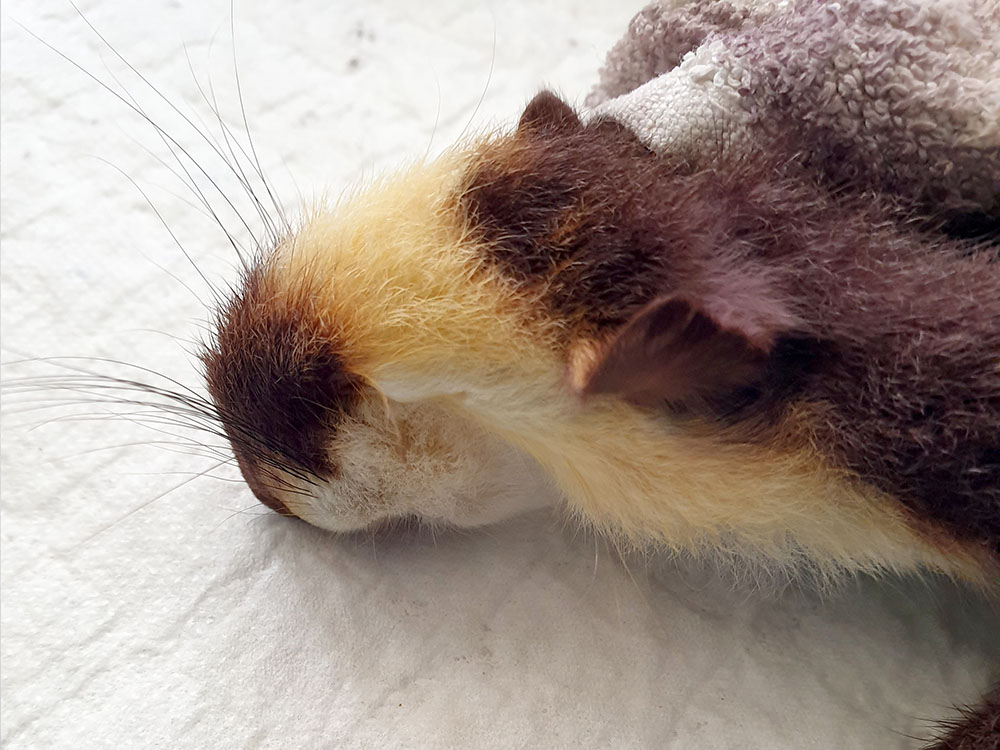
The most obvious visual changes were the colouration. The artworks showed a body of a dark reddish hue, with patches of white on the face, stomach and tip of the tail and stripes stemming down the spine. My next step of course, was Boots. A few boxes of Garnier hair dyes and peroxide bleach later and I had a completely different animal skin laid out on my desk.

My next process was to create the body form over which the skin would be fitted. For mammal taxidermy, I usually carve or cast a head out of balsa wood or PU foam and make a bind up copy of the body and limb shape from woodwool.
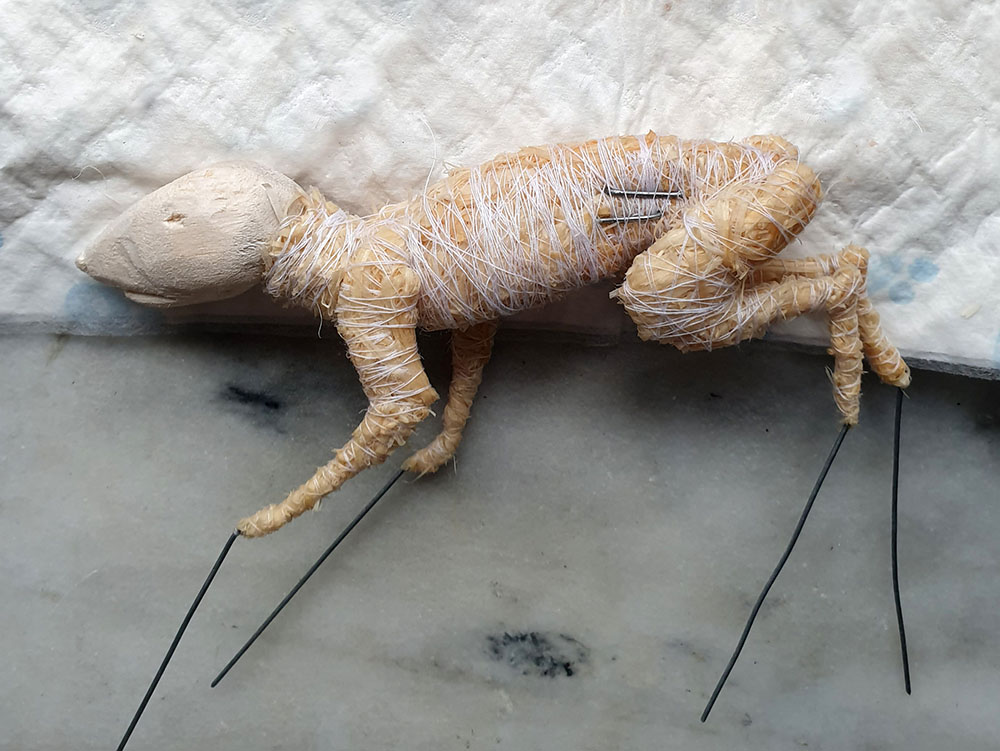
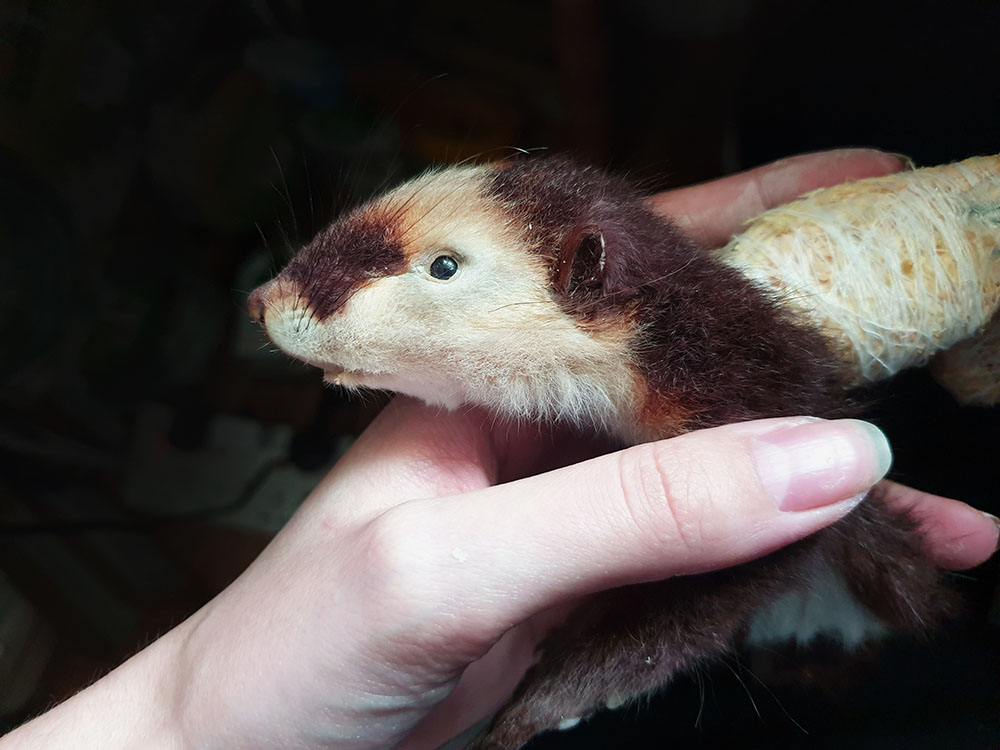
With the head essentially being a non-existent shape, I copied the paleo-art and carved a small balsa block to a similar shape as a large shrew. The body was very similar to the young squirrel already so that was a simple workaround.

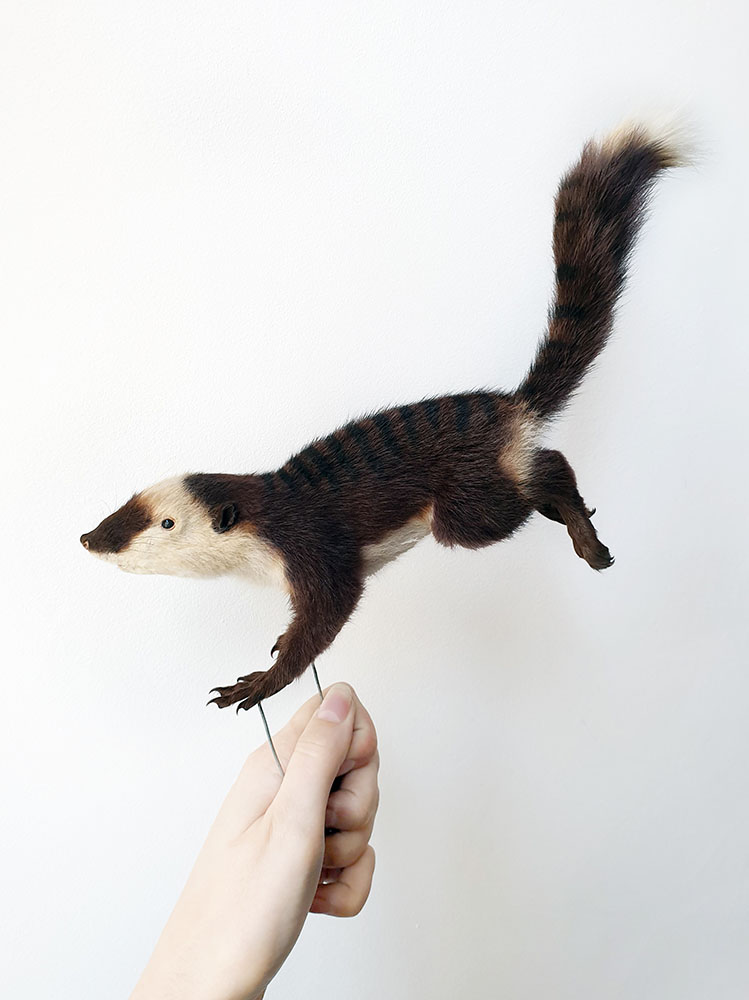
With the nature of its surroundings and the looming Megalosaurus, I imagined this creature was indeed, always on the run. So, an action pose was created, mid run, which highlighted its slight build and balancing tail very nicely.

When dressing the skin, the biggest alteration was the eye and ear placement. The young squirrel had eyes around 8mm, whereas Phascolotherium measured in at 4mm. Not to mention they were set further back and lower, as were the ears at two thirds their original size and shape. I made an incision across the eyelid and manipulated the skin to fit its new size and position, copying the same methodology for the ears. Almost instantly, a face that hadn’t been seen for 165 million years was right there looking back at me.
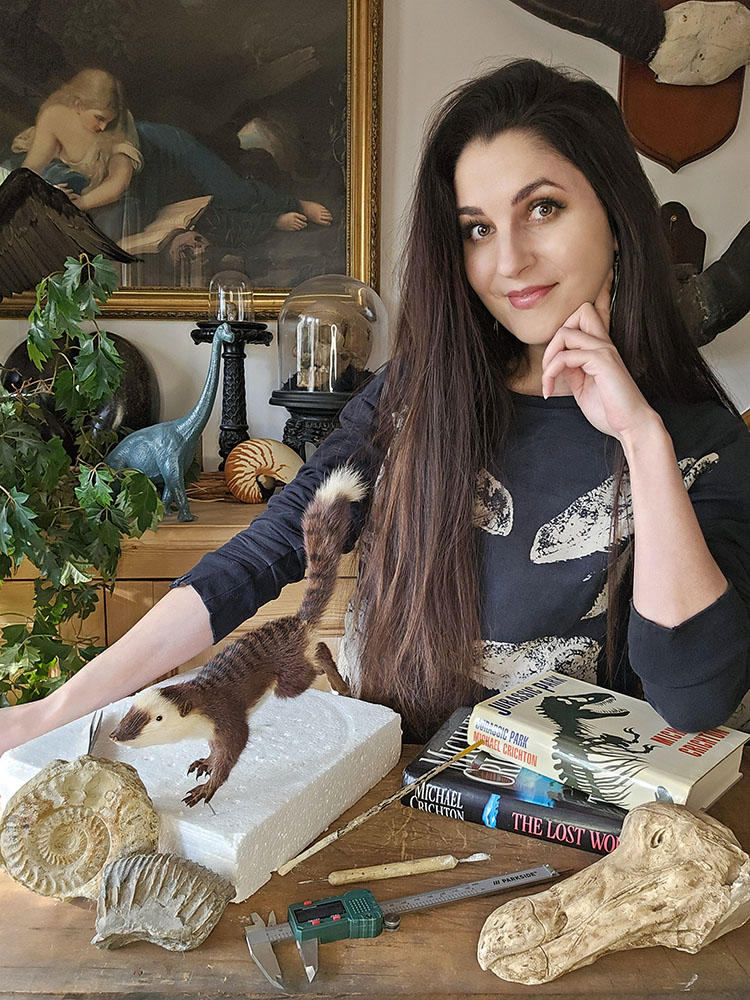
Me with the completed Phascolotherium

I have been fortunate enough to work with the Museum of Natural History on a few projects now and it’s safe to say this project has been one of my biggest challenges and greatest pleasures to date.
www.alexandrarosetaxidermy.co.uk

Instagram: @alexandrarosetaxidermy

Facebook: @alexandrarosetaxidermy
Writing from experience

The Museum’s building and collections provide inspiration for scientists and artists alike, often acting as a springboard for the creation of new work. Following a year here as one of three poets-in-residence, Kelley Swain returned to lead a session with Oxford Scholastica students, showing how museum objects can inspire creative writing.

by Kelley Swain

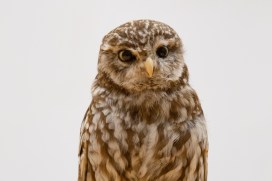
The experience of looking at the taxidermy Little Owl (Athene noctua) provided inspiration for Tallulah’s poem

Delving into the archives and behind-the-scenes stores, meeting researchers and conservators, and finding inspiration in the architecture, history, and collections were all part of my residency at the Museum during 2016. I’ve always written poetry inspired by the history of science and its fascinating objects, and I have come to appreciate museum objects not only as inspiration for my own poetry, but as teaching tools, or “object lessons” to inspire others.

It was lovely to be asked to lead a new series of these “object lessons” for a group of summer school students at Oxford Scholastica. Some of them had never encountered taxidermy, let alone a room full of articulated, stuffed, and preserved specimens. Awe abounded – both its wonder and, for some, its horror. It was a great opportunity to teach the students not only poetry, and why writing poetry inspired by museum objects can be moving, thoughtful, and important, but also to teach them about conservation and preservation.

Here we share the work of 13 year old Tallulah Xenopoulos, who created this poem following an encounter with a taxidermy owl during the workshop:

Stupid dead owl.
The wooden door opens slowly, and, although there’s a green stone with bumpy edges and
shiny sides, a jar filled with silky insects and a board with beautifully painted butterflies.
Both your eyes land on the owl.
His feathers brush down his back and he stares down at his lightly spotted blanket where his
delicate legs connect and hatch onto the bumpy branch.
His eyes
And his beak
And legs
And nails
He stares at you almost like he knows what you’re thinking – which is dumb because he’s
dead – but he scares you and fascinates you at the same time.
A piece of dust has fallen beneath his eye and I bet he’d love to just brush it away, cause
he’s like that.
But also.
He’s an owl.
A stupid.
Dead owl.
With nothing but stuffed insides and scrawny legs.
And a heart. A dead heart which they slipped out and replaced with stuff.
-”do you think they stuffed him alive?”
The boy next to you whispers. You don’t reply. But the thought of death. And of his feathers
falling the second he felt the blood rushing through him go cold and dusty, travels across
your mind.
“Do you think he knew he was about to be?” you answer
Because the poor clueless animal looks as if he knew nothing.
knows nothing.

Kelley Swain’s own poetry from the Museum residency is featured in Guests of Time, a beautiful hardback volume edited by Prof John Holmes which features new work by John Barnie and Steven Matthews, alongside 19th-century poetry from writers linked with the early days of the Museum. Together, the poems in this anthology are a tribute to the Pre-Raphaelite origins of the Museum and a rejuvenation of its artistic legacy.

Is it real? – Taxidermy

One of the most common questions asked about our specimens, from visitors of all ages, is ‘Is it real?’. This seemingly simple question is actually many questions in one and hides a complexity of answers. 

In this FAQ mini-series we’ll unpack the ‘Is it real?’ conundrum by looking at different types of natural history specimens in turn. We’ll ask ‘Is it a real animal?’, ‘Is it real biological remains?’, ‘Is it a model?’ and many more reality-check questions.

First up: Taxidermy, by Mark Carnall

Taxidermy
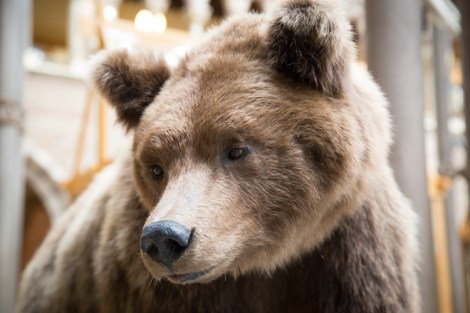
The Museum is well-known for its touchable taxidermy. As of today, we have two large bears, a Black Bear and a Brown Bear, greeting visitors as they enter the main court, as well as taxidermy specimens on our Sensing Evolution touch-tables. For children and adults alike, this close encounter with a taxidermy animal prompts the question – is it real?

Taxidermy, or ‘stuffed’ animals, are specimens that have been specially prepared, preserved and posed to show what the creature may have looked like in life, but real and not real here is tricky. The animal itself is, or was, a real animal – there are no taxidermy unicorns, for example. But the biologically real parts may only be the skin, the skull, and the skeleton inside the paws and feet, depending on the type of animal.

The touchable taxidermy Brown Bear greets visitors to the museum.

Inside taxidermy specimens there may be sculpted statues over which the skin is stretched; for older specimens, a wire and wood framework with paper, wood wool, straw and seeds may be used to fill out the skin. The animal’s squishy parts, which are not easy to preserve –such as eyes, lips and tongues – are normally made of glass or plaster.

Animals that have skins and skeletons that are relatively easy to preserve – including mammals, reptiles, and birds – are generally better suited to taxidermy. Marine mammals such as whales and dolphins, amphibians such as frogs and salamanders, and fish are all less common as taxidermy because their skins are harder to treat and keep stable.

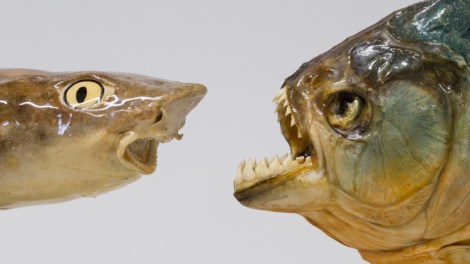
Dogfish and piranha taxidermy which have been painted and varnished in an attempt to make them resemble the living animals. Note the comedic eyes on the shark.

The hard parts of skin, such as crests, wattles and skin patterns in reptiles, are susceptible to discolouring and fading in light, so these areas may be repainted to show what the animals look like in life. This introduces another ‘non-real’ element: paint.

So although there are certainly real parts used in taxidermy, there’s yet another complication in answering the question: the animals are usually posed by a human, so even their posture and appearance could be considered ‘subjective’ and perhaps therefore not quite ‘real’.

In fact, some of our older taxidermy may have been prepared by taxidermists who hadn’t ever even seen a living example of the animal they were working on. This can lead to inaccurate positioning and posing, as in the taxidermy kiwi on display in our main court.

So, is it real? You decide.

Next time… Skeletons and bones


A moving story

img_0737

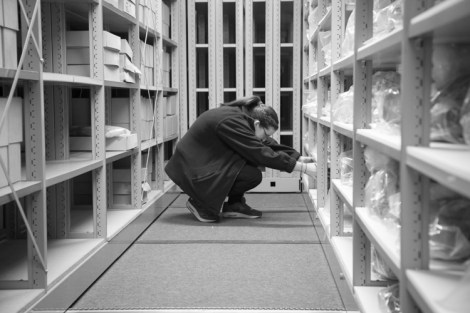
For the past nine months there has been a lot of moving going on around here. Imagine moving house endlessly for weeks on end, but where your house is full of bones, insects, fossils, rocks, and weird and wonderful taxidermy. And the location of everything has to be precisely recorded. The museum move project was a bit like that.

Project assistant Hannah Allum explains…

The museums are migrating, we declared in May 2016. And so they have. The first major stage of the stores project has been completed. After we had created inventories for the largely unknown collections held in two offsite stores, the next stage was to pack them safely and transport them to a new home nearer the museum, a job which demanded almost 70 individual van trips! We now have over 15,000 specimens sitting in vastly improved storage conditions in a new facility.

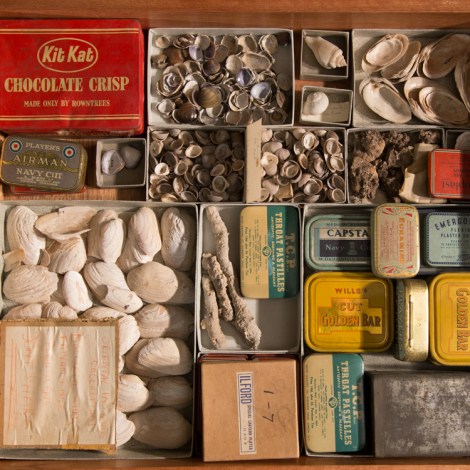
A miscellany of boxes for a collection of shells

Let’s revel in some numbers. All in all there were over 1,000 boxes of archive material, mostly reprints of earth sciences and entomological research papers; over 1,300 specimens of mammal osteology (bones); and more than 1,000 boxes and 650 drawers of petrological and palaeontological material (rocks and fossils).

Some of the more memorable specimens include old tobacco tins and chocolate boxes filled with fossils and shells; a beautifully illustrated copy of the ‘Report on the Deep-Sea Keratosa’ from the HMS Challenger by German naturalist Ernst Haeckel; and the skull of a Brazilian Three-banded Armadillo (Tolypeutes tricinctus), complete with armour-plated scute carapace.

img_0756
The skull and carapace of a Brazilian Three-banded Armadillo (Tolypeutes tricinctus)

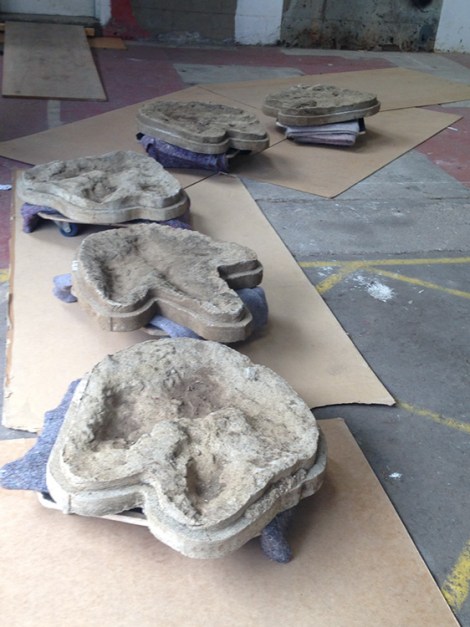
There were also a few objects that have moved on to more unusual homes. A 4.5 m long cast of Attenborosaurus conybeari (yep, named after Sir David) was too large to fit in our new store and so made its way to another facility along with a cornucopia of old museum furniture. A set of dinosaur footprint casts, identical to those on the Museum’s lawn, have been gifted to the Botanical Gardens for use at the Harcourt Arboretum in Oxford.

And last but not least, a model of a Utahraptor received a whopping 200 applications from prospective owners in our bid to find it a suitable home. After a difficult shortlisting process it was offered to the John Radcliffe Children’s Hospital and following a quarantine period should soon be on display in their West Wing.

Footprint casts, attributed to Megalosaurus, queuing for a lift to Harcourt Arboretum. Credit: Hannah Allum
Casts of footprints by made Megalosaurus, queuing for a lift to Harcourt Arboretum. Image: Hannah Allum

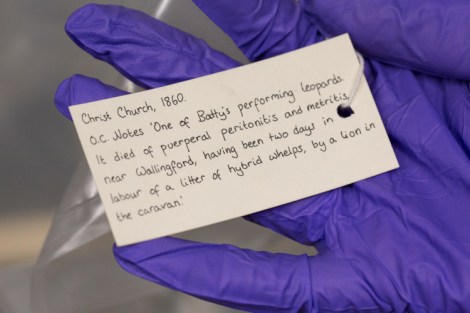
Fittingly, the final specimen I placed on the shelf in the new store was the very same one that had been part of my interview for this job: The skeleton of a female leopard with a sad story. It apparently belonged to William Batty’s circus and died of birthing complications whilst in labour to a litter of lion-leopard hybrids before ending up in the Museum’s collections in 1860.

img_0760
The sad story of a performing leopard

Though the moving part of this project is now complete there is still plenty of work to do. We are now updating and improving a lot of the documentation held in our databases, and conservation work is ongoing. The new store will also become a shared space – the first joint collections store for the University Museums, complete by April 2018.

To see more, follow the hashtag #storiesfromthestores on Twitter @morethanadodo and see what the team at Pitt Rivers Museum are up to by following @Pitt_Stores.

Partridge in a laboratory

IMG_6669

We recently ran a second series of taxidermy workshops here at the Museum, run under the expert guidance of professional taxidermist Derek Frampton. Once again they proved very popular with participants, so we asked one of those budding taxidermists, Kit Collins, to give us a short write-up of the day…

As a child I was always fascinated by nature, finding adders, baby hares, grass snakes, slow worms, and watching dolphins, buzzards, and Red Kites, when they were much rarer. I even once skinned a mouse that had been caught in our mouse trap.

I have always wanted to try taxidermy and I now work at an auctioneers where I regularly see all sorts of taxidermy – skins, horns, and skulls, including a hippopotamus skull. So I was keen to know more about the process. This was the first taxidermy course I’ve seen so I jumped at the chance to try something new and learn from an expert taxidermist.

IMG_6677
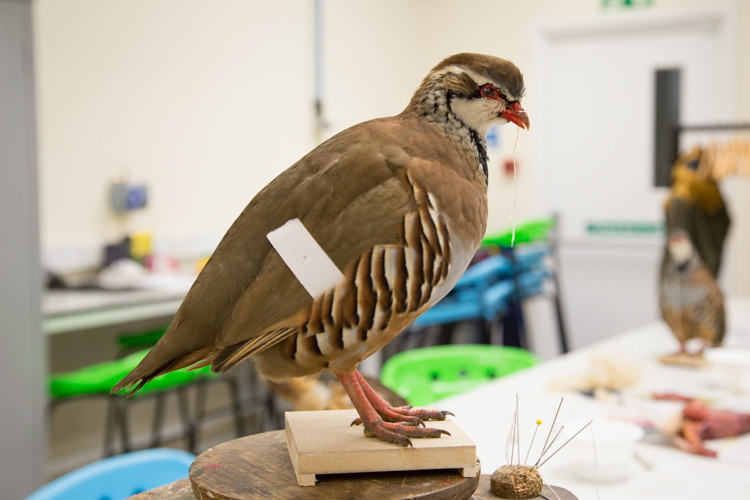
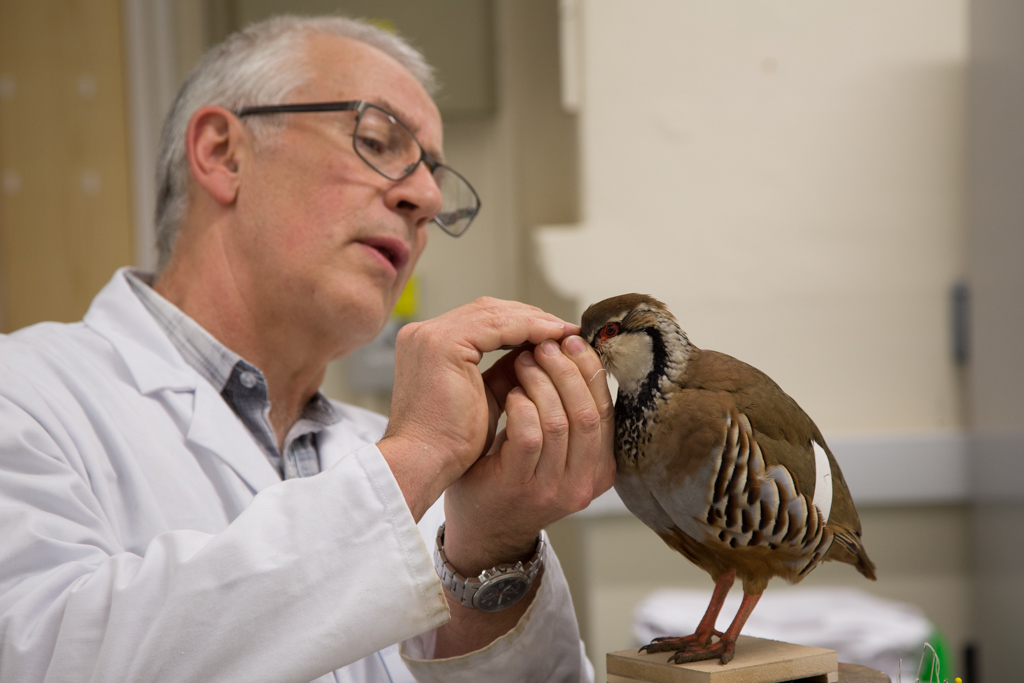
Derek Frampton puts some finishing touches to his partridge

During the workshop we were taken through each step of the process, first watching Derek demonstrating on his bird then copying these steps on our own Red-Legged Partridges.

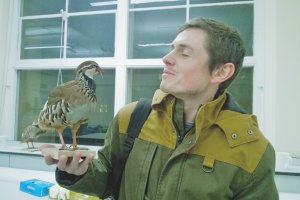
Kit and partridge
Kit and his finished specimen regard one another

We could see the finished article that had been made in the previous day’s workshop, sitting watching us on a nearby windowsill. Unfortunately, our specimens looked nothing at all like this at the start and as the morning went by it looked less and less likely that our piece of wet skin and feathers with a few bones attached would end up looking anything like a real bird again…

However, with the help of a blow dryer the feathers regained their soft, striking plumage. We then spent the afternoon piecing the bird back together using a kind of packing straw to recreate the shape of the body, and wire, clay, false eyes, and car body filler to do the rest.

We each ended up with a beautiful bird to take home, as well as the memories of a fun and unusual day out (and anatomy lesson) at the Museum. I would love to do it again.

Kit Collins