Drawing amongst the dinosaurs

For the past few years the Museum has been working with second year students on the BA (Hons) Illustration course at the University of Plymouth. As part of a module on interpreting information, students are given information on research that is going on in the Museum or related departments and asked to interpret this information visually. This year one of the students, Sally Mullaney, took on the project ‘Key to the Past: exploring the life and work of Charles Lyell’. Sally continued her work with the museum on a week’s placement during the summer, and was supervised by Eliza Howlett, Earth Collections Manager.

Sally Mullaney talks about how she interpreted the project and her experience here at the Museum.

Charles Lyell Map FINAL small
Illustrated map of Lyell’s European travels on which we can mark the fossil localities by Sally Mullaney

“For the past two months on my illustration course at Plymouth University, I’ve been working with the Museum of Natural History on an illustrated timeline of geologist Charles Lyell. At first I was pretty daunted at the amount of travelling and ‘geologising’ he did in his life throughout the Victorian era. But after I spent time reading his letters and journals, I really got a feel for what Lyell was like. His musings and good humour shine through in his many letters to various siblings, professors and his wife, Mary. This really made the Charles Lyell project a pleasure for me to do, and I was thrilled when the museum asked me back to work for a week’s placement continuing with Lyell.”

LBEC003 small
Charles Lyell and Captain Cooke spend a night in a shepherd’s hut in the Pyrénées, 1830 by Sally Mullaney

After a weekend of sightseeing Oxford’s many attractions (the museum being one of them!), Jade, a fellow student from Plymouth, and myself reported to the front desk to begin our week.  We were welcomed warmly with a cup of tea overlooking the main court of the museum, and were briefed about the week to come. I was also given the opportunity to work with the Public Engagement team to create a new logo for the Family Friendly Sunday events, as well as the continued work on Lyell which would be a map illustrating his travels and collections.

MuseumLogo BW small
New logo for family friendly activities by Sally Mullaney


The week really flew by and I managed to complete the projects with a little time to spare, which I spent sketching in the court amongst the dinosaurs! The building is such an incredible place to work in, and it has been a pleasure to be working in such a fantastic museum – I’ll definitely be visiting again!”

sketchbook 1 small
Pianist and the T. rex, 30 July 2017 by Sally Mullaney

Sally’s characterful and charming illustrations of Charles Lyell’s bring his geological travels across Europe to life. Charles Lyell (1797-1875) was a student of William Buckland at Oxford, and went on to become the foremost geologist of his day. The Museum is lucky to house a large proportion of the Charles Lyell Collection, comprising of over 16,000 documented fossil specimens. A number of the specimens in the collection would have been collected in Europe during his travels. LBEC004 small
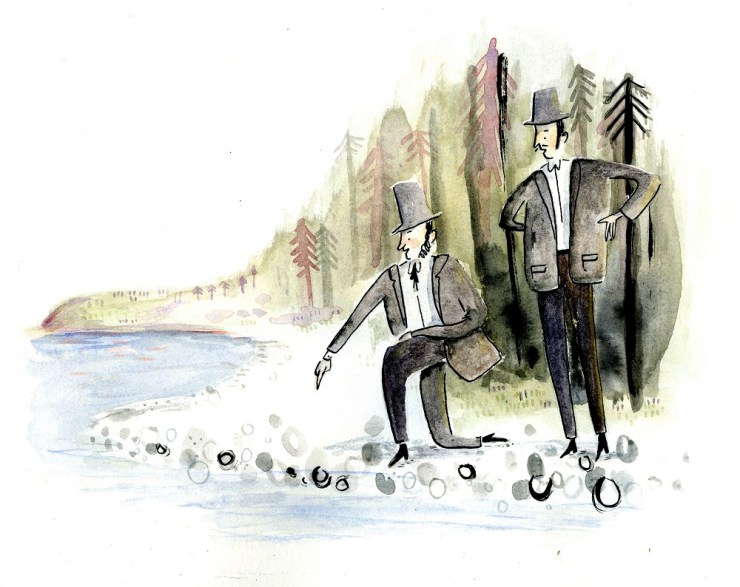
Lyell was a close and influential friend of Charles Darwin. Lyell’s important Principles of Geology was one of the few geological books that Darwin took with him on his voyage with HMS Beagle, and it helped shape his hypothesis for the mechanism of coral atoll formation amongst other things.

Last year the Museum undertook the large task of starting to make Lyell’s collection publicly accessible by cataloging and taking high resolution images of the specimens. The collection will be available online via a user-friendly database in the foreseeable future – watch this space!

You can learn all about the project, the collection and the man himself via this dedicated blog.


Rehoming a dinosaur

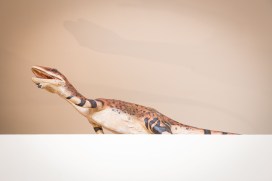
Last summer we ran an unusual competition: finding a new residence for our four metre-long model of Utahraptor ostrommaysorum. It had been hibernating in one of our off-site stores for a while, but following a reorganisation of collections we needed to find a new place for it to live. The competition to rehome the dinosaur was fierce, with 200 venues across the world vying to become the Utahraptor‘s new keeper…

It’s taken some time, thanks to logistics and admin, but one year later we are really delighted to reveal that the Utahraptor has now been installed at the Children’s Hospital at the John Radcliffe Hospital in Oxford.

The bid to take in the Cretaceous creature came from Sarah Fletcher, who now works at the Churchill Hospital in Oxford. Sarah nominated the Children’s Hospital so that the dinosaur could amaze and inspire the young patients.

The idea of having a model Utahraptor in the hospital seemed like a lot of fun. Having been through the Children’s Hospital with my family, I knew that it would make such a difference to everyone who walks through those doors. But I never thought in a million years that we would win it – I am thrilled!
– Sarah Fletcher

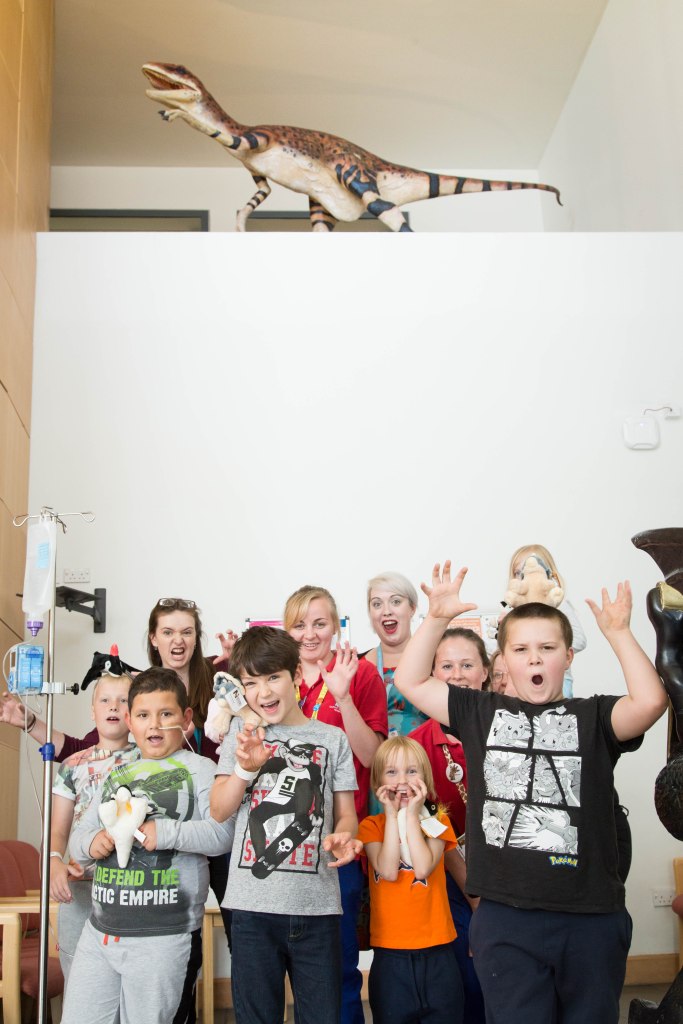
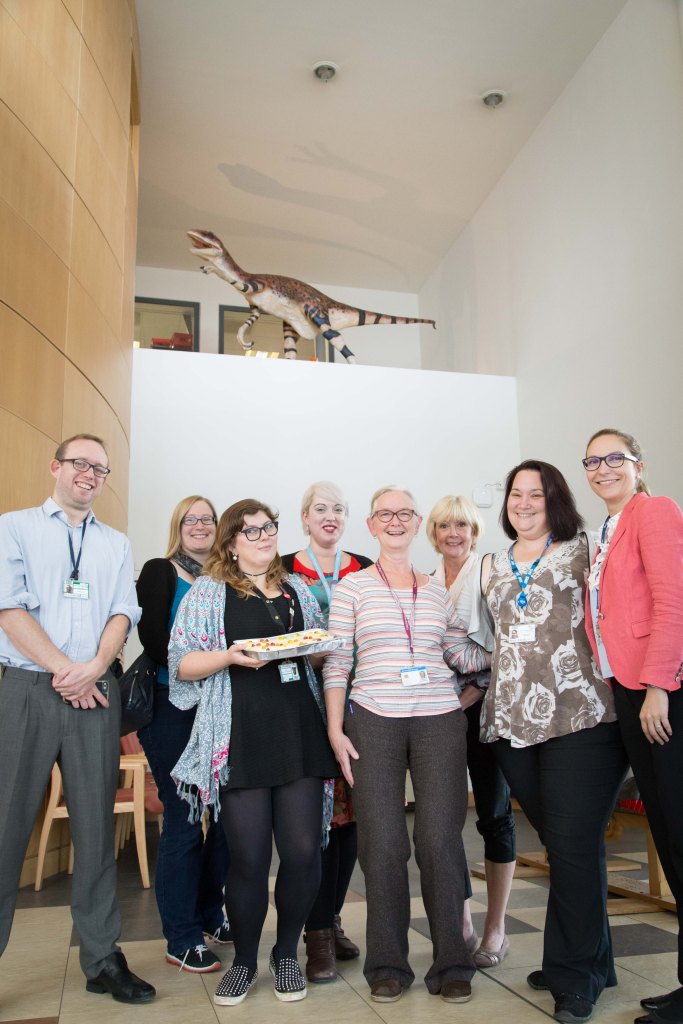
The Children’s Hospital team celebrate the arrival of their new ‘pet’

The model has been installed in the main entrance of the hospital, complete with new shadow-casting lighting, thanks to support from Oxford Radcliffe Hospitals Charitable Funds.

The team are now looking to develop new arts projects for young patients, themed around the dinosaur, including an all-important naming competition. We all hope it will bring pleasure to patients, provide a welcome distraction, and make their hospital visit a little more fun.

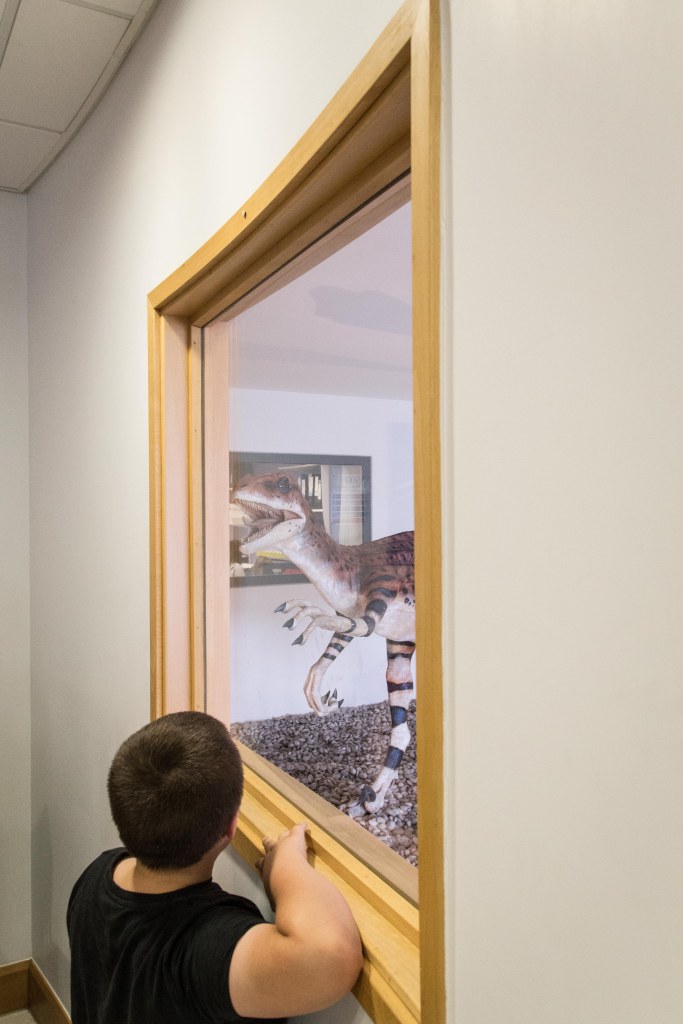
Patients, staff and visitors can peer at the dino on the way to the wards

Is it real? – Fossils

One of the most common questions asked about our specimens, from visitors of all ages, is ‘Is it real?’. This seemingly simple question is actually many questions in one and hides a complexity of answers. 

In this FAQ mini-series we’ll unpack the ‘Is it real?’ conundrum by looking at different types of natural history specimens in turn. We’ll ask ‘Is it a real animal?’, ‘Is it real biological remains?’, ‘Is it a model?’ and many more reality-check questions.

This time: Fossils, by Duncan Murdock

Whether it’s the toothy grin of a dinosaur towering over you, an oyster shell in the paving stone beneath you, or a trilobite in your hand, fossils put the prehistory into natural history collections. Anyone who has spent a day combing beaches for ammonites, or scrabbling over rocks in a quarry will attest that fossils are ‘real’. It is the thrill of being the only person to have ever set eyes on an ancient creature that drives us fossil hounds back to rainy outcrops and dusty scree slopes. But fossils, unlike taxidermy and recent skeletons, very rarely contain any original material from living animals, so are they really ‘real’?

Megalosaurus
The Museum’s famous Megalosaurus jaw

Fossils are remains or traces of life (animals, plants and even microbes) preserved in the rock record by ‘fossilisation’.

This chemical and physical alteration makes fossils stable over very long timescales, from the most ancient glimpses of the first microbes billions of years ago to sub-fossils of dodos, mammoths and even early humans just a few thousand years old. They can be so tiny they can only be seen with the most high-powered microscopes or so huge they can only be displayed in vast exhibition halls, like our own T. rex. Among this is a spectrum of how much of the ‘real’ animal is preserved, and how much preparation and reconstruction is required to be able to display them in museums.

Trace fossils include footprint trackways like these, made by extinct reptile Chirotherium.

Generally, the more there is of the original material and anatomy, the rarer the fossils are. Among the most common fossils found are ‘trace fossils’: burrows, footprints, traces, nests, stomach contents and even droppings (known as ‘coprolites’). Most ‘body’ fossils also contain nothing of the living creature, rather they are impressions of hard parts like teeth, bones and shells.

This ammonite fossil, Titanites titan, was formed when a mould was filled with a different sediment, which later turned to rock.

When an organism is buried the soft parts quickly decay away. The hard parts decay much more slowly, and can leave space behind, creating a fossil mould. If this later gets filled with different sediment, it forms a cast.

These sediments are buried further still and eventually turned into rocks. Alternatively, the hard parts can be replaced by different minerals that are much more stable over geological time. Essentially bone becomes rock one crystal at a time.

3D reconstruction of 430 million year old fossil, Aquilonifer spinosus. Found in Herefordshire Lagerstätte, which preserves ancient remains with superb detail.

Very rarely the soft parts of an organism get preserved, but in the most exceptional cases skin, muscles, guts, eyes and even brains can be preserved. If buried quickly enough an animal can be compressed completely flat to leave behind a thin film of organic material, or even soft parts themselves can be replaced by minerals, piece-by-piece. These mineralized fossils can be exquisitely preserved in three dimensions, even down to individual cells in some cases. This is about as ‘real’ as most fossils can be, except the few special cases where the remains of an organism are preserved virtually unaltered, entombed in amber, sunk into tar pits or bogs, or frozen in permafrost. The latter push the boundaries of what can really be called a fossil.

Bambiraptor feinbergi

The final step in the process, from the unfortunate demise of a critter to its eventual study or display, involves preparation. In most cases the fossil has to be removed from the surrounding rock with hammers, chisels, dental tools and sometimes acids. This preparation can be quite subjective, a highly skilled preparator has to make judgements about what is or isn’t part of the fossil. The specimen may also need to be glued together or cracks filled in, so not everything you see is always original.

As with modern skeletons, there are often missing parts, so a fully articulated dinosaur skeleton may be a composite of several individuals, or contain replica bones. This is, of course, not a problem as long as it is clear what has been done to the fossil. This is not always the case, and there are examples of deliberately forged fossils, carved into or glued onto real rocks, or forgeries composed of several different fossils to make something ‘new’, like a ‘cut n shut’ car.

So, if you see a fossil that looks too good to be true, then it just might be worth asking, “is it real”?

Next time… Models, casts and replicas
Last time… Skeletons and bones

Crayfish of the world united

by Sammy De Grave, head of research

How many species of crayfish can you name? Not many, or perhaps none? Well today, for the first time, a list of all the species of crayfish in the world has been published, thanks to a collaborative effort between Professor Keith Crandall at George Washington University and Dr Sammy De Grave, head of research here at the Museum.

The new list draws together much recent work and gives biologists access to a single, comprehensive summary of all the recognised species of crayfish for the first time. The new classifications group crayfish into 669 species, 38 genera, and five families, with two superfamilies corresponding to the Northern and Southern hemispheres.

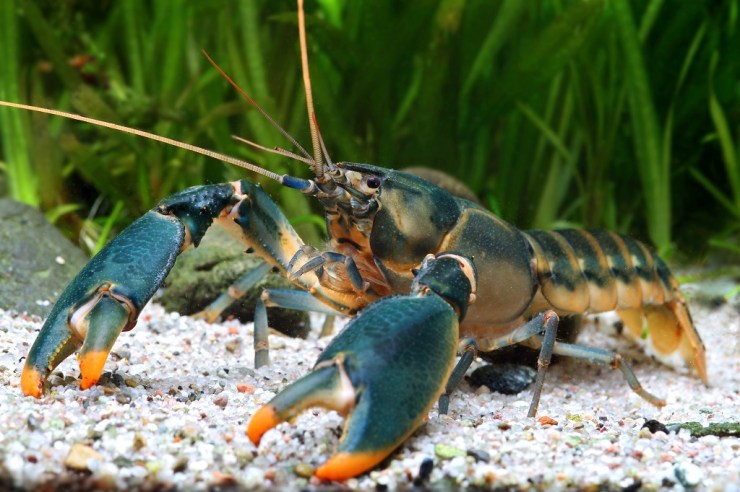
Fallicambarus devastator. Image: Chris Lukhaup

On the occasion of this taxonomic triumph it seems like a good opportunity to take a look at some interesting crayfish from around the world.

Outside biological taxonomy, crayfish are much better known as a source of food. They are eaten worldwide, but especially in the southern US, Australia, and Europe, where the Red Swamp Crayfish (Procambarus clarkii) is most commonly on the menu. As a result, the Red Swamp Crayfish has been introduced into several countries and has out-competed the local species.

Several other species are also known as invaders. The Signal Crayfish (Pacifastacus leniusculus), native to North America, is now very abundant in Europe, and is out-competing the native Noble Crayfish (Astacus astacus).

The Noble Crayfish (Astacus astacus), above, is native to Europe, but is being out-competed by the introduced Signal Crayfish (Pacifastacus leniusculus). Image: Chris Lukhaup

Another remarkable crayfish is the Marmorkrebs, a species which still has no official taxonomic name. It was first noticed in the aquarium trade in Germany in the 1990s, but no natural populations are known. But the really interesting thing about this species is that all known individuals are female: it is parthenogenetic, which means the females reproduce from eggs without fertilisation – no males involved!

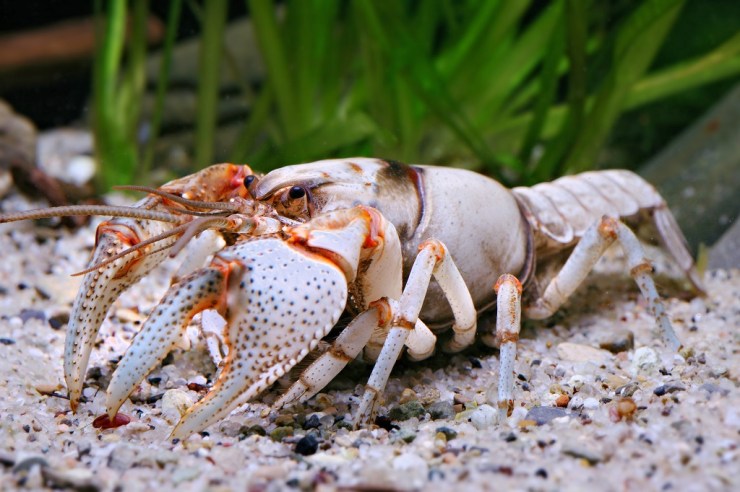
The Marmorkrebs crayfish has no official taxonomic name and is parthenogenetic – all individuals are female, genetically identical and reproduce without males. Image: Chris Lukhaup

Unfortunately, Marmorkrebs has escaped from aquaria in several countries, and is outcompeting local species due to its fast reproduction. Of most concern is its occurrence in Madagascar, where it competes for food and space with the endemic Astacoides crayfish, a much larger but slower-growing species.

Astacopsis madagascariensi, above, is being out-competed in Madagascar by the Marmorkrebs, which has escaped from several aquaria. Image: Chris Lukhaup

The Tasmanian Giant Crayfish (Astacopsis gouldi) is considered to be the largest freshwater invertebrate on the globe. Although its size has declined in recent years due to over fishing, historical specimens weighed up to 6kg and could reach 80-90 cm in length.

The completion of the new world crayfish list allows for further refinements to the conservation status of the animals too. Current Red List assessments show that 32 per cent of crayfish are already thought to be threatened with extinction, a similar number to freshwater shrimps and crabs.

It is really exciting to finally have a single source for the world’s freshwater crayfish taxonomy. Such a resource will impact a wide variety of fields that rely on crayfishes as study organisms. We hope it will also advance conservation efforts of these keystone species of highly endangered freshwater ecosystems.
– Professor Keith Crandall, George Washington University

The paper, An updated classification of the freshwater crayfishes (Decapoda: Astacidea) of the world, with a complete species list, is published today in the Journal of Crustacean Biology.

The beautiful spiral

By Mark Carnall

At this year’s Oxford Festival of Nature I ran a spotlight session on cephalopods, the group of molluscs that includes squids, octopuses, cuttlefish, nautiluses and ammonites. While many visitors recognised the distinctive shells of nautiluses, they often weren’t too sure about the animals that made them.

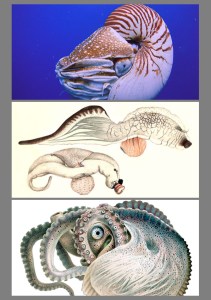
Top: Chambered nautilus (Image: Manuae) Middle: Glassy nautilus (Image: Johan Jacob Tesch) Bottom: Paper nautilus, or argonaut (Image: Comingio Merculiano)

This is not surprising because, confusingly, there are three different animals often referred to as ‘nautiluses’ and which all create strikingly similar shells or shell-like structures. This is deeply mysterious because there is no direct biological relationship between either the animals or the structures they make…

To helpful clarify just what’s going, here’s a quick guide to glassy nautiluses, chambered nautiluses and paper nautiluses, and the beautiful spiral structures they create.

Glassy nautilus

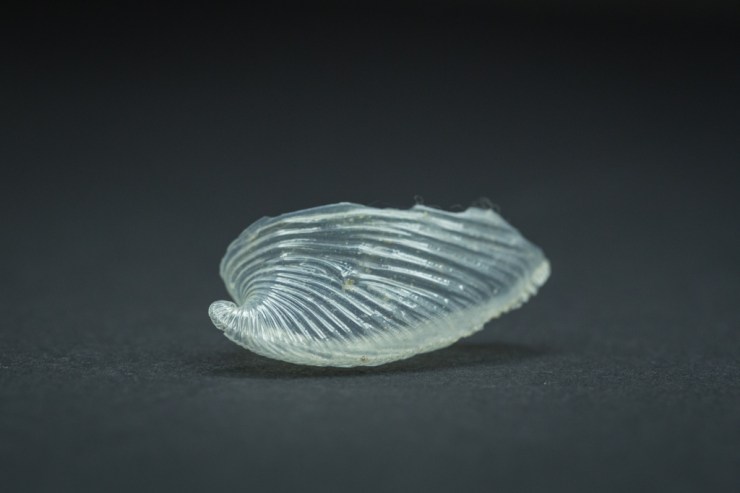
Shell of a ‘glassy nautilus’ Carinaria lamarckii.

The glassy nautilus is the outsider of the ‘nautiluses’. It is actually a free-swimming gastropod – the group of molluscs that includes snails, slugs and limpets. The glassy nautilus creates extremely fragile transparent, glass-like shells, but unlike many other shelled gastropods, it can’t retract into its shell, which only covers a small portion of the body.

These fragile shells are understandably quite rare and are said to be worth their weight in gold; unfortunately that wouldn’t be very much as they are extremely light.

Chambered nautilus

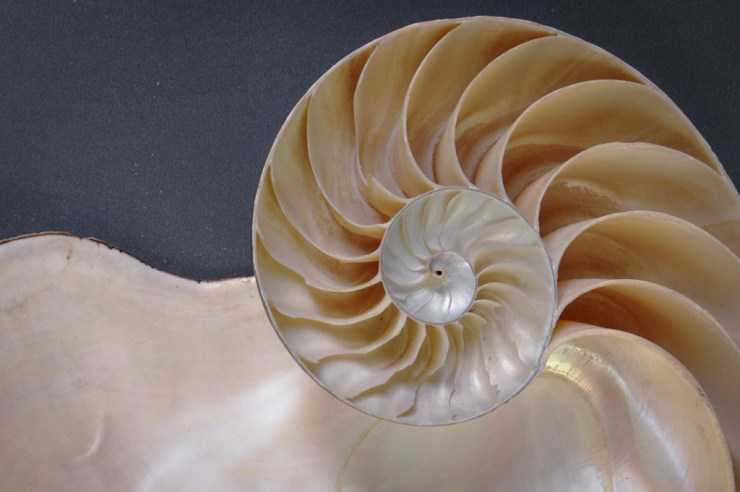
Bisected young Nautilus shell showing the internal chambers. The small tubes along the middle of the chamber walls is where the siphuncle runs, a structure that moves fluid and gas in the chambers.
Bisected young Nautilus shell showing the internal chambers. The small tubes along the middle of the chamber walls are where a structure called the siphuncle runs; this moves fluid and gas in the chambers.

Perhaps the most familiar of the three creatures here are the chambered nautilus,  cephalopods belonging to a very old group that first appeared nearly 500 million years ago. Despite being known and collected for a long time – examples of polished Nautilus shells mounted in gold and silver from the 16th century can be seen at the Ashmolean Museum – the living animals weren’t actually scientifically described until the 19th century.

‘Chambered’ refers to the internal walls of the shell which form chambers as the animals grow. The living nautilus occupies the most recently grown and largest chamber. A structure called a siphuncle runs throughout the chambers, adjusting the gas and fluid in each to aid in buoyancy.

A nautilus shell cut in half, or sectioned, is often used as a symbol to demonstrate the mathematical beauty of nature, and you’ll see it in logos worldwide. Unfortunately, as with most biology, these chambers aren’t formed with mathematical regularity; growth rates are affected by environment and diet.

It was thought that measuring the chambers in fossil nautiloids, if they were laid down regularly, could tell us how far the moon has been from Earth in the past. Disappointingly, this is not the case.

Argonauta, or paper nautilus

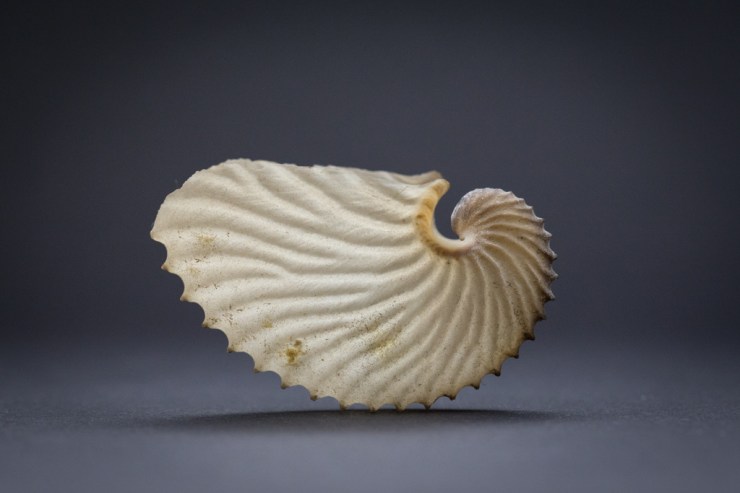
The fragile ‘paper nautilus’ the egg case and brooding chamber of an argonaut, Argonauta.
The fragile ‘paper nautilus’: the egg case and brooding chamber of an argonaut, Argonauta.

The last of our ‘nautiluses’ is the argonaut, or paper nautilus, which is a type of octopus. The structure it creates looks superficially similar to the shells of the chambered nautilus and glassy nautilus, and not surprisingly it was thought to be a paper thin shell with some affinity to the chambered nautiluses. In fact, paper nautiluses ‘shells’ are not true shells at all, but are structures secreted by female argonauts as a brood chamber for eggs.

Preparation showing series of argonaut egg cases of varying sizes.

Argonaut shells are arguably better known than the animals that make them. But unlike other kinds of mollusc shells, which can be reliably used to delineate different species, argonaut shells take a diverse array of forms across individuals thought to be of the same species. Female argonauts can also repair and replace these cases, adding to variation in their forms.

A strange similarity
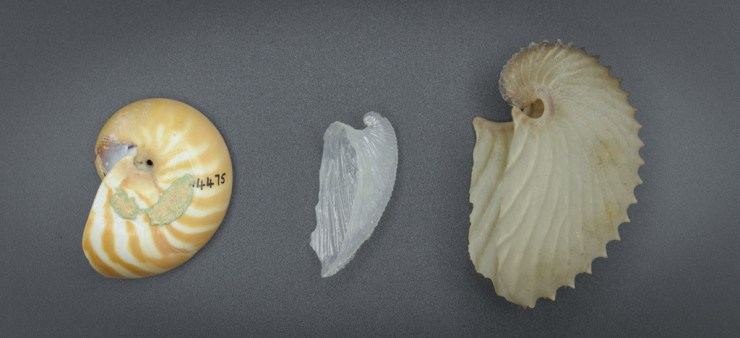
What’s striking about chambered nautilus and argonaut shells is their superficial similarity, despite the animals being in two distantly-related cephalopod groups. Both argonauts and nautiloids use their shells to remain buoyant in the water column but there are a myriad of different biological solutions to solving this problem, so why so similar?

The three different kinds of ‘nautilus shells’ from left to right chambered nautilus Nautilus, glassy nautilus Carinaria and paper nautilus Argonauta.

It’s tempting, though not scientific, to suppose that argonauts are somehow tapping into their deep evolutionary history of chambered shelled relatives; however, superficial resemblance aside, the shells of argonauts are chemically, mechanically, structurally and physiologically completely different to those of the chambered nautilus.

So how and when did argonauts evolve this egg case-making behaviour? Fossil examples provide little evidence of how it happened and don’t reveal whether case-making is the ancestral state that has subsequently been lost in related free-swimming cephalopods that brood their young differently.

So the strange similarity between these three structures – the shell of the chambered nautilus, that of the glassy nautilus (not a nautilus really, but a gastropod), and the egg case of the argonaut – remains a beautiful and intriguing mystery.