

MAKING ART WITH SWIFTS FROM THE MUSEUM’S COLLECTIONS
Between 14th May and 21st July, the mixed media artwork Fly Over My City was on display at the Museum of Natural History, delighting visitors with a visual and auditory exploration of swifts and the threats they face in urban environments. In this blog post, artist Becca Jeffree discusses working with Museum collections to create the piece, and the value of museums as venues for combining art and sciences.
While studying at London’s Natural History Museum years ago, another student had become upset with a group of artists who were drawing from the floor of the birds gallery, blocking his way. Studying birds in a cabinet was not as worthwhile, he felt, as studying in the field. Moreover, drawing seemed to him out of place within a science museum. Yet sketching specimens has historically played an important role in learning about biodiversity, and is particularly important for those whose access to wildlife is restricted.
Perhaps it is unsurprising that this discord arose in a natural history museum. Art is often separated from science in society and culture, with science tending to dominate debates about understanding nature. Museums, however, are rare places where art and science are welcomed equally and beautifully combined. Few places embody this better than Oxford University Museum of Natural History — a work of Victorian art shaped by the idea that art and science can take one another to higher levels. As historian John Holmes puts it in The PreRaphaelites and Science, the building expresses the “true nature of nature itself” through its architecture. It is a place where the study and interpretation of the natural world are cross-disciplinary.
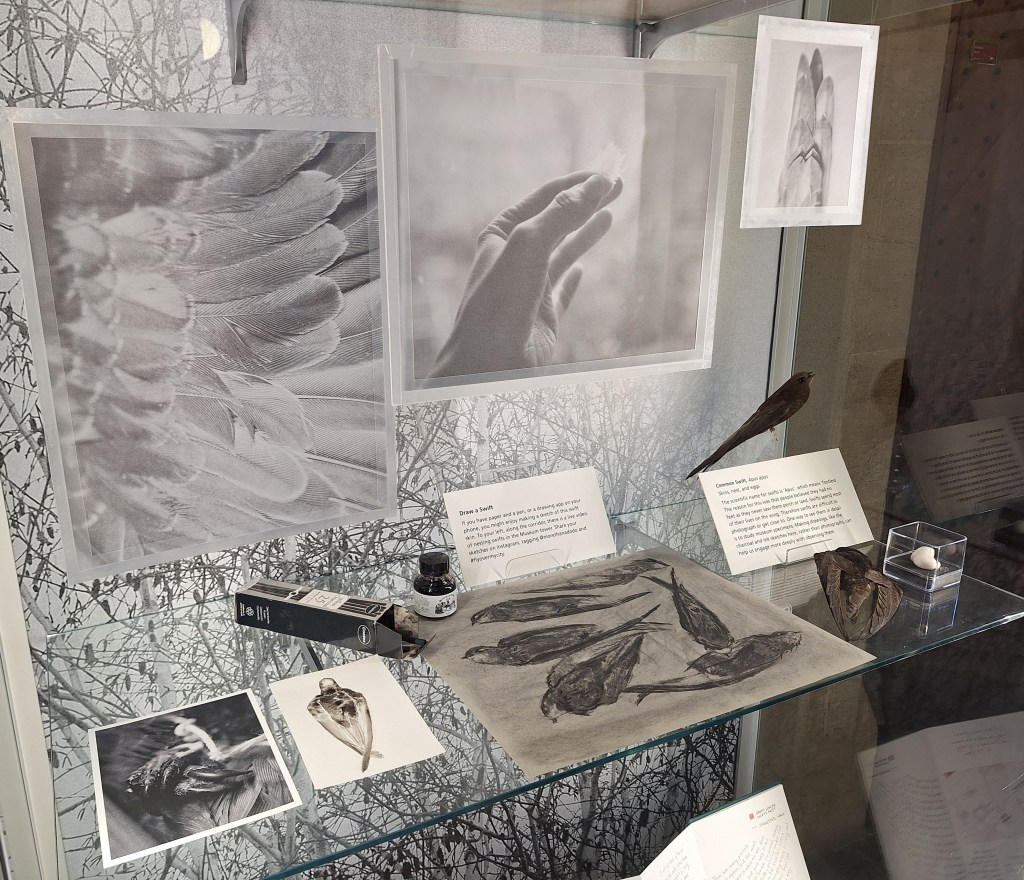
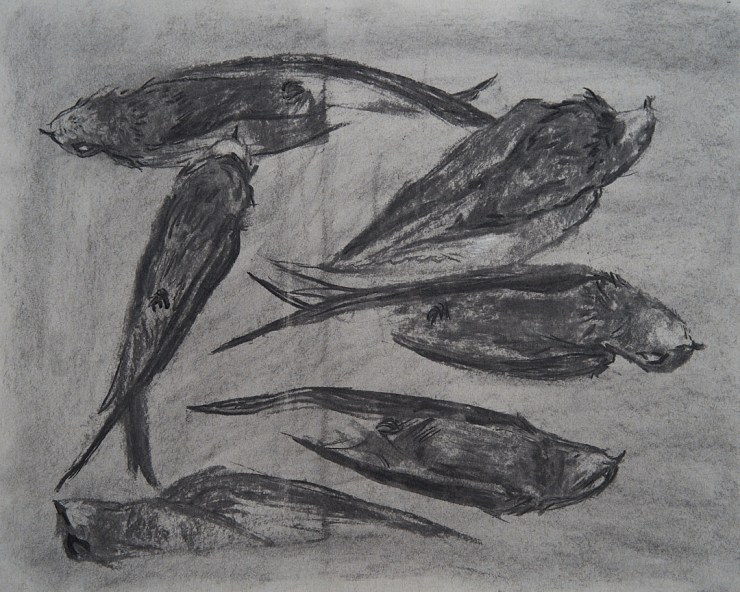
I recently collaborated with the Museum when making my artwork about the built environment and the common swift (Apus apus). Swifts are transient animals and as they rarely land they are difficult to see up close. They are found in the UK for only a short time each summer, fly fast, and are in decline. Through access to the Museum’s avian collections, I had a unique opportunity to see swift bodies up close and observe them in detail through drawing. Most of the specimens are bird skins; the skin, plumage, wing bones, skull and feet are preserved but not the internal organs, and they are not mounted like the ones we often see in cabinets. When I handled the swifts, I was asked to wear gloves to protect the specimens and avoid exposure to any harmful chemicals that may have been used to preserve them. Even though I couldn’t touch the swifts directly, I could still get to know their weight, size, colour, and notice interesting details like the shape of their chest feathers which are similar to their hummingbird relatives’.
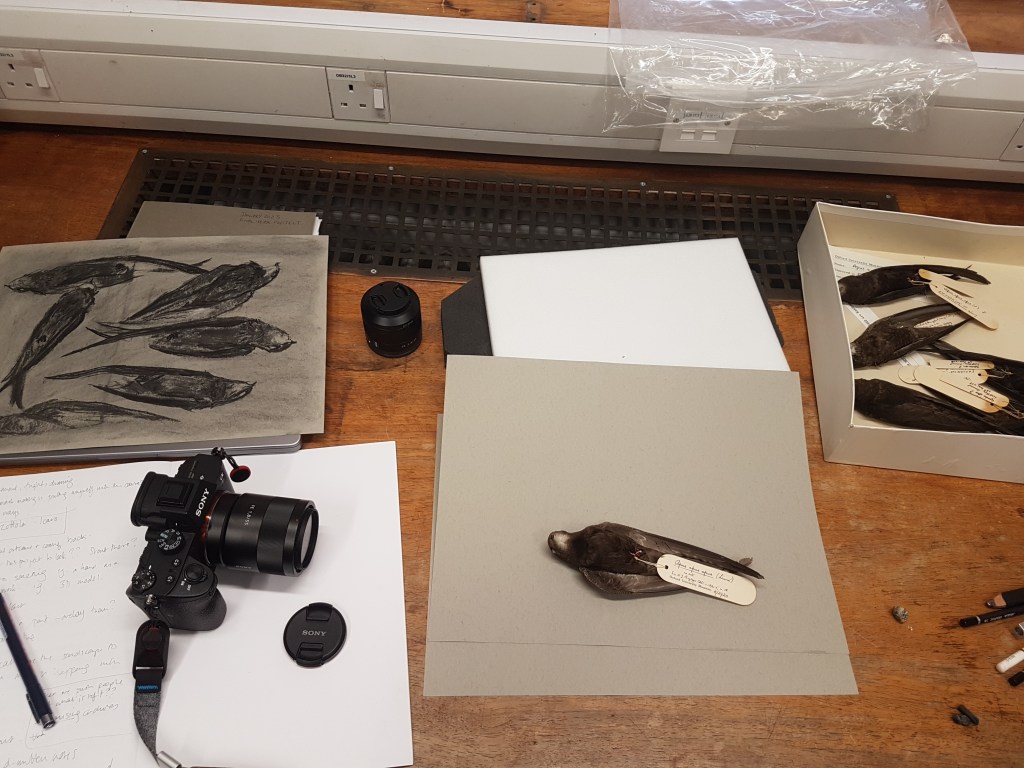
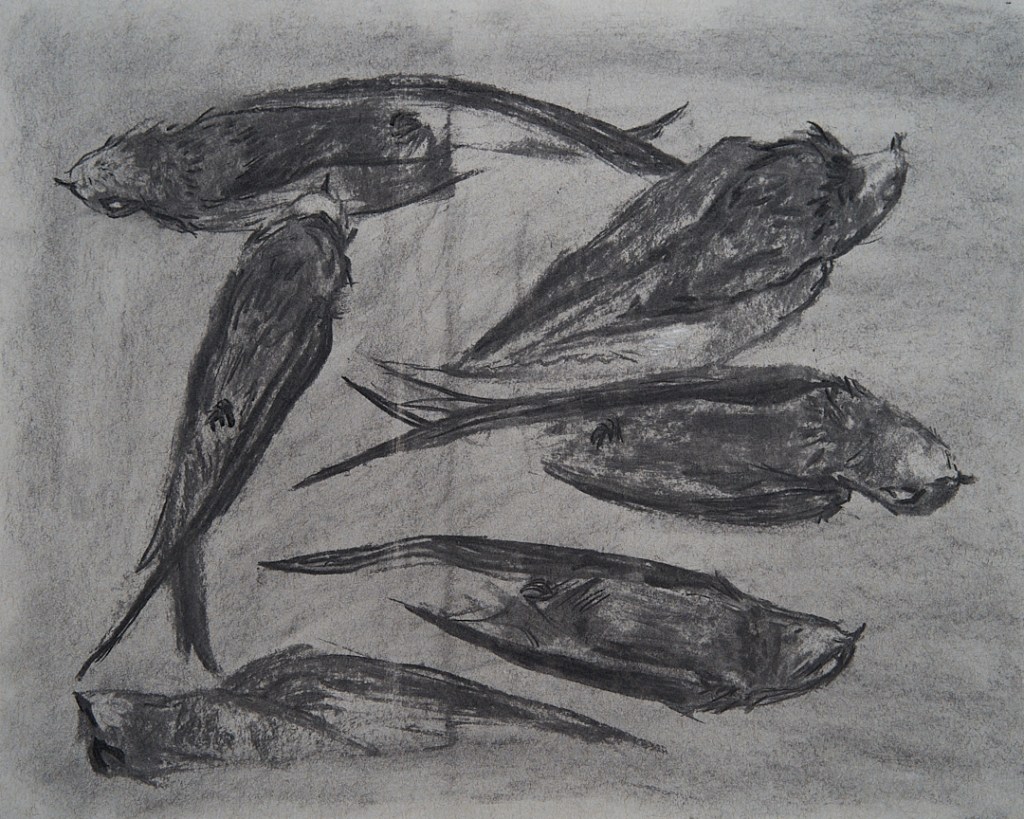
Having physical access to museum specimens allowed me to root my artwork more in science, but also to draw out further layers of meaning, by responding to my own feelings and senses. The materials I included in the work – charcoal and tracing paper – were inspired by the swifts’ weightlessness, their texture, colour and the urban environment they often inhabit. The PreRaphaelites, whose worldview infuses the Museum building, regarded art as a valid investigative method. As John Holmes puts it, “if observation yields a true knowledge of nature, then making art that records and synthesises these observations is at once a disciplined method for conducting research and the best means to convey that knowledge.” I am grateful that the Museum continues to embrace this idea today, and for the value placed on artists as researchers and communicators of its collections.
Visit Becca Jeffree’s website to find out more about the piece, and her other artwork

 More Than A Dodo
Published by