In our Bacterial World exhibition we offer a selection of ten bacteria that have changed the world, some in profound ways. In this series of short fact-file posts we present one of the ten each week. This week’s bacteria are…
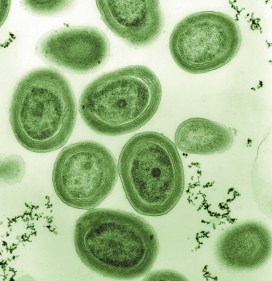
Prochlorococcus
– the Oxygen-Makers
Where they live Prochlorococcus bacteria grow anywhere damp, in salt water or fresh. They are similar to the blue cyanobacteria which thrived in the far-distant past on Earth.
Why they are important
2.3-2.4 billion years ago, cyanobacteria in the oceans began producing oxygen for the first time, changing the Earth’s environment completely.
How they are named
The Greek word for blue is cyan, giving the blue cyanobacteria their name. Until recently, they were known as blue-green algae, but cyanobacteria are actually an earlier and simpler form of life than algae.
How they work
Like all cyanobacteria, Prochlorococcus bacteria harvest energy from the Sun, absorb carbon dioxide and give out oxygen – the process called photosynthesis.
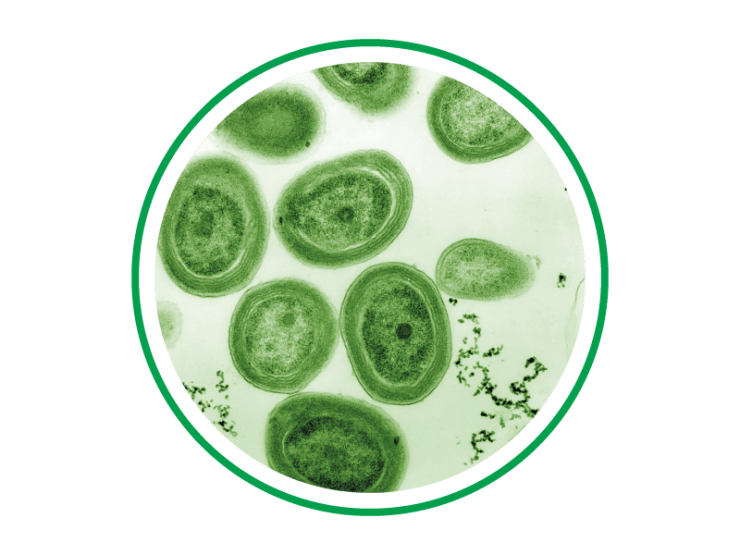
Top image: Transmission Electron Micrograph (TEM) image of Prochlorococcus coloured green
Copyright: Luke Thompson, Chisholm Lab; Nikki Watson, Whitehead (MIT), 2007
This article is taken from European research magazine Horizon as part of our partnership to share natural environment science stories with readers of More than a Dodo.
Researchers have found that many internal defence mechanisms that are quiet in rural birds are much more active in those in cities. These biological pathways are pumping out extra antioxidants, immune system cells and detoxifiers – a sign that urban life is challenging their health.
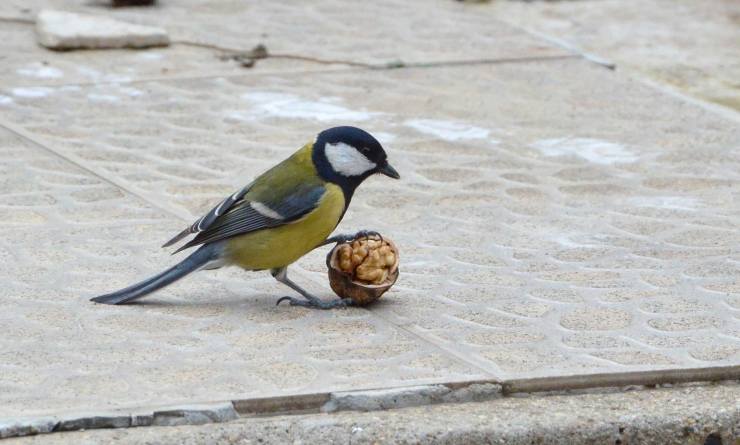
Globally, bird numbers are dropping. According to figures published by conservation organisation BirdLife International last year, 40% of bird species have declining populations while 7% are increasing in number. BirdLife cites urbanisation as a force destructive to many bird species, but a few do well in cities, such as the adaptable great tit, whose population is on the rise.
City wildlife have a different experience of predators, food availability and diseases than those in the country. This may be helpful to them – for example, humans leave food out for birds in their gardens. But they also have to cope with a fragmented habitat and with noise, air and light pollution. Scientists want to understand these forces in order to get a better grasp of the dramatic drop in some bird populations.
A research group in Sweden has been studying great tits living in 500 nestboxes in the city of Malmö, and a similar number in the forest. Great tits were chosen partly because they are well-studied and also because their use of nestboxes makes it easy for researchers to locate and examine them. The researchers check the boxes weekly during spring, weighing chicks with tiny balances, measuring them with adapted rulers, and tapping them for blood, according to Dr Hannah Watson, an ecologist at Lund University in Sweden.
An early study revealed that the urban birds had higher levels of antioxidants circulating in their blood than rural birds – a defence mechanism against attack from free radicals – toxic versions of oxygen atoms.
‘Exposure to air pollution would generate more free radicals (in the body) which can then increase what’s called oxidative stress – a kind of cellular level stress,’ said Dr Watson. ‘The free radicals cause damage to DNA, lipids, proteins – all the macromolecules in the cell.’
Switched on To explore the consequences in more detail, she compared RNA (a counterpart to DNA) samples between the two populations, in a project called URBAN EPIGENETICS.
While genes code for the structure and maintenance of a living thing, they only function if they are switched on – or expressed. This happens via a bit of chemistry, methylation, which can be triggered by environmental factors.
Dr Watson found that genes responsible for the city birds’ immune responses had been upregulated, implying that they were fighting off more infections than rural birds. Similarly, other genes, such as those for neutralising poisons, for inflammation and for antioxidant production to combat free radicals, were also switched on.
‘It’s only the birds of really good quality that are able to actually survive the nestling period in the city.’
Dr Hannah Watson, Lund University, Sweden
‘We showed big differences in terms of the genes that are expressed and the levels they are expressed at,’ she said. ‘We interpret this as being consistent with our prediction that birds living in the city are exposed to more of these environmental stressors.’
But this doesn’t necessarily mean that urban birds are suffering, says Dr Watson. ‘It could just indicate that they’re able to respond and cope.’
To understand whether the birds were taking urban stress in their stride, Dr Watson joined a study led by one of her colleagues in which they measured the caps – telomeres – at the ends of the birds’ chromosomes.
Over the last decade, scientists have shown that telomeres gradually shorten each time a cell divides, and also in response to other stressors, eventually reaching a stage of senescence, or deterioration, which corresponds to an organism’s old age and death. In fact, the length of a creature’s telomeres, it turns out, seems to foretell its lifespan. The team conjectured that, if the urban stresses were actually affecting the great tits’ ability to survive, this would be revealed in the lengths of their telomeres.
They found that city chicks that were ready to fledge had on average shorter telomeres than those of fledgling forest chicks.
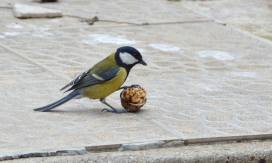
Great tits living in urban areas fight off more infections than their rural cousins. Image Credit – CC BY-SA 4.0
Weeded out Those with the shortest telomeres were less able to cope with urban stresses and died before reaching adulthood. Paradoxically, that meant that adult great tits in the city were likely to be stronger than the average forest adult because the weaker ones had been weeded out.
‘It’s only the birds of really good quality that are able to actually survive the nestling period in the city,’ said Dr Watson.’ In fact, the researchers think that while multiple stressors in the city are wiping out younger, weaker birds, they may not be of much consequence during adult life for those tough enough to make it that far.
Urban living may also mean that the social structures that served a species well in the natural habitat have become no longer necessary or even harmful.
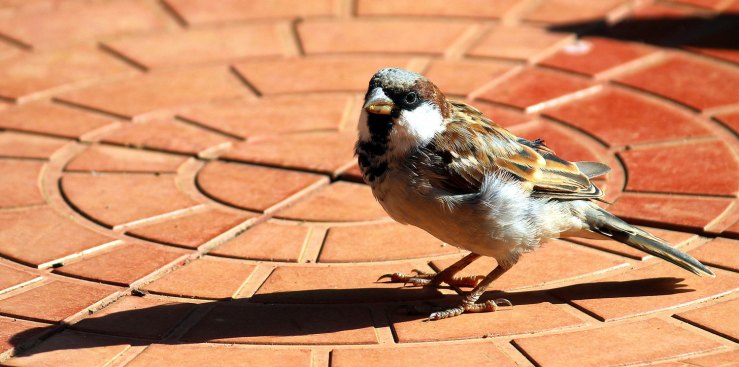
House sparrows in the wild, for example, compete with each other for food according to a dominance hierarchy that is determined largely by size. But in cities, there are two key differences – food is more abundant and house sparrows are smaller, possibly because they don’t need to store body fat since winters are milder. Either factor could undermine the way they normally compete for food.
Likewise, house sparrows are known for the way they cooperate to mob potential predators. But when the danger shifts from a bird of prey to a cat or dog, this behaviour could become redundant.
With their numbers in decline, but still strong at as many as 1.3 billion globally, their toughness, aggression and ability to survive around humans suggests they seem to do well in urban areas.
Dr Lyanne Brouwer, an animal ecologist at Radboud University Nijmegen in the Netherlands, is studying house sparrows in a variety of urban habitats as they engage in their cooperative and competitive behaviours in a project called UrbanBird, which runs until 2020. She is using observations gathered by ordinary people, as well as her own field work to understand the causes and longterm effects of any behavioural change in the way house sparrows interact with each other. Ultimately this could help predict how urbanisation could affect other species and biodiversity.
‘It’s really interesting to see that all the factors that could affect social behaviour, like for example food availability or the predators that are around, are all very different in cities – so how would that affect these social behaviours? It turns out there is basically nothing known about how such behaviours change in cities,’ she said.
The research in this article was funded by the EU.
The Museum’s building and collections provide inspiration for scientists and artists alike, often acting as a springboard for the creation of new work. Following a year here as one of three poets-in-residence, Kelley Swain returned to lead a session with Oxford Scholastica students, showing how museum objects can inspire creative writing.
by Kelley Swain
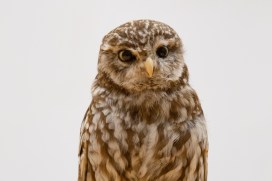
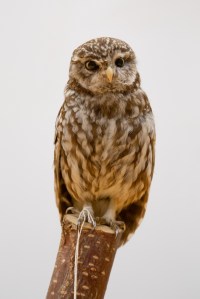
The experience of looking at the taxidermy Little Owl (Athene noctua) provided inspiration for Tallulah’s poem
Delving into the archives and behind-the-scenes stores, meeting researchers and conservators, and finding inspiration in the architecture, history, and collections were all part of my residency at the Museum during 2016. I’ve always written poetry inspired by the history of science and its fascinating objects, and I have come to appreciate museum objects not only as inspiration for my own poetry, but as teaching tools, or “object lessons” to inspire others.
It was lovely to be asked to lead a new series of these “object lessons” for a group of summer school students at Oxford Scholastica. Some of them had never encountered taxidermy, let alone a room full of articulated, stuffed, and preserved specimens. Awe abounded – both its wonder and, for some, its horror. It was a great opportunity to teach the students not only poetry, and why writing poetry inspired by museum objects can be moving, thoughtful, and important, but also to teach them about conservation and preservation.
Here we share the work of 13 year old Tallulah Xenopoulos, who created this poem following an encounter with a taxidermy owl during the workshop:
Stupid dead owl.
The wooden door opens slowly, and, although there’s a green stone with bumpy edges and
shiny sides, a jar filled with silky insects and a board with beautifully painted butterflies.
Both your eyes land on the owl.
His feathers brush down his back and he stares down at his lightly spotted blanket where his
delicate legs connect and hatch onto the bumpy branch.
His eyes
And his beak
And legs
And nails
He stares at you almost like he knows what you’re thinking – which is dumb because he’s
dead – but he scares you and fascinates you at the same time.
A piece of dust has fallen beneath his eye and I bet he’d love to just brush it away, cause
he’s like that.
But also.
He’s an owl.
A stupid.
Dead owl.
With nothing but stuffed insides and scrawny legs.
And a heart. A dead heart which they slipped out and replaced with stuff.
-”do you think they stuffed him alive?”
The boy next to you whispers. You don’t reply. But the thought of death. And of his feathers
falling the second he felt the blood rushing through him go cold and dusty, travels across
your mind.
“Do you think he knew he was about to be?” you answer
Because the poor clueless animal looks as if he knew nothing.
knows nothing.
Kelley Swain’s own poetry from the Museum residency is featured in Guests of Time, a beautiful hardback volume edited by Prof John Holmes which features new work by John Barnie and Steven Matthews, alongside 19th-century poetry from writers linked with the early days of the Museum. Together, the poems in this anthology are a tribute to the Pre-Raphaelite origins of the Museum and a rejuvenation of its artistic legacy.
As part of the Museum of Natural History Move Project Team I have helped move and repackage tens of thousands of specimens since 2017, removing boxes filled at any time over the last 150 years from their old storage location in a deconsecrated church building near Oxford.
At our new facility we have been documenting and repacking the contents in new, clean containers and placing them in environmentally stable, safe warehouses specially adapted for museum storage.
Some objects are trickier to store than others. Things that are long, heavy, curvy and fragile are tricky. Mammoth tusks are long, heavy, curvy, and fragile. This means:
They’re not going to fit in a normal box.
They’re going to be difficult to move around.
That beautiful curve will mean that all the weight of the tusk may be bearing down on just two small contact points where the tusk meets the storage surface.
Because those points are fragile, they’re likely to get damaged.
A lot of weight can rest on small areas of the tusk, putting strain on the specimen and potentially causing damage
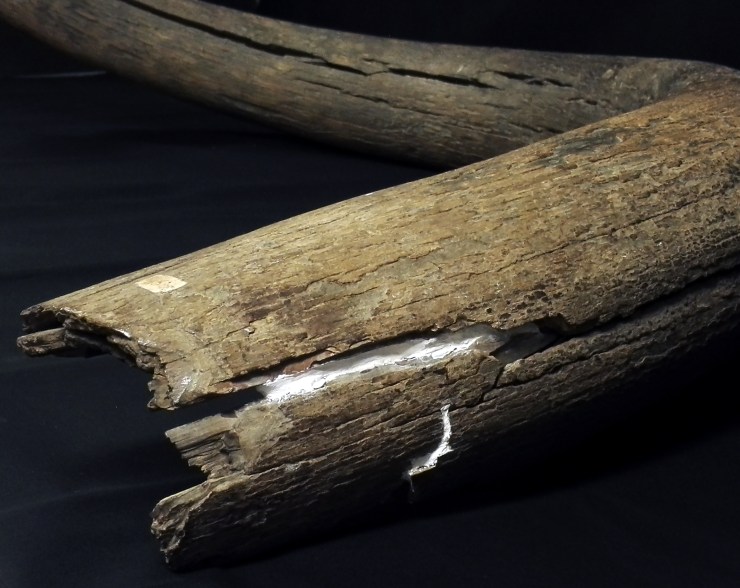
The tusk in this article is a prime example. The area nearest the camera in the photo above provided just a tiny point of contact with the floor and was very loose, almost to the point of detaching. It needed to be repaired, and stored in such a way that it wouldn’t get damaged again.
Pete Brown carries out delicate conservation work on the mammoth tusk
I filled some of the missing areas around the fragile area with an easily removable fine acrylic putty to prevent further movement and loss of the original material. A cotton tape sling helped to suspend the fragment in place during the work.
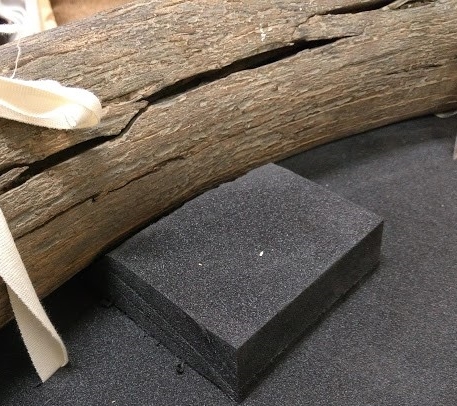
Thick plastazote provided a sturdy, slightly yielding bed for the tusk to lie on in storage, but to prevent the tusk from getting damaged again more needed be done to reduce the pressure on the points of contact.
The dark grey foam material, plastazote, is often used as a cushioned support for museum objects
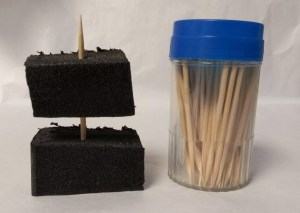
I cut depressions into the plastazote where the tusk naturally lay to increase the total surface area supporting the weight of the tusk, and fixed plastazote wedges and supports in place with cocktail sticks to again increase the contact area and prevent movement. Cotton fabric ties, fed through slits in the plastazote, also helped to guard against unwanted movement.
Cocktail sticks: not just for cheese and pineapple
The repaired end of the tusk is now only supporting a fraction of the weight it used to, and once the tusk and the plastazote bed are placed into their new custom-made crate it will be ready for long-term, safe, damage-free storage!
The end of the tusk after treatment
To keep up with all the move project action, follow the museum hashtag #storiesfromthestore on Twitter @morethanadodo.
By Ricardo Pérez-de la Fuente, Museum Research Fellow
One of the earliest and toughest trials that all organisms face is birth. In egg-laying animals, the egg shell that has protected the embryo during its early development ultimately becomes a hard barrier between the animal and its life out in the world. The bursting of the egg is literally a threshold moment, and there are many ways to crack an egg…
Some animals break the egg membranes using dissolving chemicals; others physically, mechanically tear their way through the shells. Among the latter, a great diversity of animals use specialised devices called egg bursters. These vary greatly among the many arthropods and vertebrates that use them, but perhaps the most famous example is the ‘egg tooth’ that is present on the beak of newborn chicks.
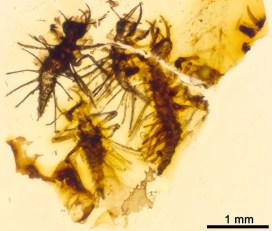
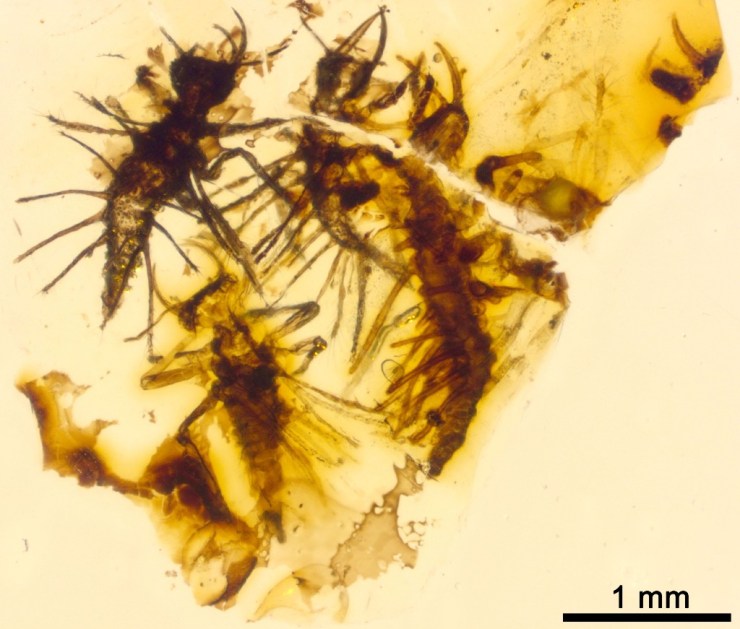
Four complete Tragychrysa ovoruptora newborns preserved together with egg shell remains and one egg burster. Modified from the open access Palaeontology paper.
My colleagues and I have found an exceptional fossil in 130 million-year-old Lebanese amber. Inside, trapped together are newborn larvae from Green Lacewings, the split egg shells from where they hatched, and the minute egg bursters that the hatchlings used to crack the egg. This is a first: no definitive evidence of these specialised egg-bursting structures had been reported from the fossil record of any egg-laying animals, until now.
The finding has been recently published as open access in the journal Palaeontology. Because multiple newborns were ensnared and entombed in the resin simultaneously, the fossil larvae have been described as the new species Tragichrysa ovoruptora, meaning ‘tragic green lacewing’ and ‘egg breaking’. A sad event, indeed, taking place in an ordinary day 130 million years ago in the Cretaceous forests of Lebanon, yet a happy circumstance now that we can take a privileged glimpse into the adaptations and behaviours of these fascinating tiny creatures.
The hatchlings from modern Green Lacewings open a slit on the egg with a ‘mask’ bearing a saw-like blade. Once used, this ‘mask’ is shed together with the embryonic cuticle and is left attached to the empty egg shell.
With the help of Amoret Spooner, Collections Manager at the Museum, egg clutches from modern green lacewings were found in the Museum collections. These eggs happened to have the intact egg bursters still attached to them, and proved to be crucial to understand that we had the same structures preserved in the amber together with the newborn larvae.
Two Tragychrysa ovoruptora newborns preserved together with egg shell remains and two visible egg bursters (right inset). Modified from the open access Palaeontology paper.
Green Lacewing larvae are small predators that often carry debris as camouflage, using their sickle-shaped jaws to pierce and suck the fluids of their prey. Whereas the larvae trapped in amber differ significantly from modern-day relatives, in that they possess long tubes instead of clubs or bumps for holding debris, the studied egg shells and egg bursters are remarkably similar to those of today’s green lacewings.
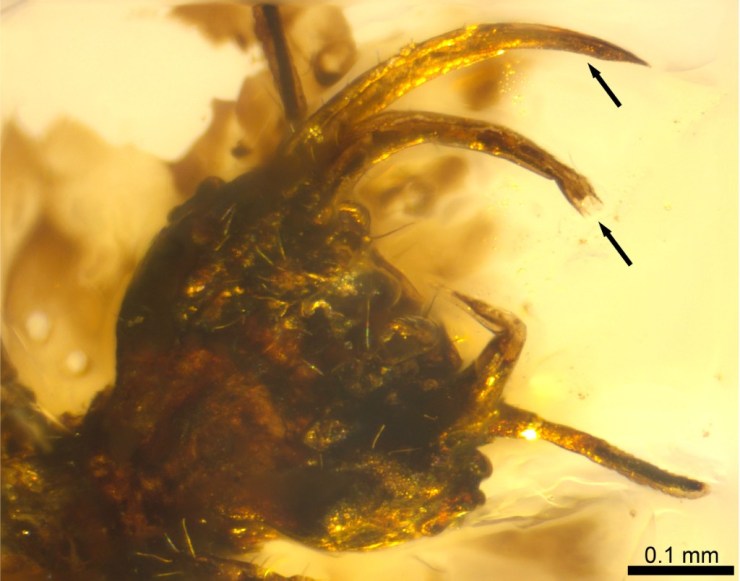
The larvae were almost certainly trapped by resin while clutching the eggs from which they had freshly emerged. Such behaviour is common among modern relatives while their body hardens and their predatory jaws become functional. Indeed, the two mouthparts forming the jaws are not assembled in most of the fossil larvae, which indicates, together with the large relative size of the head and legs, that they were recently born.
Detail of a head with the jaws still dislodged, indicating that the larva was recently hatched when it was ensnared by amber and the jaws had not yet had time to fully assemble.
It may seem reasonable to assume that traits controlling a life event as decisive as hatching would have remained largely unchanged during evolution. In fact, we see in very closely related insect groups different means of hatching that can entail the loss of the egg bursters. So the persistence of a hatching mechanism in a given animal lineage through deep time can’t be determined without direct proof from the fossil record.
Reconstruction of two Tragichrysa ovoruptora newborns clutching the eggs from where they recently hatched, moments before they were trapped by resin. Larvae colour and egg stalks are conjectural. Extracted from the open access Palaeontology paper.
This new discovery shows that the mechanism green lacewings use to crack the egg was already established 130 million years ago. Overall, it represents the first direct evidence of how insects hatched in deep time, egg-bursting their way through into life.
*
The hatching mechanism of 130-million-year-old insects: an association of neonates, egg shells and egg bursters in Lebanese amber byRicardo Pérez-de la Fuente, Michael S. Engel, Dany Azar and Enrique Peñalver is published as open access in Palaeontology this month.
Earlier this year University of Plymouth illustration student Rachel Simpson teamed up with our research fellow Jack Matthews to ‘bring the oldest multi-cellular organisms back to life’. Rachel tells us about the process of working with some of the most ancient fossil material and reveals the results of her illustrations and modelling.
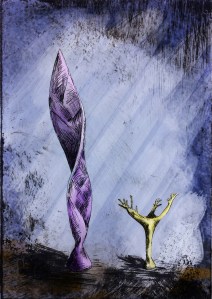
Illustration by Rachel Simpson, created in collaboration with the Museum
In August 2018 I was lucky enough to travel to Newfoundland, Canada with Dr Jack Matthews to learn about and illustrate some of the extraordinary fossils found there. A highlight of the trip was going down onto the fossil surface – known as the MUN surface – to look at examples of organisms such as Beothukis, Charnia and Primocandelabrum, all of which date from the Ediacaran period, over 550 million years ago.
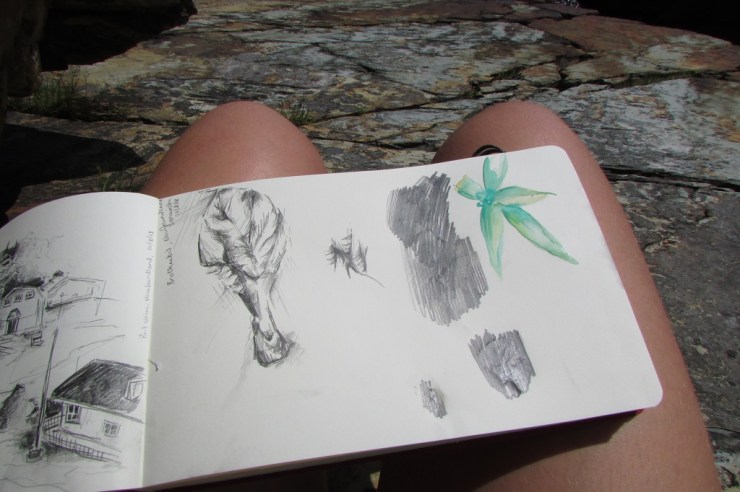
The MUN surface is the location of the fossils that I had worked on for my university project. I had spent the previous months sketching, drawing and bringing these organisms back to life from silicon casts, so it was amazing to be able to see the real specimens in situ and to sketch from the fossil surface.
Sketching directly from the fossils also provided a new challenge as I was unable to control factors such as the lighting, which is crucial to seeing the fossils clearly. Nonetheless, I learnt a lot about drawing on location.
Sketching at the fossil surface
While visiting Port Union I was able to use some of the old printing presses held by the Sir William F. Coaker Heritage Foundation to create work inspired by the fossils I had seen in the surrounding area. I love using printmaking in my own illustrative practice so it was a great experience to get to use these old presses (image at top of article).
We also had the chance to give a radio interview and talk to the Port Union community about the work that Jack and I had done, showing how science and art can work together.
On my last day in Port Union I was invited by a local potter to make some ceramic representations of the fossils I had been drawing there. I created models of Fractofusus and Aspidella, and discovered that re-imagining something in three dimensions is a very different process to recreating it as a drawing.
Rachel created ceramic representations of some of the Ediacaran organisms
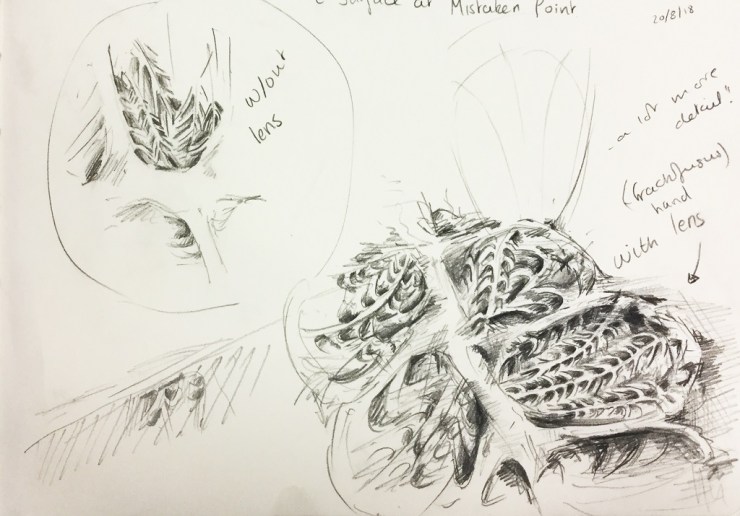
For the final three days of the trip we relocated from Port Union to Trepassey to visit the Mistaken Point UNESCO World Heritage Site. Here, I saw the highly preserved Fractofusus specimens and made some more sketches. Using a small hand lens I was able to draw all the details that are invisible to the naked eye.
Using a hand lens allowed Rachel to pick out details in the Fractofusus fossil
Drawing on location in Canada provided a better idea of the organisms in relation to other surrounding organisms, something that is more obscure when working from museum specimens. This definitely informed my practice and meant that artwork created after the trip was more representative of the science.
When I returned to England, I created some new prints inspired by my time in Newfoundland, the fossils that I saw, and the printing process I was able to use in Port Union.
A set of prints made by Rachel based on her work in Newfoundland











 More Than A Dodo