Where Do We Come From? What Are We? Where Are We Going?


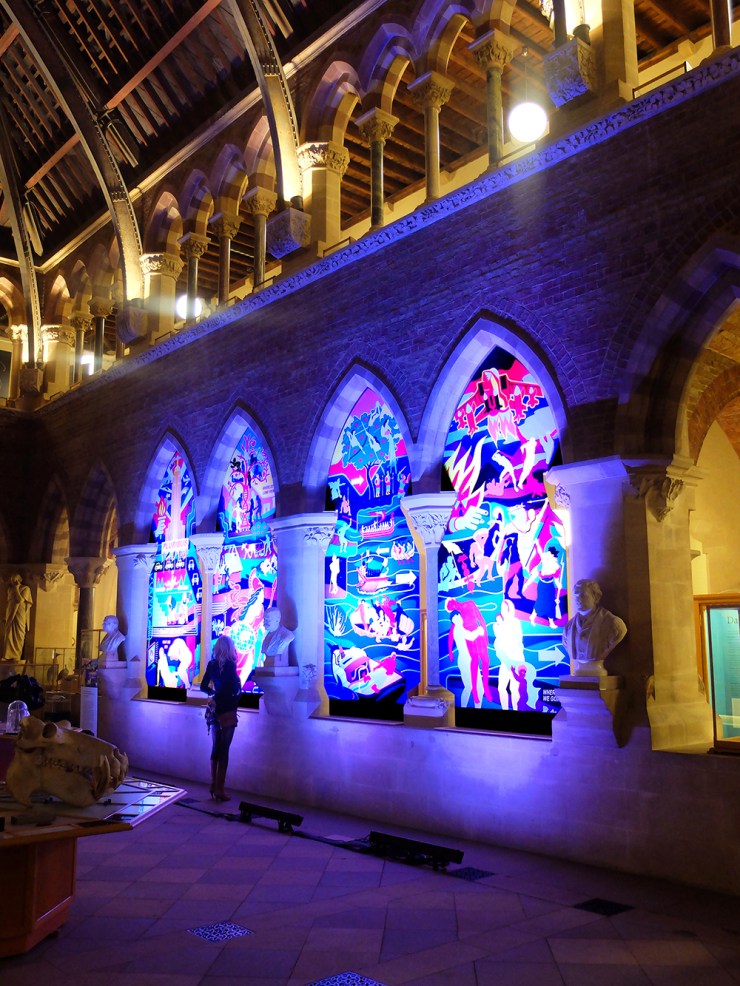
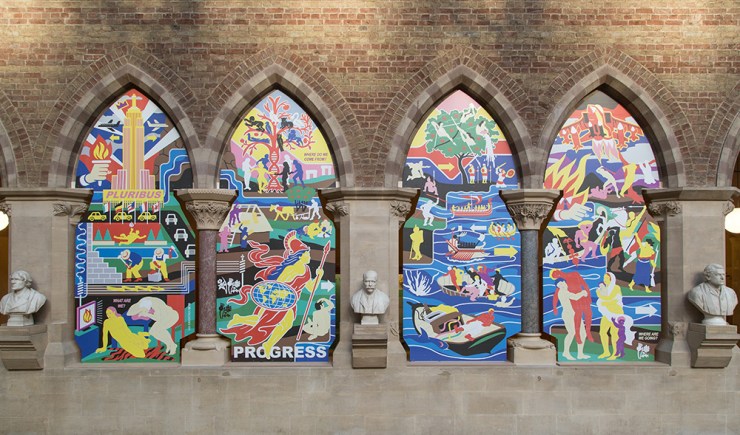
These are some of the big questions asked in our current special exhibition, Settlers. It’s also the title of a new artwork by Ian Kirkpatrick that has just been commissioned by the Museum.

You may remember, back in July we put out a call for artists to respond to the main themes of the upcoming Settlers exhibition. We received an incredible response, with almost 100 proposals, so needless to say we were spoilt for choice! After several rounds of shortlisting, discussion and deliberation, we chose Ian Kirkpatrick, a Canadian artist now based in York.

Lit up for the Settlers exhibition launch.
Credit: Ian Kirkpatrick

We were excited by Ian’s bold iconography and references to the history of art and design, while using shapes and colours usually seen on contemporary street signage. His approach to the themes and issues around migration, genetics and settlement were innovative and brave. We also couldn’t wait to see how his work would look in our Victorian neo-Gothic building.

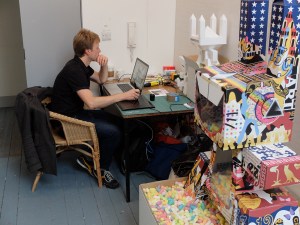
Ian working in his studio. Credit: Ian Kirkpatrick

Over a period of four months, Ian researched, planned and created his spectacular final piece Where Do We Come From? What Are We? Where Are We Going? Here he explains a little about his artistic process:
 

Most of my projects begin with a period of research – often looking at historical events or interesting facts related to the brief. I often sketch out a very rough layout of the design in my notebook, then create the actual artwork directly onto the iPad or computer. Because I use vector-based software, I can easily rearrange or modify graphics – so the design is constantly shifting until the artwork is finished.
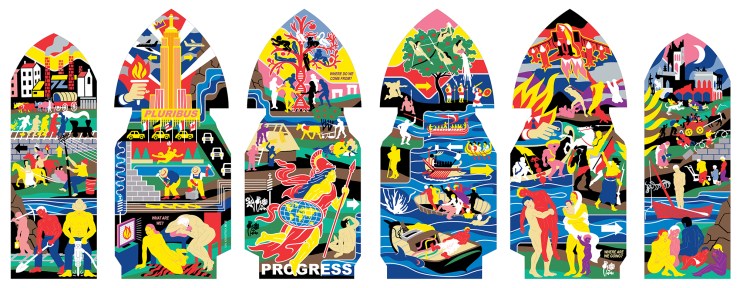
Ian Kirkpatrick’s final design. The two smaller panels (L and R) can be seen on display in the Settlers exhibition gallery.

Ian created a series of six panels that explores the social and natural causes behind human migration, both in ancient times and in the present day. It presents historical and modern peoples moving across a landscape in response to conflict, climate change and urbanisation, and remixes imagery from classical paintings alongside iconography from Great War postcards, Roman coins and the Bayeux Tapestry.
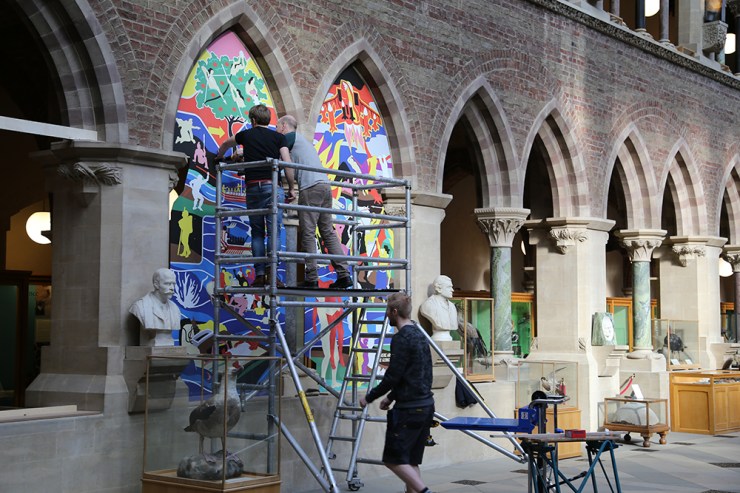
Ian, Peter Johnson and Adam Fisk installing the main panels of the artwork.

Of course, in a building like ours, the installation of such a large, bold piece of work would never be easy. Peter Johnson, the Museum’s Building Manager, came up with an ingenious solution to hold the panels into the arches, without damaging the masonry by drilling or glueing.
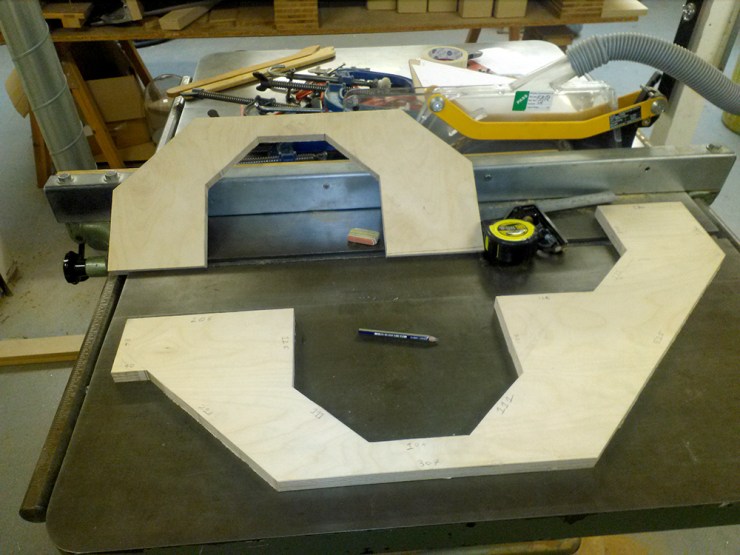
Pieces prepared in the workshop, to sit on the capitals and support the artwork

Hand-cut pieces of plywood were made to snugly fit round the capitals, so that the Dibond aluminium sheets don’t rest on the stone.
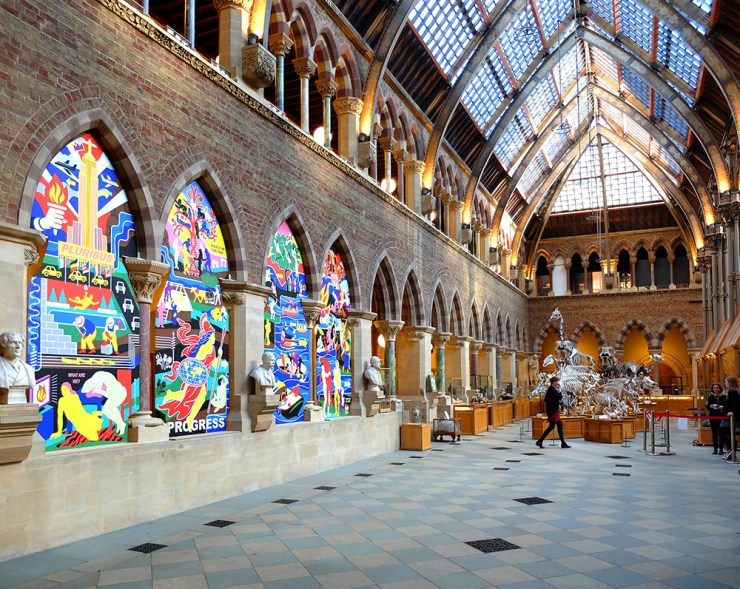
Credit: Ian Kirkpatrick

So, standing back and looking at the finished piece, looking resplendent in the winter sunshine and attracting the attention of hundreds of museum visitors, how does Ian feel?

The project was a lot of work – but it’s also been very satisfying to see it finally installed. Although the piece initially started as a comment on contemporary British settlement, it evolved into something that explored global migration throughout all of history.  Trying to find a way to tackle a theme that big, while still remaining visually coherent, is quite tricky!  But I was really pleased with the results and love seeing the finished piece housed within the magnificent neo-Gothic architecture of the Museum!
 

The crucial cortex

Lance Millar_Developmental Anatomy_14Oct2017.jpg-large

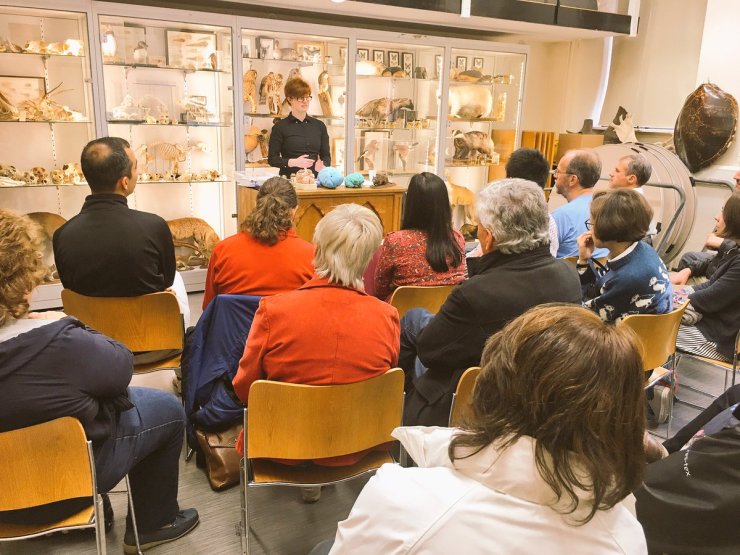
University of Oxford PhD student Lance Millar recently ran one of our Brain Spotlight events as part of the Brain Diaries exhibition programme. Here, Lance explains his research into neurodevelopmental disorders and possible treatments.

The brain has always been a fascinating organ for me. It is the site of our intelligence, our problem-solving and social skills, and it allows us to connect our senses to the world around us.

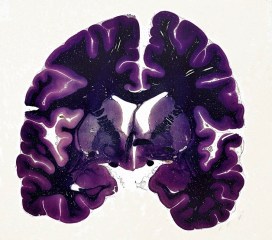
The large, folded outer part of the human brain is called the cortex, and is responsible for decision-making, language, face recognition, and a lot of the other things that I like to think are what make us human. The word cortex comes from the Greek for husk or outer shell, which underestimates the importance of what the cortex does.

Humans can survive with damage to the cortex, but depending on the part of the cortex that is damaged, a range of disabilities can result. People who have had a stroke can lose part of their cortex, leading to limb paralysis, loss of speech, or loss of memory, depending on the site of the damage.

B0009564 Human brain, coronal section, LM
Cerebral cortex – Professor Michael R Peres – Wellcome Images

Some people are also born with a developmental problem in the cortex, and are said to have a neurodevelopmental disorder. Such conditions are thought to include autism, schizophrenia, ADHD, and even dyslexia – all fairly common conditions. The damage to the cortex is subtle and complex in these conditions, and scientists are still working out exactly what happens to the brain during its prenatal development.

I am studying one particular neurodevelopmental disorder caused by lack of oxygen at birth. It is known to medical specialists as neonatal hypoxia ischaemia. The image on the right shows a cross-section MRI scan of a normal newborn human brain, alongside some babies who have been damaged by oxygen deprivation. You can see that the brains are smaller, the cortex is less folded and it takes up less space inside the skull.

Woodward
MRI scans of normal newborn brains alongside those of babies who have been damaged by oxygen deprivation. Image: Woodward et al., New England Journal of Medicine, 2006

Scientists still don’t know how to protect the newborn brain from these injuries. Some are caused by inflammation which is a normal response to illness, but can wreak havoc in the confined space of the skull. Some is caused by the presence of free radicals, which are thought to contribute to ageing and organ failure, as the newborn brain doesn’t have many antioxidants to fight these chemicals. It’s also possible that the electrical signals that neurons within the brain send to each other contribute to the damage when there isn’t enough oxygen to feed them.

So what can we do to treat oxygen deprivation at birth? One breakthrough treatment currently available is known known as hypothermia. In this technique, the baby is cooled to 33℃ which slows down the brain-damaging chemical reactions which in turn protects the brain. This is currently the only treatment available, but I am involved in the study of possible alternatives.

We don’t want to introduce any drugs to the baby’s system as they might be harmful to normal development. So scientists are currently working on treatments which help the baby’s natural body proteins to protect the brain. I do this by looking at neurons under the microscope, and identifying proteins expressed by these neurons using fluorescent probes known as antibodies.

Neurons under the microscope
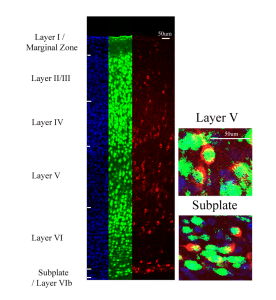
An example of neurons under the microscope. Image: Lancelot Millar

These neurons are expressing neuroserpin, a natural brain protein which decreases inflammation and cell death. I’m looking at exactly where neuroserpin is expressed in the brain, how it can be upregulated in response to oxygen deprivation, and how its chemical reactions could be used to protect the brain.

Another way to help people with neurodevelopmental disorders is to better understand how the cortex connects to other parts of the brain and how it can carry out complicated decisions. There is still so much to understand about the complexity of the human brain, and what seems like fundamental research could generate the springboard for new ideas for neurodevelopmental disorder treatments.

To explore the structure of the human brain and compare it to that of other animals see the Brain Diaries Brain Explorer below.


Rehoming a dinosaur

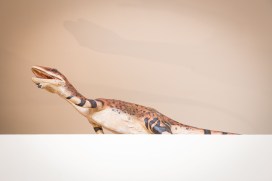
Last summer we ran an unusual competition: finding a new residence for our four metre-long model of Utahraptor ostrommaysorum. It had been hibernating in one of our off-site stores for a while, but following a reorganisation of collections we needed to find a new place for it to live. The competition to rehome the dinosaur was fierce, with 200 venues across the world vying to become the Utahraptor‘s new keeper…

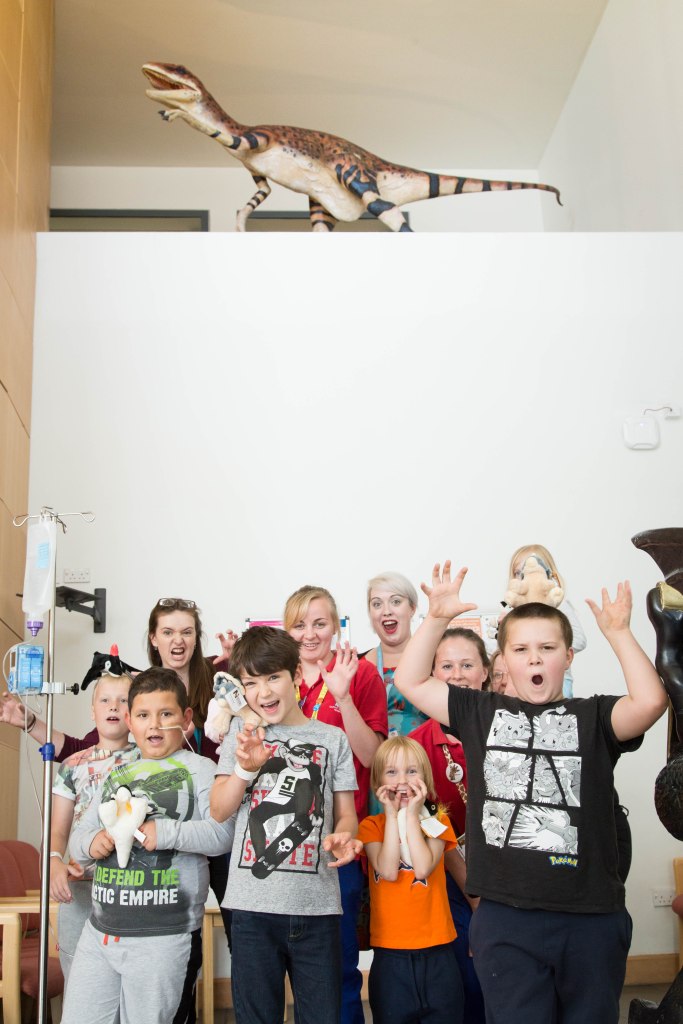
It’s taken some time, thanks to logistics and admin, but one year later we are really delighted to reveal that the Utahraptor has now been installed at the Children’s Hospital at the John Radcliffe Hospital in Oxford.

The bid to take in the Cretaceous creature came from Sarah Fletcher, who now works at the Churchill Hospital in Oxford. Sarah nominated the Children’s Hospital so that the dinosaur could amaze and inspire the young patients.

The idea of having a model Utahraptor in the hospital seemed like a lot of fun. Having been through the Children’s Hospital with my family, I knew that it would make such a difference to everyone who walks through those doors. But I never thought in a million years that we would win it – I am thrilled!
– Sarah Fletcher

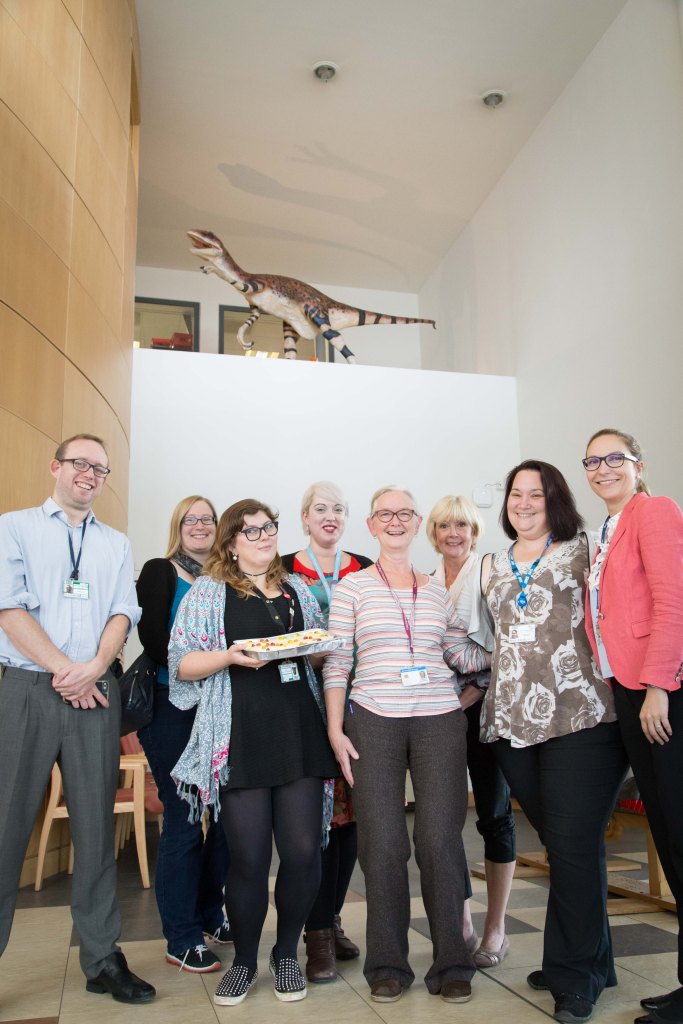
The Children’s Hospital team celebrate the arrival of their new ‘pet’

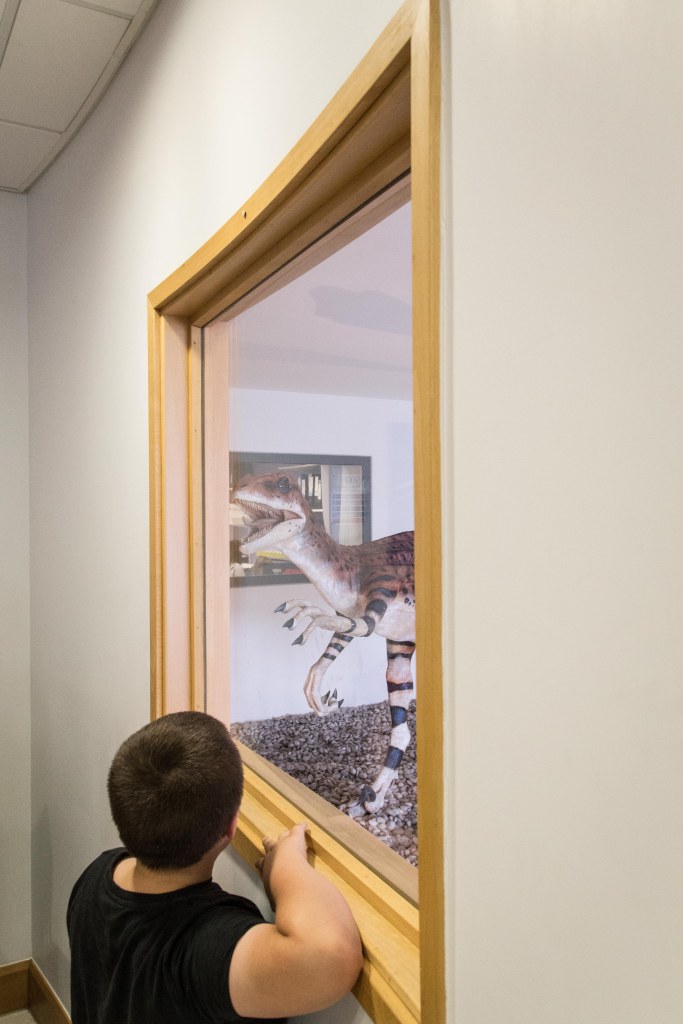
The model has been installed in the main entrance of the hospital, complete with new shadow-casting lighting, thanks to support from Oxford Radcliffe Hospitals Charitable Funds.

The team are now looking to develop new arts projects for young patients, themed around the dinosaur, including an all-important naming competition. We all hope it will bring pleasure to patients, provide a welcome distraction, and make their hospital visit a little more fun.

Patients, staff and visitors can peer at the dino on the way to the wards
Credit: Mike Peckett

Great minds don’t think alike

Credit: Mike Peckett

Museums are a place for many things: inspiration, learning, conservation… the list goes on. But we believe that they should also be a forum for debate and discussion. One of our aims, as part of our Contemporary Science and Society exhibition and event series, is to bring controversial or challenging ideas to our visitors and to encourage a lively, informed and balanced debate.

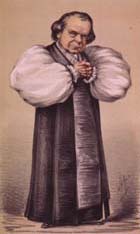
Thomas Henry Huxley

Controversy is nothing new to this institution; there is a history of debate going right back to 30 June 1860, the year the Museum was founded. The Great Debate is believed to have been the first ever public debate on Charles Darwin’s theory of evolution – certainly the thorny issue of the time.

The debate is now notorious for the clash of ideologies between Samuel Wilberforce, the Bishop of Oxford, and Thomas Henry Huxley, a young biologist known as ‘Darwin’s bulldog’.

Samuel Wilberforce

Reports from the time are a little sketchy, but tempers are believed to have flared and insults were traded, climaxing with the shocking moment where Wilberforce compared Huxley’s grandparents to an ape. This was obviously outrageous to the delicate Victorian temperament, and people were believed to have fainted with shock!

This short video reveals how we think the debate may have gone (with a little artistic license thrown in):

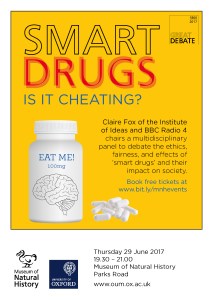
The anniversary of the Great Debate falls next week, and this year it’s an extra special one. We’re reigniting the tradition of a good lively discussion with The Great Debate: Smart Drugs – Is It Cheating? On Thursday 29 June, Claire Fox of the Institute of Ideas and BBC Radio 4 chairs a multidisciplinary panel as in a debate about the ethics, fairness, and effects of so-called smart drugs and their impact on society.

Smart drugs is a name given to prescription drugs, typically used to treat disorders such as narcolepsy and attention deficit hyperactivity disorder (ADHD), which are now also commonly being used to improve cognitive ability and concentration. Some studies suggest that these drugs are now widely being used by university students, in a climate of increased academic and financial pressure.

Many students are said to see these drugs as a normal aid to study, but some experts have serious concerns about increasing levels of self-prescription and the long-term safety of their use, as well as the impact on competitiveness. Increased use in other areas of society may also have implications.

The panel for this debate includes world experts in the fields of neuroethics, evolutionary psychology, and philosophy, each representing different sides of this challenging subject.

Tickets are free, but you need to book your place. We can promise controversial opinions, expert insights and an eye-opening evening, but unlike Wilberforce and Huxley, we can’t necessarily guarantee that the panelists will be flinging insults about each other’s grandparents.

Comedy rears its ugly head

Logo blob fish
Is the Blobfish the ultimate ugly animal?

Animals with big eyes, fluffy tails and cute noses are easy to love. But what about those with tentacles, slimy skin or a large throat pouch?! Luckily the Ugly Animal Preservation Society is here to fight their corner. Education Officer Chris Jarvis shares some tales from a special event…

Comedy met conservation on Saturday night, as the Museum teamed up with Berkshire, Buckinghamshire & Oxfordshire Wildlife Trust, compere Simon Watt and the Ugly Animal Preservation Society. During the evening, six comedians put the case for their own neglected animals in need of conservation: the Scrotum Frog; Christmas Island Frigate Bird; Kaluga Sturgeon; Slimehead; Okapi, and Yak. The audience then voted to choose the official mascot for Oxford, but which of these lovely uglies did they choose?

The Scrotum Frog

Par Samuel Garman (1843-1927) [Public domain], via Wikimedia Commons
Image: Samuel Garman via Wikimedia Commons

Chosen by Iszi Lawrence, this unfortunately-named amphibian’s population in Lake Titicaca is now dwindling. It’s threatened by the introduction of alien salmon for the angling fraternity and is also blended to make a medicinal frog frappe by Andean locals with strong stomachs!

Christmas Island Frigate Bird

By Charlesjsharp (Own work) [CC BY-SA 3.0 (http://creativecommons.org/licenses/by-sa/3.0)], via Wikimedia Commons
Photo: Charlesjsharp via Wikimedia Commons
Some may find its inflatable throat pouch off-putting (in the same way the Scrotum Frog brings certain disturbing images to mind), but not advocate Eleanor Morton. This critically endangered seabird is one of a family of only five species that grace our oceanic skies and deserves our attention.

Kaluga Sturgeon

By User:Cacophony [GFDL (http://www.gnu.org/copyleft/fdl.html), CC-BY-SA-3.0 (http://creativecommons.org/licenses/by-sa/3.0/) or CC BY 2.5 (http://creativecommons.org/licenses/by/2.5)], via Wikimedia Commons
Photo: Cacophony via Wikimedia Commons
Hideous and aggressive, these formidable fish grow to a ton in weight and have suffered a population decline of 80% over the last 90 years: we humans like to eat their eggs and their spawning grounds are now severely polluted. Without action we may lose one of the largest fresh water fish in the world. Kaluga Sturgeon champion Paul Duncan McGarrity made the case for this fugly fish.

Slimehead

By Pengo (Own work) [CC BY-SA 3.0 (http://creativecommons.org/licenses/by-sa/3.0) or CC BY 3.0 (http://creativecommons.org/licenses/by/3.0)], via Wikimedia Commons
Photo: Pengo via Wikimedia Commons
Nigel Lovell chose this sociable, deep sea fish which has been severely overfished due to the remarkable success of a rebranding campaign. You might know it better as the ‘Orange Roughy’ seen in fishmongers since the 1970s. But just remember it’s a ‘Slimehead’ – your dinner guests might not want to see that on their menu!

Okapi

By Raul654 (Own work) [GFDL (http://www.gnu.org/copyleft/fdl.html) or CC-BY-SA-3.0 (http://creativecommons.org/licenses/by-sa/3.0/)], via Wikimedia Commons
Photo: Raul654 via Wikimedia Commons
A rather beautiful (to my mind) relative of the giraffe, which looks like it put on a zebra’s pyjama bottoms by mistake! Rosie Wilby’s case for the Okapi was strengthened by a wonderful demonstration of its courtship behaviour involving a member of the audience and an 18-inch purple tongue*!

*Photographs cannot be shared.

Yak

Photo: travelwayoflife via Wikimedia Commons

Chosen by Teiran Douib, and not to be confused with the domestic yak, the wild yak is listed as vulnerable in its native Himalayas due to poaching, cross-breeding and climate change. These wonderful creatures are blessed with electrically non-conductive fur to survive electrical storms. They are one of the largest of all cow species, reaching up to 2.2 metres at the shoulder. However, their udders and scrotums are particularly small and hairy as protection against the cold.

Once the comedians had made their pitch it was time to decide on an ugly animal mascot for Oxford. Voting was frenetic and passionate as the issues at stake clearly hit home. But finally a champion emerged…

The winner was…the Kaluga Sturgeon! Yes, it’s official, Oxford’s Ugly Animal Mascot is a one-ton, aggressive fish that occasionally upends boats. As Paul Duncan McGarrity pointed out, it’s a shame that Oxford doesn’t have a long-standing boating rivalry with another city where this might come in handy…

Oxford Swift City takes flight

The Museum is really pleased to be a partner in Oxford Swift City, a major new initiative to protect and nurture the city’s populations of swifts. Here Keo Baxendine at RSPB Midlands tells us more about the project…

Swift expert George Candelin shares his experience of researching the swifts at the Museum. Image: Colin Wilkinson.

The swifts have just returned to the UK after their long migration from Africa. At the Museum they have begun circling the tower where they nest each year.

These charismatic birds, Apus apus, are commonly recognised throughout the UK as a sign of summer. They also have a long cultural association with Oxford as a symbol of knowledge and dexterity. Yet sadly, the national swift population has fallen by 42 per cent since 1994, due to a lack of nesting sites and food.

The Oxford Swift City project hopes to turn the birds’ fortunes around by protecting existing swift nesting sites as well as encouraging the creation of new ones. Last night, project partners and guests gathered at the Museum to kick off the project.

The swift is an iconic species whose appearance announces the start of summer. Sadly the swift is in trouble. Numbers have dropped dramatically, putting the birds at risk of disappearing completely from the UK. The Oxford Swift City community project provides local people with a great opportunity to learn about this important bird and discover how to take action to help give swifts a home in Oxford.
– Lucy Hyde, Oxford Swift City Project Officer

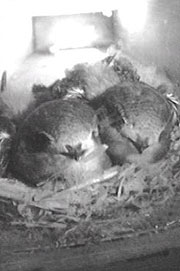
Swift chicks in a nestbox in the Museum tower, shown on the webcam feed

There are lots of ways to get involved: take part as a swift survey volunteer; help out at a community event; or just put up a nestbox or plant wildflowers in the garden. You can also join a local swift expert on a number of ‘swift walks’ through Oxford over the summer.

The colony of swifts which nests in the Museum has been the subject of a research study since 1948, and is one of the longest continuous studies of a single bird species in the world. This work has contributed much to our knowledge of the swift.

Fittingly, Oxford Swift City is running a ‘Swift Tower’ design competition. Subject to approval, the winning design will be constructed in Oxford next year, providing ideal nesting spaces for swifts – so get scribbling!

Funded by the Heritage Lottery Fund, the RSPB-led Oxford Swift City project is supported by many local partners, including Oxford University, Oxford University Museum of Natural History, Oxford City Council, Thames Valley Environmental Records Centre, Environment Resources Management and the local Wildlife Trust.

For more information please email oxfordswiftcity@rspb.org.uk.