Museum à la mode

Credit- Julia Cleaver www.JuliaCleaver.com
Image: © Julia Cleaver 2015 http://www.JuliaCleaver.com

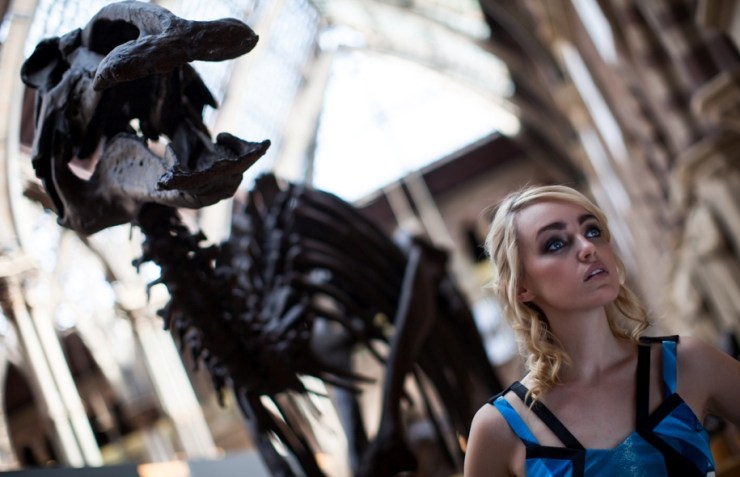
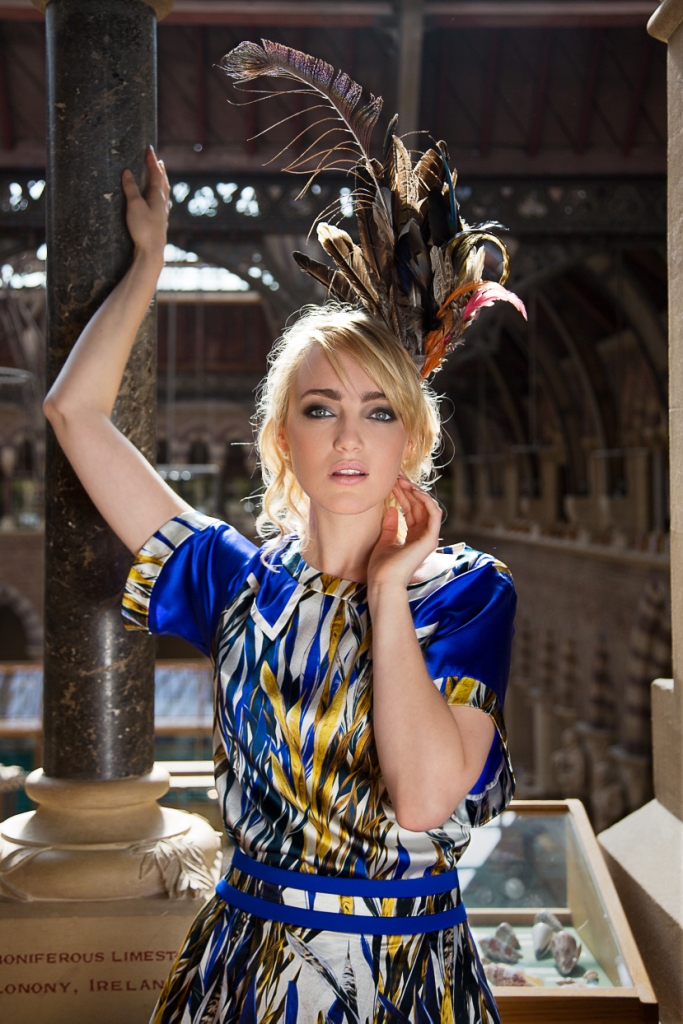
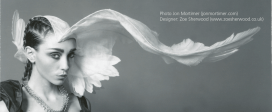
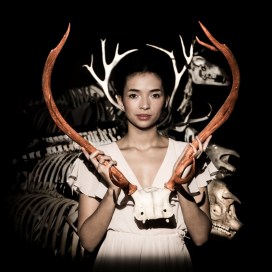
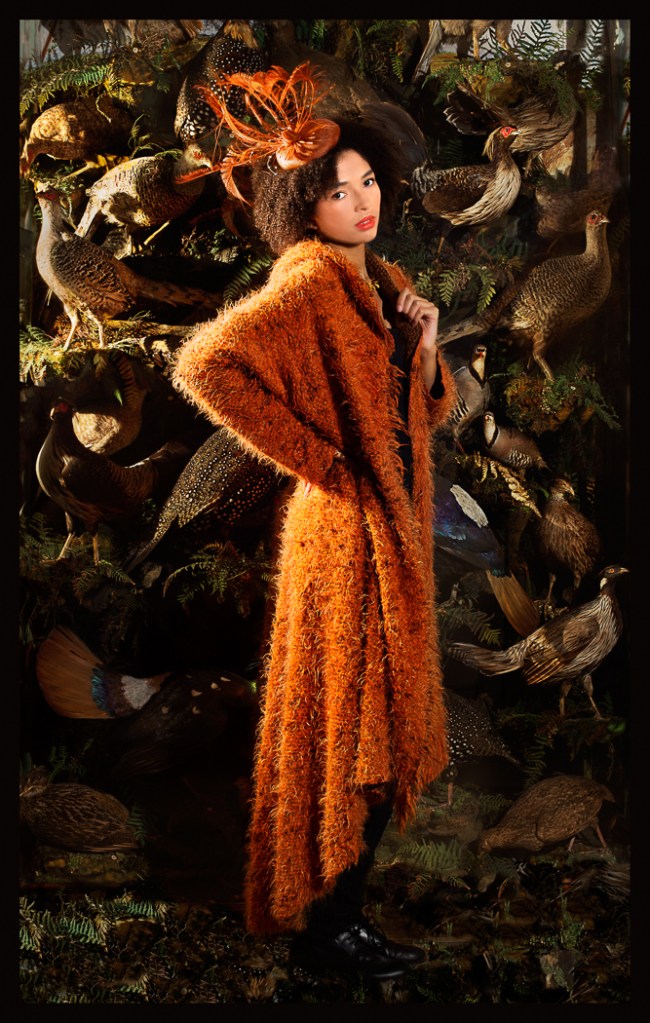
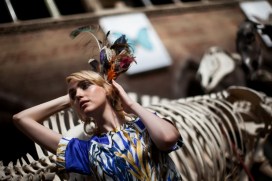
I’ve just received some fabulous pictures from a photo shoot here in the Museum. The building and its specimens are shown at their very best and the model’s striking looks add a sheen of glamour to each photo. But what makes these images really special is that the model is one of our own; Aisling Serrant is better known to Museum staff as a trainee education officer on the HLF Skills for the Future programme.
Oxford University Museum of Natural History,
Image: © Julia Cleaver 2015 http://www.JuliaCleaver.com

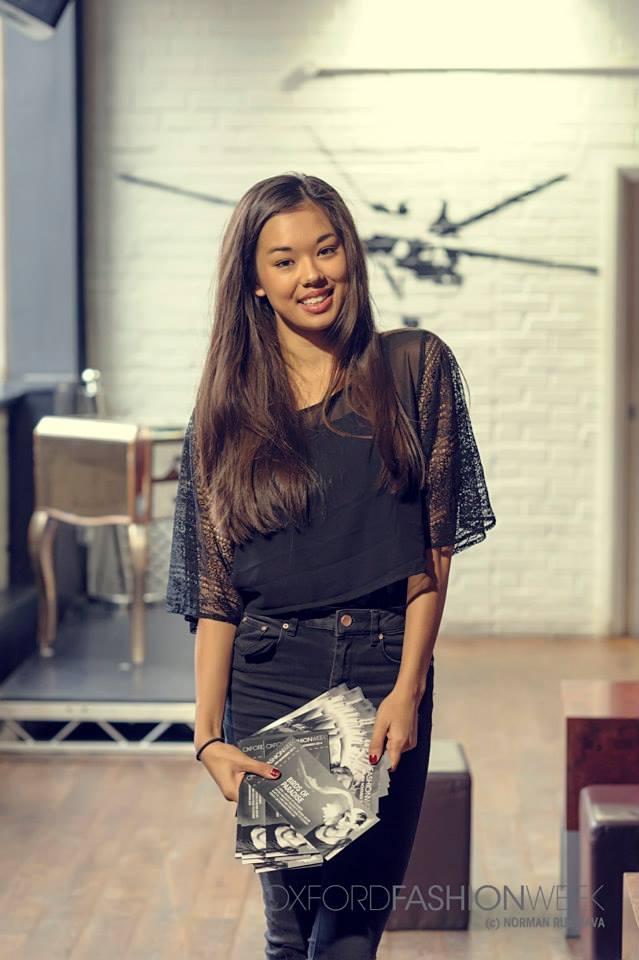
Aisling spent four months in the Public Engagement team in 2014, largely working with school groups and families. Not always the most glamorous job. In November 2014 we had the opportunity to see her in a completely new light. Oxford Fashion Week was coming to the Museum and they were running open casting sessions for models. Aisling remembers how she got involved:

**

When the initial meetings started taking place between the Fashion Week organisers and the Museum staff, my ears pricked up. Alongside studying or working I have modelled for years. My degree is in archaeology, so people have always found the combination with fashion modelling quite funny – perhaps imagining me standing knee-deep in a muddy trench in stilettos! It seemed too good to be true – could there really be a chance for me to bring my two contrasting types of work together?

Aisling in the Oxford Fashion Week shows
Aisling in the Oxford Fashion Week shows. Credit: Mark Hemsworth

I was delighted when I was asked to model in all three shows that were to be held at the Museum. They took place on Friday 7 and Thursday 8 November.

Friday night was a busy one with two shows in one night. I felt right at home, with the familiar faces of old friends like the T.rex and Iguanodon (oh and some of the staff members too!).  However it did all feel a bit surreal.
Getting ready backstage

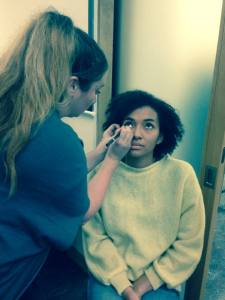
The Museum Annexe had been transformed into the backstage area, but the last time I had spent so much time there I’d been running an archaeological dig activity with year 6 children in the Making Museums project. Now the place couldn’t have looked more different with rails upon rails of clothes, photographers’ flashes and the distinct smell of hairspray in the air.

Saturday night was the big finale to the week – the Birds of Paradise show in the Museum central court. The skeleton parade was parted so we could walk down the middle and the Triceratops skull was moved to become the backdrop for the first part of our walk. The museum was transformed into another world for the evening.

On the runway at the Birds of Paradise show.
On the runway at the Birds of Paradise show. Credit: Mark Hemsworth

The addition of atmospheric music and such stunning outfits was truly breathtaking – enchanting at times, slightly eerie at others – but always fantastically dramatic. The nature-inspired outfits, some smothered in black feathers, others twinkling with jewel beetle shells, served as a reminder of how extraordinarily beautiful the natural world is.

**

Credit- Julia Cleaver www.JuliaCleaver.com
Image: © Julia Cleaver 2015 http://www.JuliaCleaver.com

Photographer Julia Cleaver was here for the shows and was so inspired by the venue and so enjoyed working with Aisling that she returned recently to do an extra photo shoot. These photos are the stunning outcome of that session. Many thanks to Julia for letting us share them here.

Rachel Parle, Interpretation and Education Officer
A glimpse of paradise

Copyright Ben Robinson, Oxford Fashion Week

We host hundreds of events a year at the Museum; everything from specialist lectures to family friendly activities. But coming up in November we’ve got a real first – a fashion show right here in the middle of the Museum. Oxford Fashion Week will be hosting their headline event here on Saturday 8 November. Birds of Paradise will be the climax to the week of shows and has been inspired by the spectacular Birds of Paradise in the Museum’s collection.

Hannah Zainnudin
Hannah Zainnudin

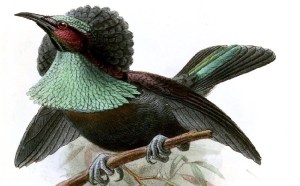
Earlier this year, Oxford University student Hannah Zainuddin approached the Oxford Fashion Week team with her exciting proposal. As a Biology student, evolution is at the heart of her studies and she’s particularly interested in the behaviour of Birds of Paradise, as an example of sexual selection at its most flamboyant. But Hannah’s interest isn’t purely biological. She is excited by the overlap between art and science and wants to use fashion as opportunity to blend the creative and academic elements of Oxford.

I hope people will realise that fashion isn’t just superficial.

Hannah is currently a finalist at St Catherine’s College, Oxford and will be juggling her studies with the role of Creative Director for the Birds of Paradise show.

CraspedophoraKeulemans cropShe’s sourced exciting, original looks by cutting edge professional designers. Watch out for explorations of iridescence, dramatic colour combinations and textures that mirror the display techniques used by the flamboyant birds. Changes in the volume of models’ outfits will also reflect the impressive puffed up feathers that male birds use in their dances.

To set the scene and whet the appetite for the show, the Fashion Week team came in to capture some publicity shots. The results give us a glimpse of the dramatic impact we’ll see on the night with striking models, breathtaking outfits and a unique setting.

Copyright Ben Robinson, OFW
Copyright Julia Cleaver, OFW

The model in all these fabulous shots is Tiffany Saunders who, as well as being a professional model, is the Assistant Director of Oxford Fashion Week.

Her enthusiasm for the museum as a set for the shoot and as a venue for the show was obvious as we scouted out the perfect locations in the galleries. Although she’s been modelling since she was four years old and has worked in countless interesting venues, she says that using the Museum as her framework was a very different experience;

I felt in awe of my surroundings in a way that I’m not used to. Every angle, every shot, every corner of the Museum presented an image of wonder and uniqueness. It was an honour to have been amongst such outstanding surroundings.

Tiffany also explained why she and Oxford Fashion Week director Carl Anglim are so excited about the show:

We have wanted to do an event at the museum for a while because it is so unique and iconic. Part of what sets Oxford Fashion Week apart from other fashion weeks is the cultural heritage the city has to offer, so we always like to use venues that display this supreme asset. Headlining at the museum is something the whole team are particularly excited about. It is a world class venue and will be an incredible highlight of Oxford Fashion Week.

Copyright Julia Cleaver, OFW

In another first for the team, they will also be holding a double-bill at the Museum on Friday 7 November. Independent Collections will kick off the evening at 6pm, followed by Couture at 7.30pm. Three brilliant shows in 24 hours.

If you’d like to join us for either of these nights, tickets are available through the Oxford Fashion Week website.

Rachel Parle, Interpretation and Education Officer

Heads up… what’s on


CraspedophoraKeulemans crop

We try hard not to use this blog simply as a promotional tool for the Museum’s events, but thought that when a new quarterly programme is published you might like to know so you can have a look and pick out anything you fancy.

Oct-Dec prog coverSo this is just a short post to let you know that the October-December programme is now out. Highlights include a headline runway show for Oxford Fashion Week, on Saturday 8 November, with designs inspired by the beauty and variety of Birds of Paradise.

We have some Arctic-themed activity later in November, with the Northern Lights late night event for Christmas Light Festival on Friday 21 November, and a special talk by Museum director Professor Paul Smith, The Arctic – A Natural History, on Tuesday 18 November. Free tickets are available now.

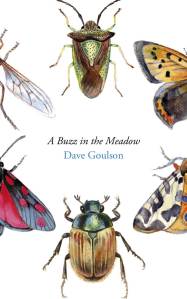
Attachment-1Finally, there was a late arrival that didn’t quite make it into the programme leaflet, but is not to be missed: Dave Goulson, founder of the Bumblebee Conservation Trust, will talk about his latest work, A Buzz in the Meadow, on Thursday 9 October. Tickets can be booked here, and a limited number of early bird tickets include a behind-the-scenes tour in our entomology department.

With plenty of family events too, hopefully there’s something for everyone in the programme. If you’d like to be added to our general mailing list just drop me a line at communications@oum.ox.ac.uk and I’ll add your email address.

Scott Billings – Public engagement officer

Ready for your close-up?

IMG_3684
Image copyright Richard Kelsall

They say a picture is worth a thousand words, and at the Museum we make thousands of pictures: pictures to document, pictures to investigate, and pictures to wow. We use a lot of different imaging techniques too, from standard close-up photography to scanning electron microscopy, which reveals the most minute details.

To coincide with the final week of the Wildlife Photographer of the Year exhibition here, on Saturday 20 September we held a new adult workshop to give people some hands-on experience of some of these processes. Imaging Techniques in Modern Natural History gave participants the chance to get up close to some wonderful specimens and make their own images to take home.

I had planned to review the day here, but Rose Parkin, who took part in the workshops, very helpfully sent in her own write-up of the sessions. So here’s a special guest post from Rose, along with some pictures taken by people on the day.

*

By Rose Parkin

When I signed up for the digital imaging course I expected a fairly dry, tech-heavy day. Instead, the experience was really exciting. Not only did it provide hands-on experience of viewing and recording images with new technology, it also gave me a brief glimpse behind the scenes of my favourite museum.

Laser Scanning and Digital Modelling
For our first session our small group was led through a maze of corridors by Sarah Joomun, the Documentation Officer, to the laser scanning lab. It sounded a bit futuristic, and it turned out that it looks that way too. Sarah popped a fossil onto a mount, clicked a few buttons and red lasers appeared, scanning the fossil’s surface while it rotated. After ten minutes the first 3D image of the fossil was produced – a beautiful net of triangles, which looked like a teleporting object in a science fiction film.

Laser scanning Image copyright: Tom Nicholson-Lailey
Laser scanning
Image copyright Tom Nicholson-Lailey

Sarah turned the fossil and scanned it again. The challenge was then to fit  these two images together to make a complete 3D model. Amazingly, this technique enables other palaeontologists around the world to see and replicate, with the use of a 3D printer, the exact size and shape of a fossil without it ever leaving the museum.

Multi-plane Microscope Photography
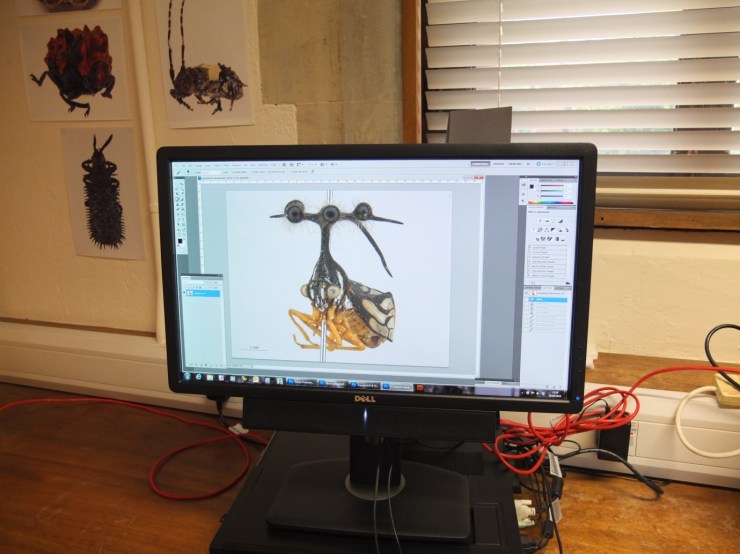
Our next session was upstairs, with artist-in-residence and photographer Katherine Child. Even though we were close to the main corridor of the museum it felt like a real working space, crammed full of equipment and insect specimens. Katherine had chosen the tiniest of insects for us to photograph with the multi-plane microscope. It looked like a small seed with some barely visible limb-like protrusions.

Multiplane photography. Image copyright Rose Parkin
Multiplane photography.
Image copyright Rose Parkin

But under the microscope a wonderfully strange insect became visible, with the most bizarre appendages and bright orange legs. While the microscope already showed a great deal of detail the multi-plane photography captured an incredibly crisp image. The microscope takes large numbers of photos of the specimen, using different focal planes each time, then the focussed elements are all stacked together to produce a crystal clear photograph.

Once we’d chosen and photographed some other insects from the collection and poked around the room a bit (finding a disturbing collection of large pickled spiders), we were taken on a tour of the entomology department. Katherine led us through corridors of offices and labs, up to a stunning store room that felt almost church-like, with rows and rows of cabinets full of fascinating insects.

Scanning Electron Microscopy
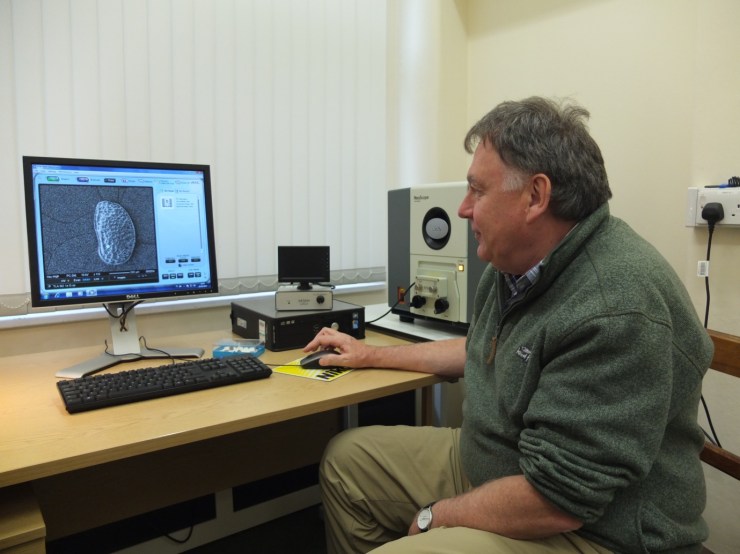
After lunch we had a laboratory session with museum director Paul Smith to look at sand under an electron microscope. Luckily, that was much more exciting than it sounds! The sand was taken from Dog’s Bay on the west coast of Ireland and is rich with a wide range of tiny fossilized organisms. Paul showed us how to carefully select individual microfossils from a tray using just a microscope and a paint brush.

PS and SEM
Professor Paul Smith demonstrates the scanning electron microscope. Image copyright Rose Parkin

We then viewed some of the microfossils using a scanning electron microscope. This allowed us to see an incredible level of detail. The microscope was so powerful that we could see hair holes in a fossil the size of a grain of sand.

DSLR Macrophotography
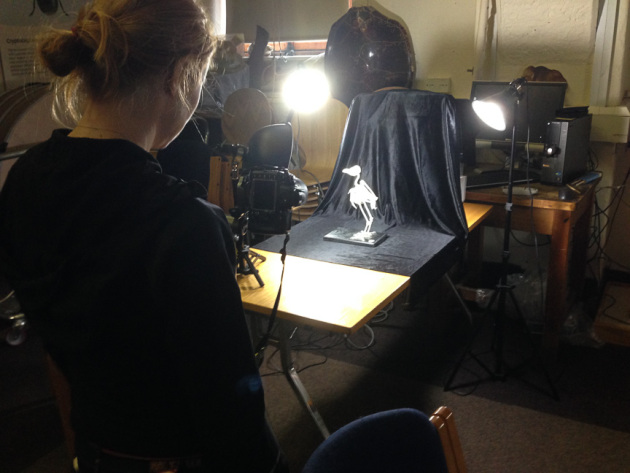
My final session was a crash course in macrophotography. Held in the seminar room, the low lighting and floor-to-ceiling collection of specimens lent an almost eerie feeling to the set-up.

Macrophotography. Image copyright Keith Barnes
Macrophotography.
Image copyright Keith Barnes
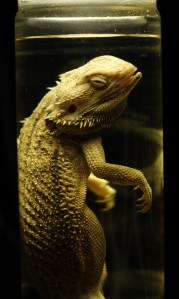
Bearded dragon. Image copyright: Rose Parkin
Bearded dragon.
Image copyright: Rose Parkin

Once prepped, we were let loose on four separate camera setups. Being able to choose and shoot at our own pace made this feel like a really creative experience. The help given by professional photographer Keith Barnes and public engagement officer Scott Billings was perfect – very hands on but not patronizing (despite my lack of DSLR experience).

With this digital imaging course the museum has created a really exciting snapshot of the work that goes on behind the scenes, reinforcing the fact that this impressive place is much more than just an ordinary museum.

Carnival carry-on

IMG_0180

Hi, I’m Aisling, a trainee education officer taking part in the HLF Skills for the Future programme across the Oxford University Museums and Collections.

Aisling setting up the carnival activities

I’ll be spending a year working with the education teams, learning the skills it takes to become a great museum education officer.
My placement starts with 4 months here at the Museum of Natural History, before moving to the Ashmolean, and finishing in the Pitt Rivers Museum.

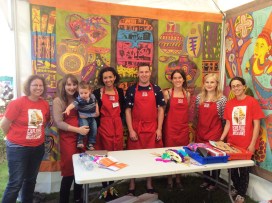
Last Sunday I was lucky enough to work at Cowley Road Carnival with the rest of the trainee team. When we met in the morning the sun was shining, music was playing, the whole street already smelt delicious from the many street food stalls… we just knew it was going to be a good day!

IMG_0119Before all the fun could start we had to set up base at our spot in the grounds of St Mary and St John Church. How many trainees does it take to set up two tents and a few tables?

The answer is five trainees, a project coordinator, a head of education and three additional helpers. It took teamwork, perseverance and the truly superhuman strength of Andy, head of education at the Pitt Rivers, but we got there in the end, and didn’t it just look beautiful!?

image23

After we had rewarded our hard work with a much-needed tea break we began setting up our handling objects. We took lots of beautiful masks, quite fitting for the theme ‘the many faces of Oxford.’ We also took a horse skull, a cast of a velociraptor skull, and some fossilised dinosaur poo. The last of which created some very funny reactions when the person holding it found out what it was.

IMG_0147The make and take activity we chose to run was mask-making, which is always a hit with the children (and some grown-ups too!) There was shiny paper, glitter and sequins everywhere, and we mean everywhere, and a fun time was had by all.
Our activity proved very popular and we counted 220 children who left for home as Egyptian pharaohs, samurai warriors or fierce dinosaurs. What’s more, the sun stayed shining for the whole day, despite the forecasts predicting otherwise, and we even got time to catch some of the procession. Definitely a good day!

Aisling Serrant, Trainee Education Officer

Wildlife photographers

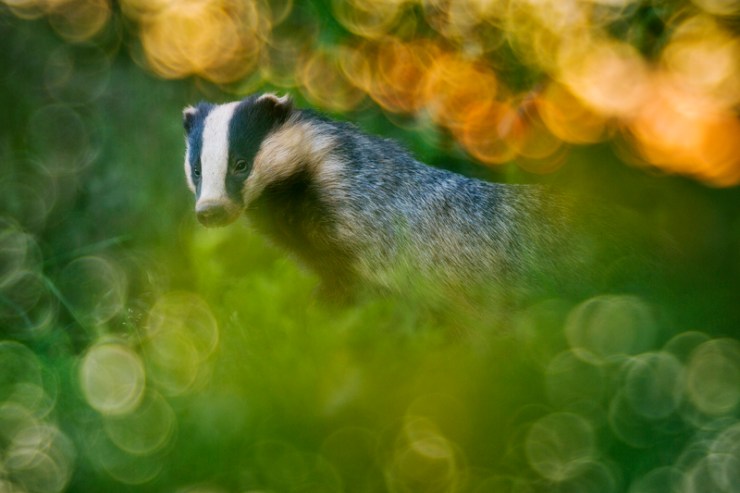
Badger dream scene Copyright: Marc Steichen
Badger dream scene
Copyright: Marc Steichen

Wildlife Photographer of the Year – 16 July-22 September
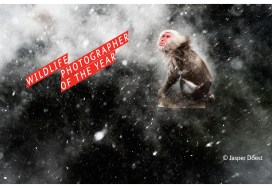
We’re excited to announce that the prestigious Wildlife Photographer of the Year exhibition is returning to the Museum this summer for the first time in over a decade. It will be on show, for free, in the Main Court from 16 July to 22 September, so make sure you get down here to see it.

This global showcase of the very best nature photography has inspired us to launch a little wildlife photography competition of our own…

In celebration of the swifts that return to nest in the Museum’s tower each spring, we are running the Summer Swifts photo competition. Send us your best photograph of this summer’s swifts on the wing, either around the Museum’s tower or near you, and the winning image will be put on display alongside Wildlife Photographer of the Year in the Museum from mid-August. Not bad eh?

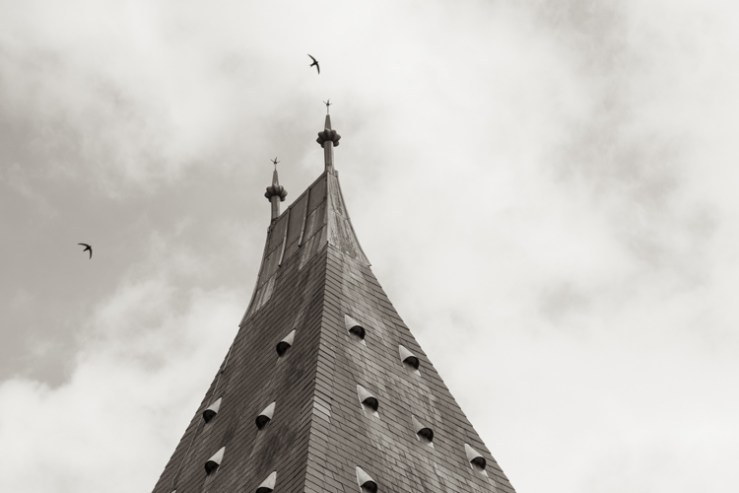
The picture below is not from Wildlife Photographer of the Year, but is my hastily-grabbed effort to capture the swifts. I imagine many of you can do better. Email your entries to communications@oum.ox.ac.uk by 15 August and we’ll let you know who’s won shortly after. Needless to say the images must be your own and not break anyone’s copyright, and you grant us permission to print and display them in the Museum until 22 September. Good luck!

IMG_2173
Swifts swoop around the Museum tower

Wait, there’s more… To coincide with Wildlife Photographer of the Year here we’re also offering a unique adult Day School titled Imaging Techniques in Modern Natural History – a Hands-On Guide. This takes place on Saturday 20 September and costs just £60.

It’s a practical course in digital imaging that will give you access to the Museum’s imaging equipment and specimens to learn about electron microscopy, 3D laser scanning, multiplane microscopy and macrophotography, as well as a poke around behind the scenes. Places are limited so for more info and to book email education@oum.ox.ac.uk pronto.

Scott Billings – Communications coordinator