Where Do We Come From? What Are We? Where Are We Going?


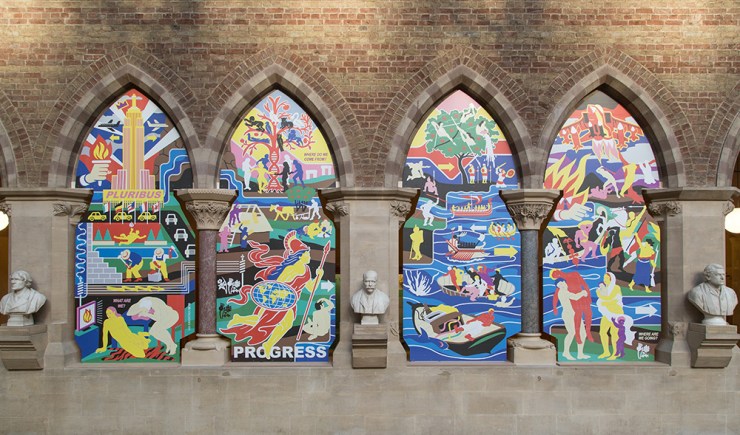
These are some of the big questions asked in our current special exhibition, Settlers. It’s also the title of a new artwork by Ian Kirkpatrick that has just been commissioned by the Museum.

You may remember, back in July we put out a call for artists to respond to the main themes of the upcoming Settlers exhibition. We received an incredible response, with almost 100 proposals, so needless to say we were spoilt for choice! After several rounds of shortlisting, discussion and deliberation, we chose Ian Kirkpatrick, a Canadian artist now based in York.

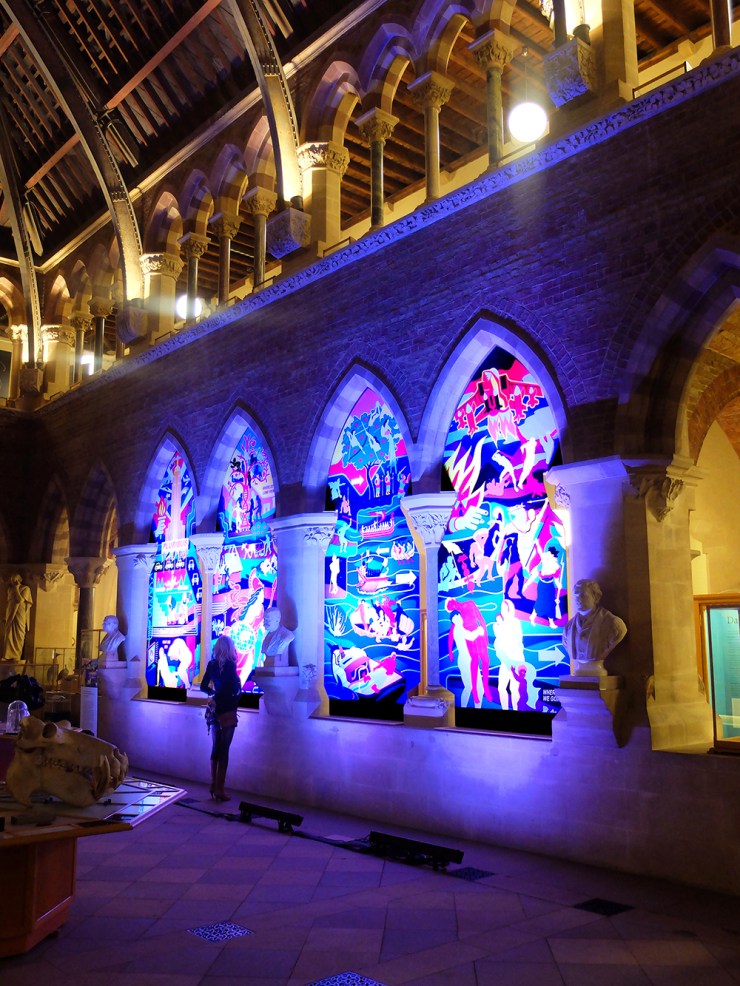
Lit up for the Settlers exhibition launch.
Credit: Ian Kirkpatrick

We were excited by Ian’s bold iconography and references to the history of art and design, while using shapes and colours usually seen on contemporary street signage. His approach to the themes and issues around migration, genetics and settlement were innovative and brave. We also couldn’t wait to see how his work would look in our Victorian neo-Gothic building.

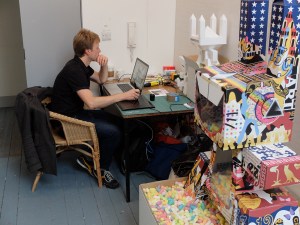
Ian working in his studio. Credit: Ian Kirkpatrick

Over a period of four months, Ian researched, planned and created his spectacular final piece Where Do We Come From? What Are We? Where Are We Going? Here he explains a little about his artistic process:
 

Most of my projects begin with a period of research – often looking at historical events or interesting facts related to the brief. I often sketch out a very rough layout of the design in my notebook, then create the actual artwork directly onto the iPad or computer. Because I use vector-based software, I can easily rearrange or modify graphics – so the design is constantly shifting until the artwork is finished.
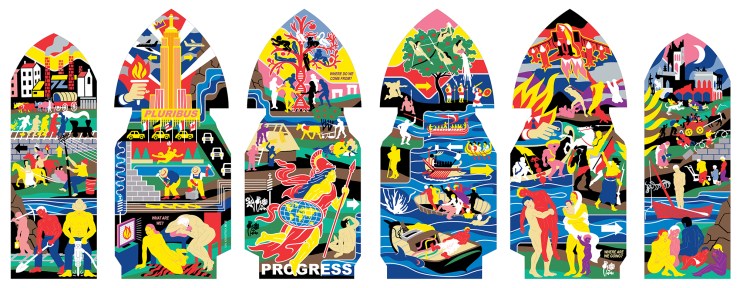
Ian Kirkpatrick’s final design. The two smaller panels (L and R) can be seen on display in the Settlers exhibition gallery.

Ian created a series of six panels that explores the social and natural causes behind human migration, both in ancient times and in the present day. It presents historical and modern peoples moving across a landscape in response to conflict, climate change and urbanisation, and remixes imagery from classical paintings alongside iconography from Great War postcards, Roman coins and the Bayeux Tapestry.
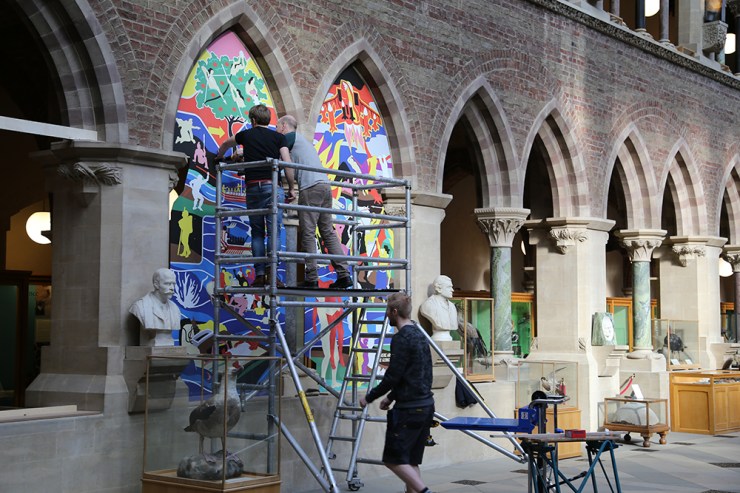
Ian, Peter Johnson and Adam Fisk installing the main panels of the artwork.

Of course, in a building like ours, the installation of such a large, bold piece of work would never be easy. Peter Johnson, the Museum’s Building Manager, came up with an ingenious solution to hold the panels into the arches, without damaging the masonry by drilling or glueing.
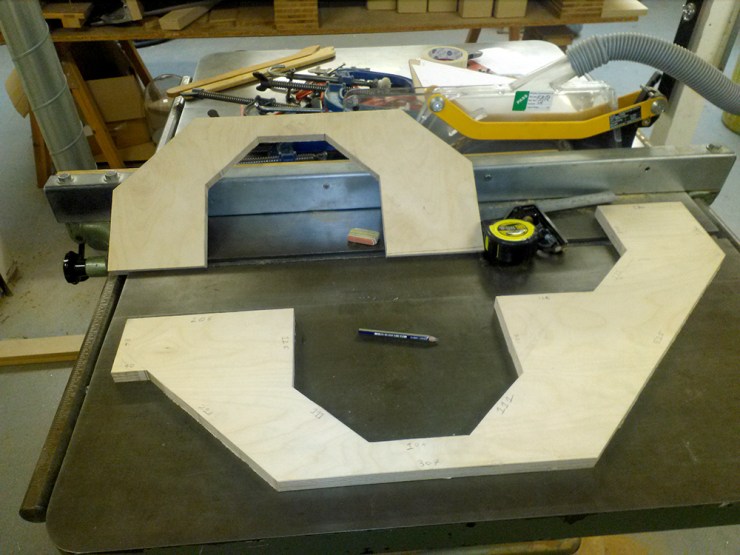
Pieces prepared in the workshop, to sit on the capitals and support the artwork

Hand-cut pieces of plywood were made to snugly fit round the capitals, so that the Dibond aluminium sheets don’t rest on the stone.
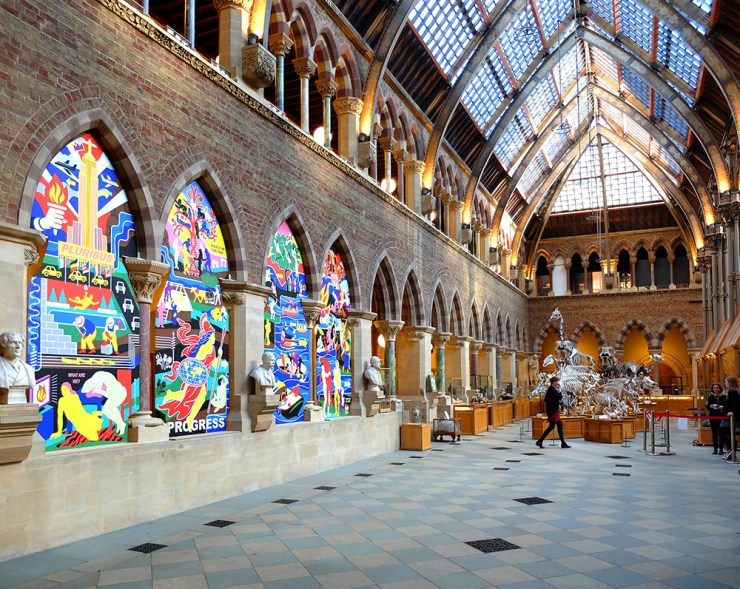
Credit: Ian Kirkpatrick

So, standing back and looking at the finished piece, looking resplendent in the winter sunshine and attracting the attention of hundreds of museum visitors, how does Ian feel?

The project was a lot of work – but it’s also been very satisfying to see it finally installed. Although the piece initially started as a comment on contemporary British settlement, it evolved into something that explored global migration throughout all of history.  Trying to find a way to tackle a theme that big, while still remaining visually coherent, is quite tricky!  But I was really pleased with the results and love seeing the finished piece housed within the magnificent neo-Gothic architecture of the Museum!

 

Calling all artists

We’re happy to announce an exciting opportunity to coincide with our  new exhibition – Settlers, opening at the Museum of Natural History in February 2018.

Settlers is the upcoming exhibition in our Contemporary Science and Society series. The latest of the series, Brain Diaries: Modern Neuroscience in Action is currently running until 1 January 2018.

The history of the people of Britain is one of movement, migration and settlement. Tracing patterns revealed by genetics, archaeology and demography, Settlers: Genetics, Geography and the peopling of Britain will tell the dynamic story of Britain’s ever-changing population.

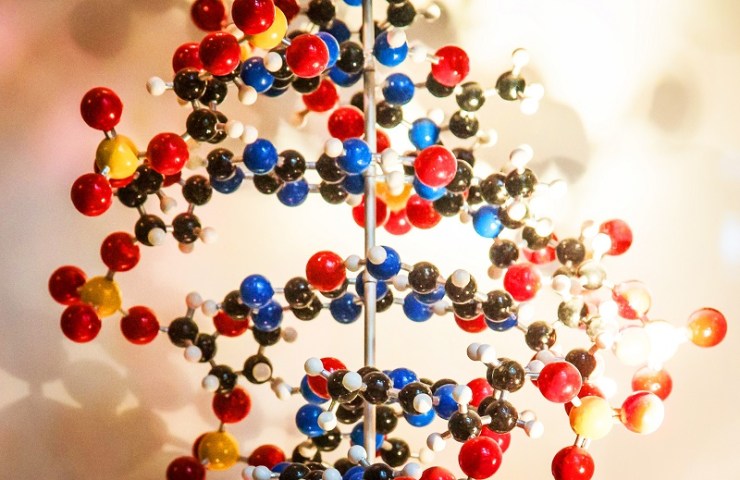
DNA image for call out blog post

Planning for Settlers is going well and we’re happily getting to grips with the science and archaeology, but we’d also love to have some artistic input. Can you help us?

The Museum would like to commission up to two pieces of contemporary art that explore themes such as genetics, DNA, migration, settlement and ancestry.

We’re particularly interested in work that will provoke thought and discussion and engages with 18-25 year olds, and we welcome all media, including digital and installation art.

The artwork could be displayed in the gallery itself, in the main court or even on the museum lawn.

centre-court
The Museum’s centre court

If you like the sound of adding some artistic flair to Settlers, you can find out more here:.  Don’t delay, though; the deadline for applications is Friday 1 September 2017.

Imitation game

Last month we had the pleasure of hosting artist and scientist Dr Immy Smith as part of her week-long takeover of @IAmSciArt on Twitter. Drawing inspiration from the Museum’s collections, Immy has created some beautiful paintings. Here she tells us a little more about her interests and work…

My current artwork is focused on crypsis and mimicry – the ways that animals and plants disguise themselves or pretend to be something they’re not. Cryptic camouflage helps animals to avoid being seen, often to help them catch prey – or to avoid becoming prey themselves! Mimicry is also often about trying not to get eaten: the harmless hornet moth, for example, mimics a stinging insect to deter predators. I use these themes to develop print art projects, and also public workshops to help people learn more about the ecology of cryptic animals.

Cryptic Cards by Immy Smith

In my arts practice I try to imagine how animals and plants might evolve to camouflage themselves on human-made materials, and what they might look like. Will we one day find moths adapted to hide on advertising hoardings, or beetles mimicking litter? I made an entire deck of Cryptic Cards as a response to this kind of question.

Another project I’m working on at the moment is called Emergent Crypsis. This is a collaboration with Norweigan generative artist Anders Hoff who makes art using algorithms executed by a computer. I’m imagining how creatures might adapt to an extreme example of human-made patterns – computer generated abstract images.

Violin Beetle (Mormolyce phyllodes) by Immy Smith

My work requires me to closely study many animals and plants, but how do I learn about all these species in order to draw their imaginary relatives? How do I make my art a convincing representation of how life might find ways to hide on human-made art?

One answer is of course, the internet. I’ve been lucky enough to find many wildlife photographers online who are kind enough to let me use their images as reference. But photographs alone are not always enough to get to know the fine details and defining characteristics of a species: the joints and articulations of small insects, for example, are best studied from specimens. And some species are rare, or even extinct, and it can be hard to find photographic a reference.

Leaf-footed Bug (Diactor bilineatus) by Immy Smith

This is where scientific collections come into the picture. The collections held in museums and other institutions are not only essential for scientists and scientific illustrators, they are also an invaluable resource for artists of many disciplines, science communicators, and educators of many kinds. In the collections at the Oxford University Museum of Natural History I can photograph and sketch leaf-mimicking insects, for example, that are native to the forests of South America which I may never visit. I can study in minute detail the articulation of beetles that are rarely seen, and which might be difficult to find – and irresponsible to collect – myself.

A display of terrestrial bugs (Heteroptera) in the Museum, including the Leaf-footed Bug painted by Immy Smith

Not only do I find specific species that I want to study in natural history collections, I often see new ones – animals I didn’t know about or hadn’t thought of drawing before. In the same week that I visited Oxford, I also made a trip to Herbarium RNG in Reading to study plant mimicry, and found similar inspiration there. I can channel all this into both aesthetic art destined for print and sciart workshops that communicate the wonders of insects or plants with the wider community.

Working on sciart projects and educational workshops helps me appreciate the multitude of ways in which collections benefit research and education. We must try to communicate the plethora of roles they play, and the host of ways they cross into our lives – whether through scientific research on insects pollinators of the crops we eat, or via a deck of cards made by someone like me for mainly recreational purposes. We must fight to protect scientific collections because they are a resource that benefits all of us as a society.

Stories from Stone, Body and Bone

rosehill exhibition postcard image for web

Each year the Museum works with members of the community on a wide variety of projects using our collections to enthuse and engage people in natural history. These projects often result in some amazing outcomes but until now we have been unable to find the right space to celebrate this work in the Museum. So this month we are very happy to unveil our new Community Case, dedicated to doing just that.

Community case front for web
Stories from Stone, Body and Bone in the new community case

Our opening display focuses on the Children in Need-funded Story Makers programme. In partnership with Fusion Arts, this initiative helps Oxford primary school pupils to develop their communication skills by taking inspiration from museum collections. And this year they teamed up with us to create Stories from Stone, Body and Bone.

Pupils from New Marston, Wood Farm, and Rose Hill Primary schools worked with Story Makers founder and arts psychotherapist Helen Edwards in two visits to the Museum, stimulating and developing imaginative ideas, stories and artwork.

During these visits the Story Makers met with our education officer Chris Jarvis and together they looked at rocks and minerals, tectonic plate formation, and the evolution of skeletons and animal posture. They explored the collections creatively through sensory observation, using the hands, body and senses to develop self-awareness and self-confidence.

story makers work 3 for web
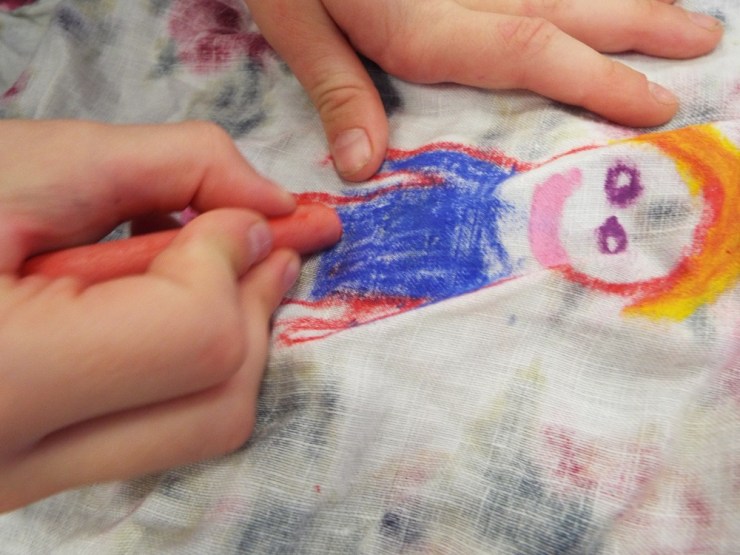
Getting creative with chalks and textiles

We work with the children as artists and we carefully designed a series of sessions that enabled them to have direct sensory engagement with objects in the museum. We then used art processes to portray their experiences and feelings about their interactions.
Helen Edwards, Integrative Arts Psychotherapist

Back at school, the pupils used visual art, drama, movement and modelling to communicate feelings and ideas that emerged from these museum encounters, sharing thoughts with the group in a playful and trusting atmosphere.

story makers students for web cropped

Group sessions back at school involving movement, drama and art

story makers work 4 for web
Detail from one of the Stone Age caves

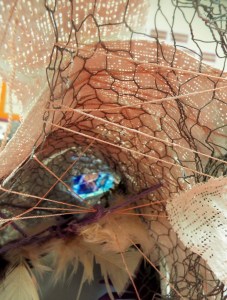
Each Story Maker then created a Stone Age character – someone who might dream up and pass on stories full of meaning and myth. They imagined places in which their Stone Age characters might live, thinking about what they might see looking out from these spaces, through the cracks, crevices and windows in their caves.

From these ideas emerged beautiful, bright, and colourful models of these fictional abodes, as well as stories and poetry about their characters.

Story Makers built the children’s capacity to think reflectively, enriching their speech and language, and helped them to develop their writing skills as the stories were compiled into Story Makers books.

story makers artwork for web
Stone Age houses and landscapes as part of the Stories from Stone, Body and Bone project

Everyone should get to do this, it is like a dream come true
Story Maker, from the Stories from Stone, Body and Bone project

Stories from Stone, Body and Bone is on display until Sunday 21 May in our new Community Case. The next display, installed on 22 May, will feature artwork by our community of artists who use the collections as inspiration for their work.

Visions of Nature

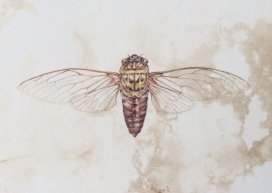
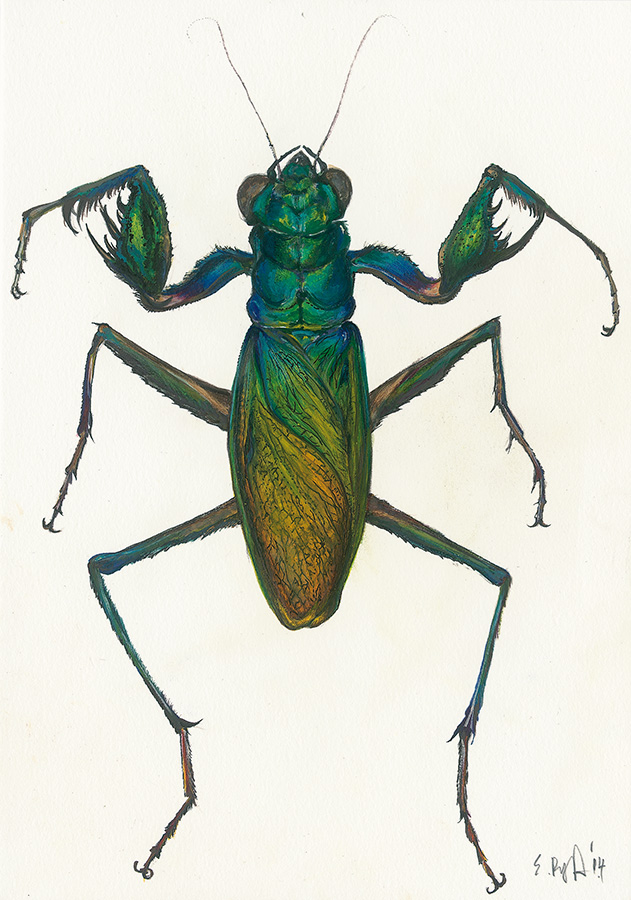
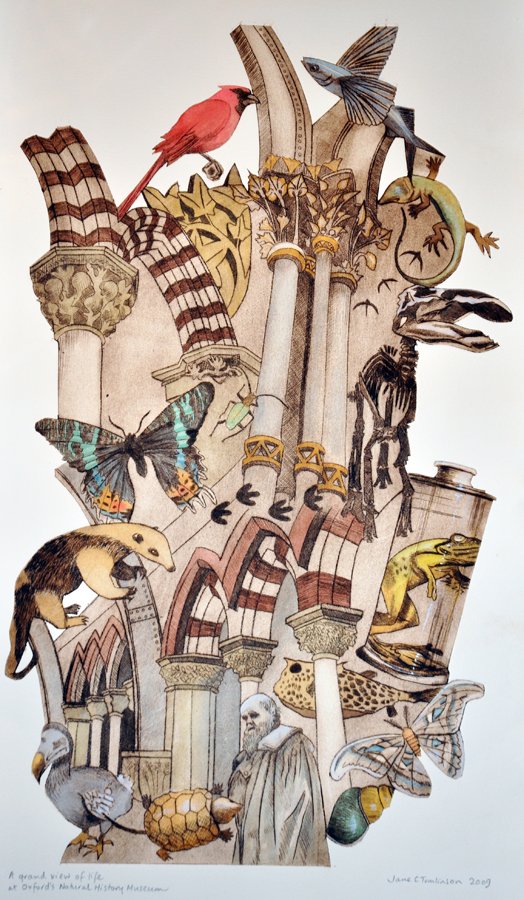
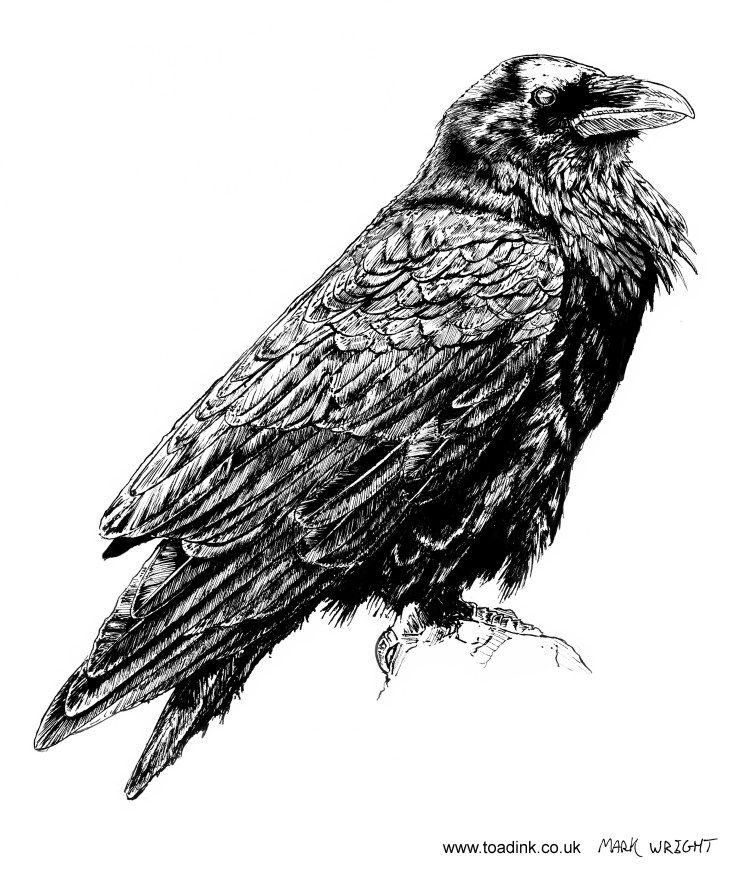
As part of our Visions of Nature year in 2016, we invited you to send in your own ‘visions of nature’. We didn’t know what to expect, but week after week we received pictures of beautiful paintings, drawings, photographs, and textile art, all inspired by the natural world or by the Museum and its collections.

All of these artworks can now be found in the online gallery, but we’ve picked out a few here to show you and to mark the end of the project. Thanks very much to everyone who took part.

2 bugs
Emma Reynard

Jake Spicer - Main court Oxford University Museum of Natural History

Jake Spicer – Main court Oxford University Museum of Natural History

Jane Tomlinson - Oxford University Museum of Natural History
Jane Tomlinson – Oxford University Museum of Natural History
Deidre Bean - Cicada
Deidre Bean – Cicada


Mark Wright - Raven
Mark Wright – Raven

Darwin, dolphins and a ‘Monkeyana’

macmanimalkingdompl60-crop-750

The Museum is home to a vast collection of natural history specimens but is perhaps less well-known for its substantial art and object collection. This material became the focus of Charlie Baker and Imogen Stead, two of our summer interns, as they spent six weeks researching, organising and curating it for the Museum.

The range and amount of material was formidable: numerous prints, non-scientific objects, paintings, photographs and sculptures from across the Museum, all coming together into a single organised collection for the first time. Here, Charlie and Imo unearth just a small sample of some of the items they catalogued during their time at the Museum:

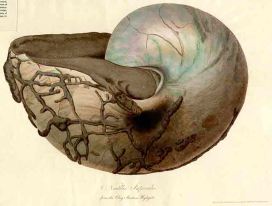
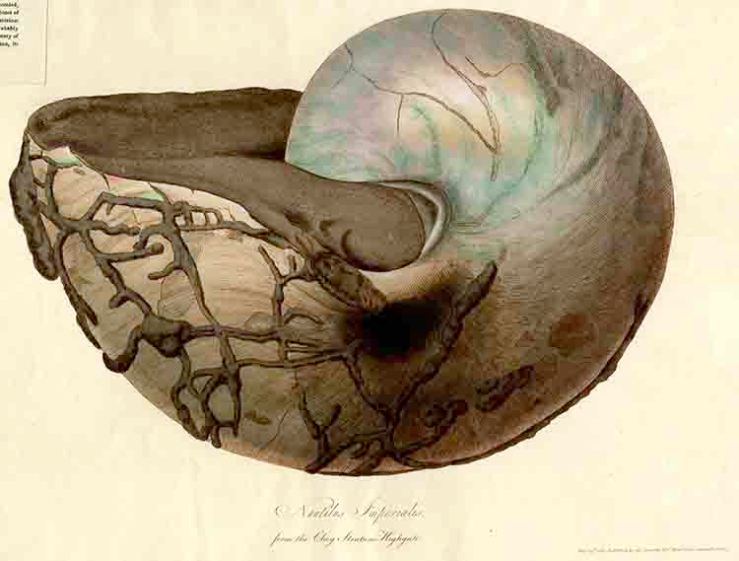
Nautilus Imperialis
This beautiful print shows a fossil of the Nautilus Imperialis. It is one of the largest prints the Museum holds: measuring 48cm x 43 cm, it’s too large for the scanner! It has a small pamphlet of text stuck to it, just visible in the picture, and we speculate that this may have been promotional material for James Sowerby’s Mineral Conchology of Great Britain, the first volume of which was published in 1812, the same year as this print.

nautilusimperialis-for-web
Nautilus Imperialis print

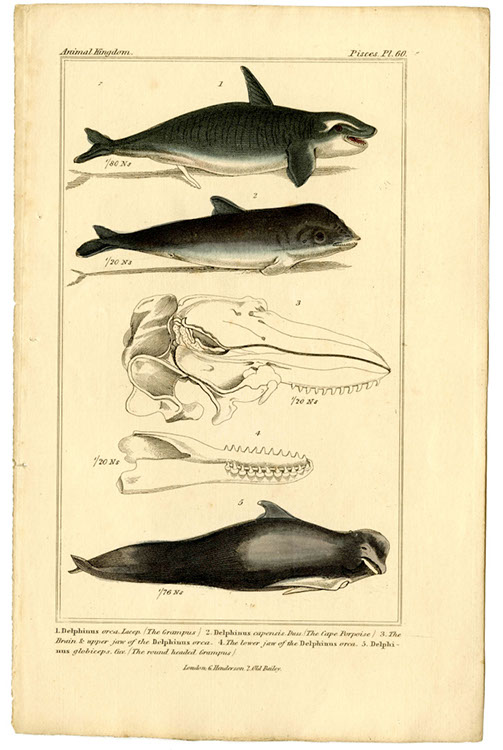
Plate 60 from The Animal Kingdom
This is a plate from Henry MacMurtrie’s translation of Georges Cuvier’s Le Règne Animal, showing a few species of the genus Delphinus, or Common Dolphins. The Museums has 32 plates from this book in the collection. The publication demonstrates the intellectual collaboration between countries and the international appeal of Cuvier’s famous work. In fact, the collections holds plates from the original French and two different English translations.

macmanimalkingdompl60
Plate 60 from ‘Animal Kingdom‘ (Le Régne Animal) by Georges Cuvier, 1829

Slide cutter
This tool was found in a chest of drawers in the Hope Library at the Museum. It initially baffled us, but staff identified it as a slide cutting tool. The circular blade scores the glass, and the notches are used to carefully break off the piece of glass. When cataloguing and storing it, we discovered the blade is still sharp enough to cut through a sheet of paper!

slidecuttercloseup
Slide cutter tool

Photo of Charles Darwin
This framed photo of the great Victorian scientist is one of 22 pieces of art hanging in the Museum’s Hope Library. What makes this copy of the photo special, however, is the caption beneath it: “I like this photograph very much better than any other which has been taken of me.”

darwin
Photograph of Charles Darwin with his annotations

Monkeyana Cartoon
One of the most bizarre items we came across was this 1828 satirical cartoon about lawyers. The collection has eight ‘Monkeyana’ cartoons, all by Thomas Landseer.

monkeyana
Monkeyana Cartoon by Thomas Landseer, 1828