Paint it green

In the process of researching or conserving old pinned insects, it’s common to find a green deposit clustered around the pin. This is known as verdigris and is a natural patina created when the metal oxidizes over time. Katherine Child is Image Technician in the Museum’s Life collections and takes photos of insects for researchers, students, artists and publications. She is also an artist in her own right, so when she witnessed verdigris being removed during a conservation project, she came up with an inspired idea.
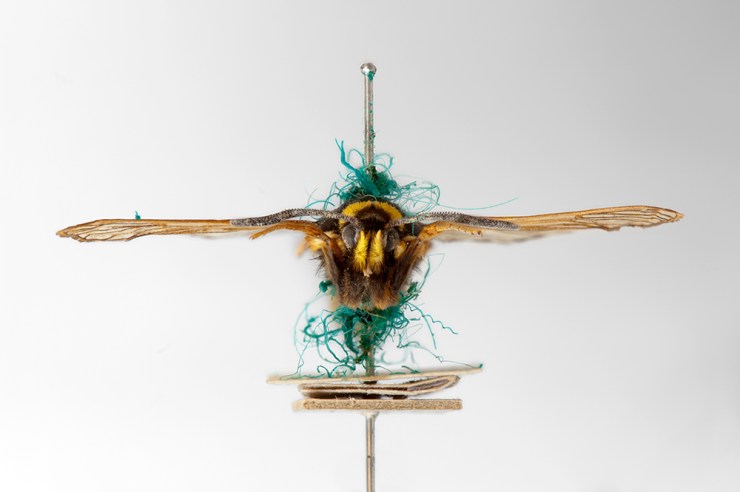
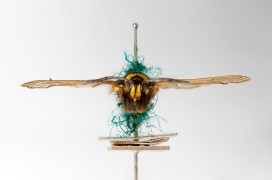
A clearwing moth before conservation, showing verdigris spreading where the metal and the insect fats, or lipids, react.

A few years ago I read a book called Colour: Travels Through the Paintbox, by Victoria Finlay, and was interested to learn that verdigris was once used as a pigment. Verdigris, which I now know translates from French as ‘Green of Greece’, is a word that’s been in my vocabulary since I was small.  I loved its rich bright blue-green colour, which is often seen on old copper piping or copper statues.

Verdigris forms when copper or a copper alloy reacts with water, oxygen, carbon dioxide or sulphur.

L: Three years’ worth of verdigris, ground and ready to make into paint.
R: A second attempt at mixing the paint, this time using linseed oil.

As early as 5thcentury AD, it was used in paint-making, and until the late 19th century it was the most vibrant green pigment available. But it was unstable – Leonardo da Vinci warned that it ‘vanishes into thin air if not varnished quickly.’ These days synthetic pigments provide a more constant alternative.

Despite its past uses, verdigris is a big problem in pinned insect collections. Nowadays stainless steel pins are used, but pins containing copper still remain in old collections and these react with air and insect fats. The more fatty the insect, the more verdigris tends to form and, if left, it can damage a specimen irreparably.

Comprising around five million or so insects, the Hope Entomological Collections here in the Museum take quite a bit of looking after. A few years ago a project to catalogue and conserve many of its butterfly and moth specimens was undertaken and the removal of verdigris and repining of insects was part of this.

With paint-making in mind, I asked that the beautiful, but problematic, substance be saved.  About three years on I finally got around to using the pigment, which I had also been adding to while photographing the collections.

I chose a variety of differently shaped moths to paint (most of the verdigris came from moths, so moths seemed the most apt subject). To narrow my options further I went for green moths. Some of the specimens I chose had verdigris on their pin, so I was able to take pigment and use it to paint the very specimens from which it came!

Katherine tested out the newly made verdigris paint in her sketchbook.

After a first failed attempt to make watercolour paint (during which pigment and water remained stubbornly separate due to the greasy insect fats still present), I tried again, this time using linseed oil to make oil paint – and it worked! Traditionally a flat bottomed tool called a muller was used to press pigment into the water or oil. Not having one of these, I used the flat end of a pestle and a mortar which did the trick.

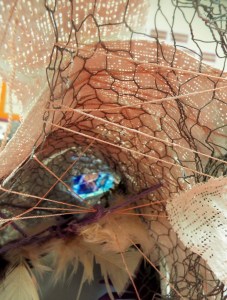
A Miscellany of Moths, the finished verdigris painting.

The paint went surprisingly far and, following on from the 14 green moths, I plan to use up the remainder to paint beetles.

Katherine’s Miscellany of Moths painting can be seen on display in the Museum’s Community Case until 18th October.

Calling all artists

We’re happy to announce an exciting opportunity to coincide with our  new exhibition – Settlers, opening at the Museum of Natural History in February 2018.

Settlers is the upcoming exhibition in our Contemporary Science and Society series. The latest of the series, Brain Diaries: Modern Neuroscience in Action is currently running until 1 January 2018.

The history of the people of Britain is one of movement, migration and settlement. Tracing patterns revealed by genetics, archaeology and demography, Settlers: Genetics, Geography and the peopling of Britain will tell the dynamic story of Britain’s ever-changing population.

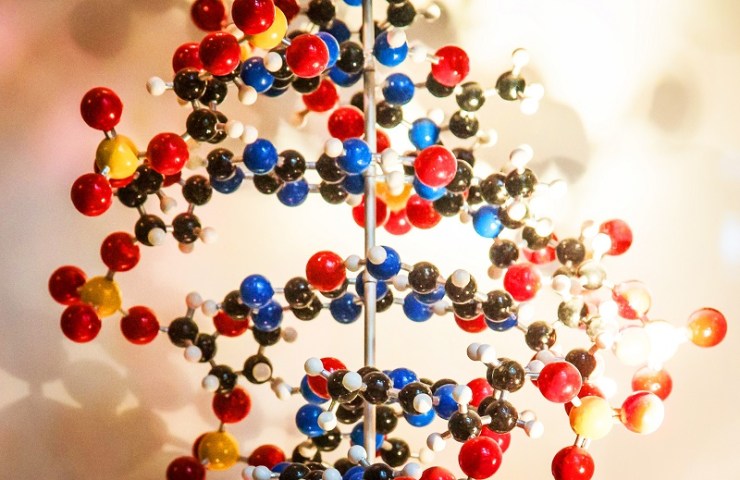
DNA image for call out blog post

Planning for Settlers is going well and we’re happily getting to grips with the science and archaeology, but we’d also love to have some artistic input. Can you help us?

The Museum would like to commission up to two pieces of contemporary art that explore themes such as genetics, DNA, migration, settlement and ancestry.

We’re particularly interested in work that will provoke thought and discussion and engages with 18-25 year olds, and we welcome all media, including digital and installation art.

The artwork could be displayed in the gallery itself, in the main court or even on the museum lawn.

centre-court
The Museum’s centre court

If you like the sound of adding some artistic flair to Settlers, you can find out more here:.  Don’t delay, though; the deadline for applications is Friday 1 September 2017.

The Big Brain Competition

What happens in your brain when you receive compliments? And what’s going on in your mind when you watch your football team win a match? Does the brain respond differently when recalling music, compared to listening to it? All these questions, and more, have been posed in our Big Brain Competition…

Coinciding with the Museum’s Brain Diaries exhibition, the Wellcome Centre for Integrative Neuroimaging is inviting you to ask your own question about the brain to be in with a chance to have it tested by neuroscientists using Oxford’s state-of-the art Magnetic Resonance Imaging (MRI) scanner.

The advanced MRI scanner at the John Radcliffe Hospital in Oxford is one of the strongest in the world. It allows scientists to carry out functional MRI (fMRI) scans to see the brain in action. This mind-blowing procedure can reveal how the brain changes when learning a new skill or how it compensates when someone recovers from brain damage. It can also reveal which areas are used when people speak, move or laugh, to give just a few examples.

This fMRI scan shows how blood flows to the visual cortex region at the back of the brain when viewing a visually-stimulating checkerboard pattern
layouttile
Dr Stuart Clare of the Nuffield Department of Clinical Neurosciences is asking you for questions about the brain

Functional MRI shows when a brain area is more active by detecting the changes in blood oxygen levels and blood flow that happen in response to neural activity. The technique can be used to produce activation maps showing which parts of the brain are involved in a particular mental process.

The scientist behind the Big Brain Competition is Dr Stuart Clare, whose research involves pushing the technological boundaries of the fMRI technique to reveal new insights about how the brain functions normally and how it is affected by disease. There is still so much that the fMRI scans can bring to light, so Stuart is asking you for ideas!

Over several years of inviting people in to see the beautiful pictures that our MRI scanner can produce, I’ve been fascinated by the questions they have about the brain and whether you can see this thing or that thing in our fMRI scans.  With this competition we want to give people the unique access to our scanner and the chance to try an idea out for themselves.

When coming up with an idea for investigation there are a few practical things to bear in mind. Any activity has to be something people can do when lying down in the scanner and it has to be clear when they start and stop doing the activity. But Stuart is very open to ideas for experiments that they haven’t come across before – something that scientists really don’t already know the answer to.

The animation below explains how fMRI works and what it can do. So take a look, think up an experiment of your own and enter your idea via this form. The best one will be put into action by the research team and you will be able to watch the scans take place at the John Radcliffe Hospital yourself!

Credit: Mike Peckett

Great minds don’t think alike

Credit: Mike Peckett

Museums are a place for many things: inspiration, learning, conservation… the list goes on. But we believe that they should also be a forum for debate and discussion. One of our aims, as part of our Contemporary Science and Society exhibition and event series, is to bring controversial or challenging ideas to our visitors and to encourage a lively, informed and balanced debate.

Thomas Henry Huxley

Controversy is nothing new to this institution; there is a history of debate going right back to 30 June 1860, the year the Museum was founded. The Great Debate is believed to have been the first ever public debate on Charles Darwin’s theory of evolution – certainly the thorny issue of the time.

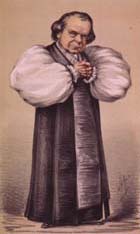
The debate is now notorious for the clash of ideologies between Samuel Wilberforce, the Bishop of Oxford, and Thomas Henry Huxley, a young biologist known as ‘Darwin’s bulldog’.

Samuel Wilberforce

Reports from the time are a little sketchy, but tempers are believed to have flared and insults were traded, climaxing with the shocking moment where Wilberforce compared Huxley’s grandparents to an ape. This was obviously outrageous to the delicate Victorian temperament, and people were believed to have fainted with shock!

This short video reveals how we think the debate may have gone (with a little artistic license thrown in):

The anniversary of the Great Debate falls next week, and this year it’s an extra special one. We’re reigniting the tradition of a good lively discussion with The Great Debate: Smart Drugs – Is It Cheating? On Thursday 29 June, Claire Fox of the Institute of Ideas and BBC Radio 4 chairs a multidisciplinary panel as in a debate about the ethics, fairness, and effects of so-called smart drugs and their impact on society.

Smart drugs is a name given to prescription drugs, typically used to treat disorders such as narcolepsy and attention deficit hyperactivity disorder (ADHD), which are now also commonly being used to improve cognitive ability and concentration. Some studies suggest that these drugs are now widely being used by university students, in a climate of increased academic and financial pressure.

Many students are said to see these drugs as a normal aid to study, but some experts have serious concerns about increasing levels of self-prescription and the long-term safety of their use, as well as the impact on competitiveness. Increased use in other areas of society may also have implications.

The panel for this debate includes world experts in the fields of neuroethics, evolutionary psychology, and philosophy, each representing different sides of this challenging subject.
Tickets are free, but you need to book your place. We can promise controversial opinions, expert insights and an eye-opening evening, but unlike Wilberforce and Huxley, we can’t necessarily guarantee that the panelists will be flinging insults about each other’s grandparents.

Delightful dung beetles

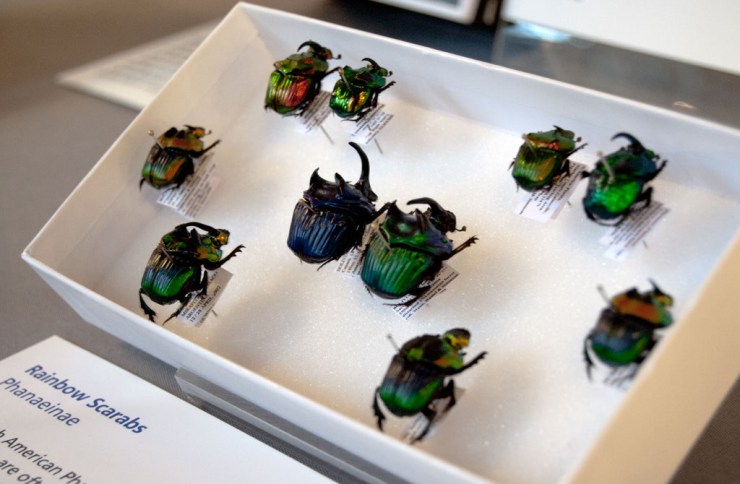
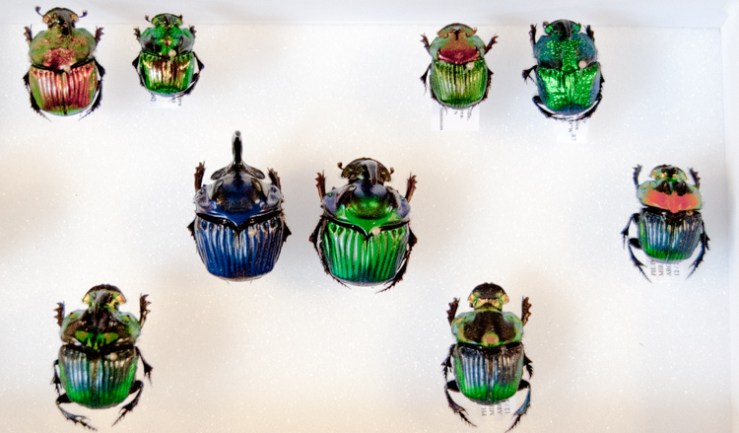
The latest display in our changing Presenting… case showcases a wonderful array of dung beetles. Darren Mann, head of our Life Collections, tells us why they are so important.

Worshipped during ancient Egyptian times, dung beetles have a long history of human appreciation. Jean-Henri Fabre (1823-1915), one of the first to popularise insects in his writings, began his Souvenirs entomologiques series with the Sacred Scarab, and even Charles Darwin appreciated the weaponry adorning many dung beetles.

Dung beetles can be divided into three main groups based on their nesting behaviour. The rollers, often seen on television wildlife documentaries, make a ball out of dung and roll it some distance before burying it. The tunnellers dig directly below the dung pile and bury as much as needed for nest construction. Finally, the dwellers nest within the dung pile.

The South American Phanaeinae is one of most colourful groups of beetles. They are often referred to as Rainbow Scarabs due to their bright metallic bodies. We don’t fully understand why these beetles are quite so colourful.

Dung beetles are one of the more popular groups of insects used in ecological and evolutionary research today. They can help us to understand questions about how biodiversity loss impacts on ecosystems, or act as model organisms in the field of evolutionary development.

Unlike the much-publicised importance of bees and their pollination services, dung beetles are relatively unknown, despite their huge ecological and economic value. Their feeding and nesting behaviours provide many useful ecosystem services such as dung removal, pest fly control, parasite suppression, nutrient cycling, plant growth enhancement, improvement of soil structure, secondary seed dispersal, and a possible reduction of greenhouse gas emissions.

Through these activities, one study calculated that dung beetles are worth around £367 million a year to the UK cattle industry alone.

The largest dung beetles belong to the genus Heliocopris, which can reach up to 69 mm (pictured is Heliocopris dominus). These large beetles specialise on elephant and rhino dung. From around 2 mm in length is the oriental genus Panelus. These small beetles probably feed on the ‘dung’ of other insects and fungi.

Ancient Egyptians believed that the dung beetle kept the Sun moving across the sky like a giant ball of dung, linking the insect to the god of the rising sun Khepri. Some historians believe that it was through observing dung beetle behaviour and biology that Egyptians developed ideas about life after death.

The two most widely depicted species in Egyptian art are Kheper aegyptiorum and Scarabaeus sacer. Nowadays, only Scarabaeus occurs in this region of Africa; Kheper is now a more southern species, possibly indicating climatic changes since Ancient Egyptian civilization.

Kheper aegyptiorum on display in the museum’s Presenting… case

The UK has about 60 species of dung beetle and most of these belong to the ‘lesser dung beetle’ subfamily Aphodiinae. The largest of our dung beetles are the Dor Beetles which can reach 28 mm. Our smallest, Plagionus arenarius, is a meagre 2.5 mm. Sadly, over 50 per cent of our dung beetles are in decline due to agricultural intensification, pesticides and habitat loss.


Stories from Stone, Body and Bone

rosehill exhibition postcard image for web

Each year the Museum works with members of the community on a wide variety of projects using our collections to enthuse and engage people in natural history. These projects often result in some amazing outcomes but until now we have been unable to find the right space to celebrate this work in the Museum. So this month we are very happy to unveil our new Community Case, dedicated to doing just that.

Community case front for web
Stories from Stone, Body and Bone in the new community case

Our opening display focuses on the Children in Need-funded Story Makers programme. In partnership with Fusion Arts, this initiative helps Oxford primary school pupils to develop their communication skills by taking inspiration from museum collections. And this year they teamed up with us to create Stories from Stone, Body and Bone.

Pupils from New Marston, Wood Farm, and Rose Hill Primary schools worked with Story Makers founder and arts psychotherapist Helen Edwards in two visits to the Museum, stimulating and developing imaginative ideas, stories and artwork.

During these visits the Story Makers met with our education officer Chris Jarvis and together they looked at rocks and minerals, tectonic plate formation, and the evolution of skeletons and animal posture. They explored the collections creatively through sensory observation, using the hands, body and senses to develop self-awareness and self-confidence.

story makers work 3 for web
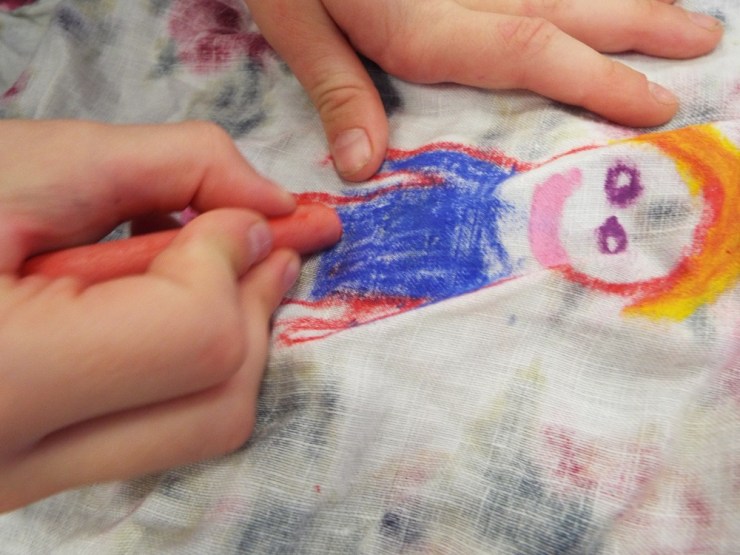
Getting creative with chalks and textiles

We work with the children as artists and we carefully designed a series of sessions that enabled them to have direct sensory engagement with objects in the museum. We then used art processes to portray their experiences and feelings about their interactions.
Helen Edwards, Integrative Arts Psychotherapist

Back at school, the pupils used visual art, drama, movement and modelling to communicate feelings and ideas that emerged from these museum encounters, sharing thoughts with the group in a playful and trusting atmosphere.

story makers students for web cropped

Group sessions back at school involving movement, drama and art

story makers work 4 for web
Detail from one of the Stone Age caves

Each Story Maker then created a Stone Age character – someone who might dream up and pass on stories full of meaning and myth. They imagined places in which their Stone Age characters might live, thinking about what they might see looking out from these spaces, through the cracks, crevices and windows in their caves.

From these ideas emerged beautiful, bright, and colourful models of these fictional abodes, as well as stories and poetry about their characters.

Story Makers built the children’s capacity to think reflectively, enriching their speech and language, and helped them to develop their writing skills as the stories were compiled into Story Makers books.

story makers artwork for web
Stone Age houses and landscapes as part of the Stories from Stone, Body and Bone project

Everyone should get to do this, it is like a dream come true
Story Maker, from the Stories from Stone, Body and Bone project

Stories from Stone, Body and Bone is on display until Sunday 21 May in our new Community Case. The next display, installed on 22 May, will feature artwork by our community of artists who use the collections as inspiration for their work.