Dodo Roadshow: Royal Cornwall Museum

To mark our selection as a Finalist in the Art Fund Prize for Museum of the Year 2015 we’re embarking on a unique and ambitious tour of the country – the Dodo Roadshow.

Beginning at Land’s End on 8 June and concluding in John O’Groats one week later, the famous Oxford Dodo will visit more than 20 museums and galleries along the way. At each stop the Dodo will ‘interview’ one of the venue’s star objects.

Royal Cornwall Museum: a huge nugget of gold

Royal Cornwall Museum

So, tell me about yourself – who are you and where do you come from?
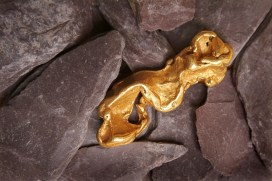
Well, I’m the largest nugget of gold ever found in Cornwall, and I can be seen at the Royal Cornwall Museum in Truro.

What is it that makes you so special?
Beauty, rarity … and of course my size. I weigh an impressive 60 grams; that’s about the same as a large hen’s egg. What would a Dodo’s egg have weighed I wonder…?

Who looks after you in this place?
I have a very dedicated support team who pander to my every need: housekeepers who make sure my home environment is just perfect, interpreters who help me tell my story, bouncers who help cushion me from my adoring fans and PAs who make sure I’m seen in all the right places…

Do you remember life before the museum?
Not a lot, my early life is a blur.  My first real memory is being ‘discovered’ in a Cornish river bed. That was in February, 1808 if my memory serves.  I caused a sensation in the press, with people desperate to own me. Nothing but the best for me though: I was acquired by Philip Rashleigh, that most discerning of Cornish mineral collectors.

What does the future hold for you?
My museum owners will be 200 years old in 2018, and as I’m one of their major stars there will be endless public appearances, photoshoots and press calls. If it all gets too much I might go on retreat for some quiet study, maybe even see my analyst.

Stickers small - Dodo Roadshow_crop

Dodo Roadshow: National Maritime Museum Cornwall

Viking Voyagers NMMC 850px To mark our selection as a Finalist in the Art Fund Prize for Museum of the Year 2015 we’re embarking on a unique and ambitious tour of the country – the Dodo Roadshow. Beginning at Land’s End on 8 June and concluding in John O’Groats one week later, the famous Oxford Dodo will visit more than 20 museums and galleries along the way. At each stop the Dodo will ‘interview’ one of the venue’s star objects.
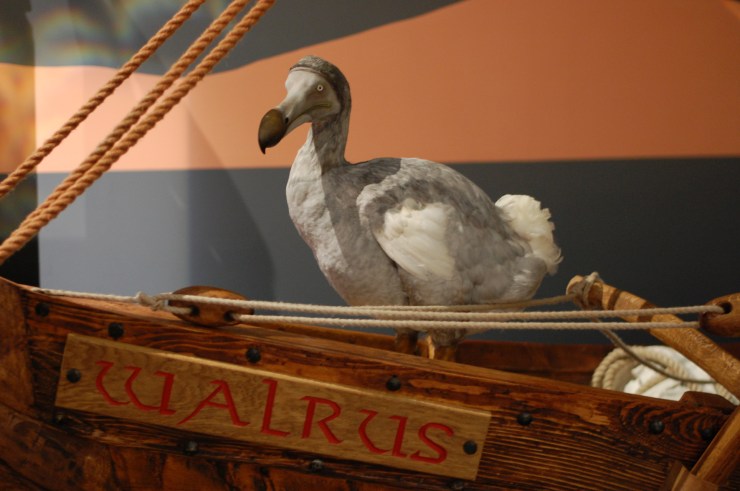
National Maritime Museum Cornwall: Walrus, Viking Cargo Ship

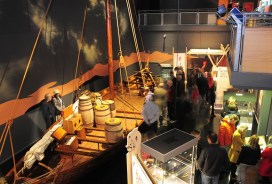
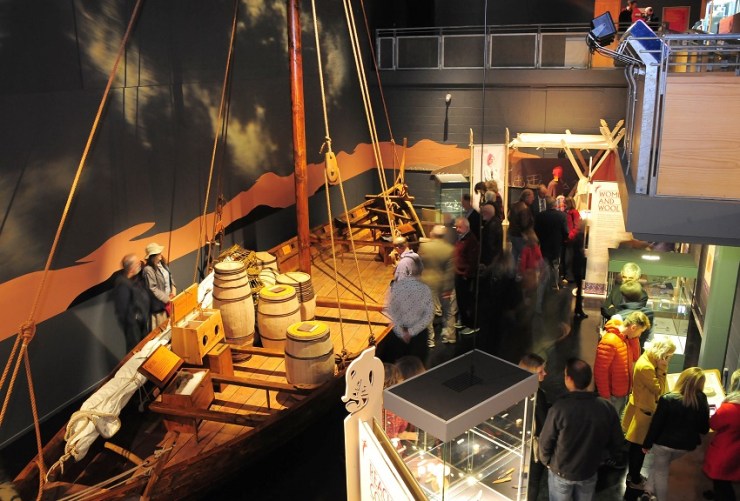
Squawk! I'm on the Walrus, a 14m Viking ship. It's the first stop on my tour and what a way to start!
Squawk! I’m on the Walrus, a 14m Viking ship. It’s the first stop on my tour and what a way to start!

So, tell me about yourself – who are you and where do you come from?
Viking cargo ship built from oak in Denmark in the 11th century. I plied the seas of northern Europe carrying all sorts of wares like furs, antlers, amber, silver and of course walrus ivory, a most desirable item in great demand by those with a bit of spare money to spend. I am 14m long and 3.3m wide and I have a tall mast which can carry a huge square sail made of woven wool.

What is it that makes you so special?
My name is Walrus – or Hrosshvalr in Old Norse meaning horse whale. Everyone who visits the Maritime Museum can climb aboard me and explore my beautiful craftsmanship; from the hand-carved stems to the overlapping planks characteristic of clinker-built ships of the Viking Age. They can discover my cargoes by smelling and feeling the goods stored in the barrels, chests and baskets. The Vikings built the best ships that could cross oceans and go far inland up rivers. I’m more used to hopping from coast to coast and am mainly powered by the wind.

Who looks after you in this place?
I was built and am looked after by the Maritime Museum’s Boat Team.

Do you remember life before the museum?
When I said I was built in the 11th century in Viking Denmark, in fact I have come back from the dead for this very special exhibition, Viking Voyagers. After my trading days I was scuttled – or deliberately sunk – in the Roskilde Fjord around the year 1000 with a few other ships, apparently to create a defence against sea-borne attacks from elsewhere. I don’t know why. I’m just glad to be back again and to have thousands of people marvel at how splendid I am. If they hold my steering oar or styrbord (where your modern word starboard comes from) they might be able to imagine all the adventures I had 1000 years ago.

What does the future hold for you?
I am content here to tell my story for the duration of this very special exhibition Viking Voyagers which will remain at the Maritime Museum until early 2017. Then? Who knows. Perhaps I’ll end up dead as a Dodo again. Stickers small - Dodo Roadshow_crop

Ready for the road

IMG_4934

Tomorrow is the official launch of the Dodo Roadshow. Our 8 day adventure from Land’s End to John O’Groats kicks off at the southern tip of the country, before zooming on to 4 other museums during the day. It’s certainly a busy one to get us going!

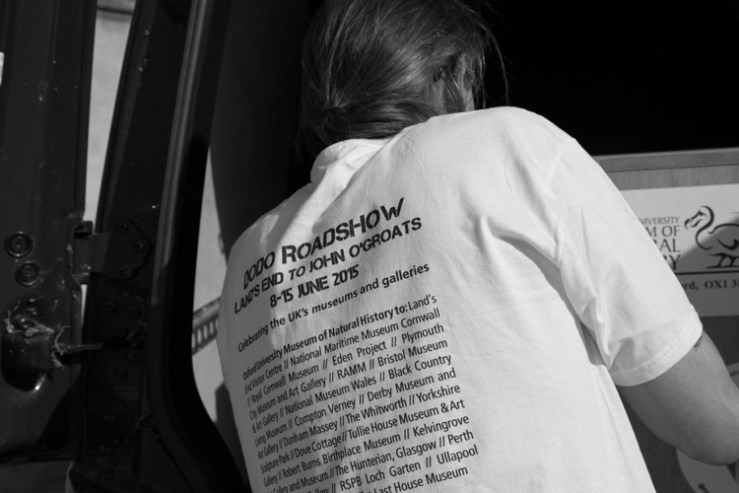
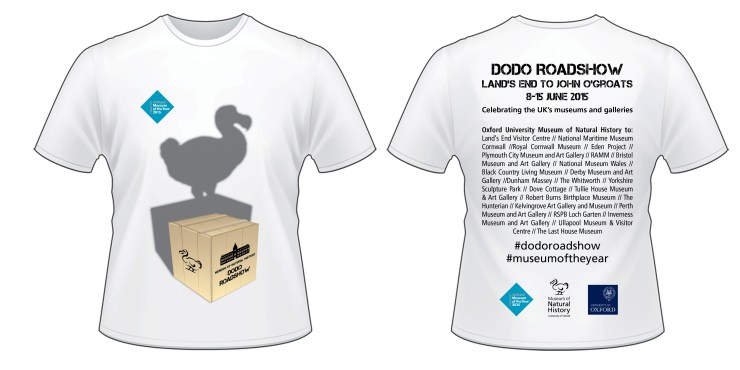
The ambitious itinerary on the back of Darren's t shirt
The ambitious itinerary on the back of Darren’s t shirt

IMG_4936

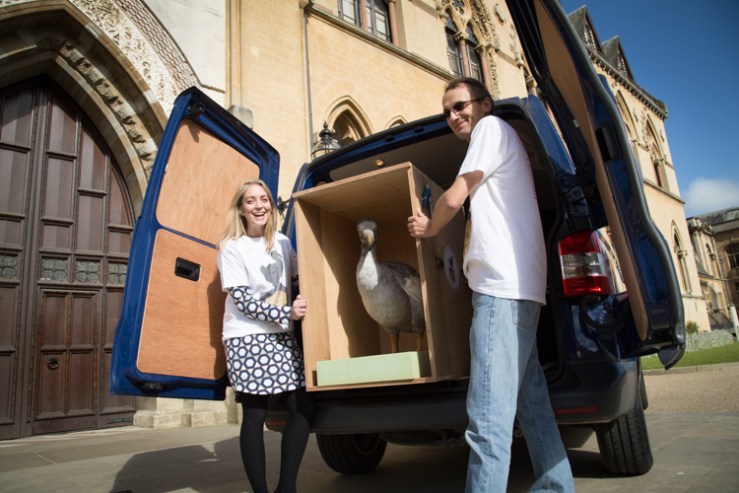
Ellie Smith and Darren Mann, part of the first leg team have packed up the Museum van with the essentials. They’ll be joined by Julia Parker and will head down to Cornwall today. Next stop Land’s End!

Ellie and Darren lift the Dodo into the van

Rachel Parle, Interpretation and Education Officer

It’s the Dodo Roadshow!

Stickers small - Dodo Roadshow_crop

We are definitely more than just a Dodo, but sometimes we do like to celebrate our famous specimen. This month we’ll be doing that in two exciting ways: putting the real Dodo remains on display, and taking Dodo bits and pieces on an epic tour – the Dodo Roadshow.

The Oxford Dodo display in the centre court of the Museum tells the story of the famous specimen that’s been under the care of Oxford University since the 17th century. But it doesn’t contain the real head and foot remains of the original animal: this uniquely precious specimen has to be kept behind the scenes, so it’s rare to get even a glimpse… until now!

On show until 19 July, you have a one-off opportunity to see the real deal on display in the climate-controlled Presenting case near the Welcome Desk. You can find out more about the display on the Museum website too.

Gently placing the Oxford Dodo into the Presenting case

As you’ll probably know by now, we’ve been shortlisted for the Art Fund Prize Museum of the Year 2015. To mark this, we’re embarking on a unique and ambitious tour of the country. Beginning at Land’s End on 8 June, the Dodo Roadshow will travel the full length of Britain in the colourful Museum van. Staff will journey all the way to John O’Groats in just one week, visiting over 20 museums and galleries along the way.

Oh, and we’ll be taking a Dodo with us too. While the original head is on display in the Museum, we’ll get the striking Dodo model out on the road, and we’ll also take along real Dodo foot and limb bones, from the same original animal as the head. These will be used as part of a ‘show and tell’ with visitors at each stop.

The Dodo model (right) which will be joining us for the adventure

But it’s not just about the Dodo. In a bid to celebrate the rich diversity of museum collections in the UK, the Dodo will meet with star objects from every museum and gallery on the tour too. And in a small expression of cultural heritage exchange, the Dodo will ‘interview’ these star objects for a series of Q&A articles, which you’ll be able to read about right here on the blog.

We wanted to do something special to celebrate our nomination for the Art Fund Prize for Museum of the Year 2015. Getting out on the road to visit museums and galleries far and wide seemed like a great way to talk about the huge breadth of collections that we have in the UK, both in natural history and well beyond.

The Dodo Roadshow is a chance for some people to meet the iconic Oxford Dodo, and for the Dodo – and us – to meet equally important objects in other museum collections.

– Professor Paul Smith, Museum director

Here’s the full breakdown of where we’re going:

Monday 8 JuneLAND’S END Visitor Centre; National Maritime Museum Cornwall; Royal Cornwall Museum; Eden Project; Plymouth City Museum and Art Gallery
Tuesday 9 JuneRAMM; Bristol Museum and Art Gallery
Wednesday 10 JuneNational Museum Wales; Black Country Living Museum; Compton Verney
Thursday 11 JuneDerby Museum and Art Gallery
Friday 12 JuneYorkshire Sculpture Park; The WhitworthDove Cottage
Saturday 13 JuneTullie House Museum & Art Gallery; Robert Burns Birthplace Museum; Kelvingrove Art Gallery and Museum
Sunday 14 JuneThe Hunterian, Glasgow; Perth Museum & Art Gallery; RSPB Loch Garten
Monday 15 JuneUllapool Museum & Visitor Centre; Information Centre, JOHN O’GROATS

Look out for travel snaps, postcards and drawings from the Dodo here on the blog and @morethanadodo on Twitter – #dodoroadshow.

Right, I’m off to pack – squawk!

Spot the staff wearing these t shirts out on the road

Rachel Parle, Interpretation and Education Officer

Drawing on the past

page 3 low

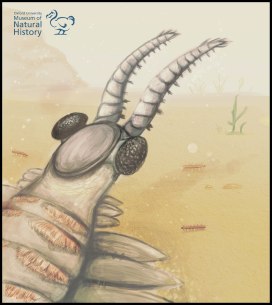
My name is Jasmine Bevis and I’m an Illustration student at Plymouth University. I have a great interest in prehistoric life, so when the Museum of Natural History suggested a project, I just had to get involved. The task was to develop a new reconstruction of Anomalocaris, a 500 million year old predator from the Cambrian era. With input from palaeontologist Allison Daley I came up with a successful design, and was invited to come to the museum for a placement.

Jasmin's Anomalocaris
Jasmine’s Anomalocaris

On my first day I was welcomed with open arms by Allison Daley and Eliza Howlett. I was given a look behind the scenes and shown some extraordinary fossil specimens that brought out my inner child. It got more exciting when I was shown my workstation, a room packed full of fossils and all manner of objects; I would not have to look far for inspiration! Meeting the Public Engagement team was next, where I was given my first project, to draw digital line artworks for education worksheets. These drawings needed to be clear, accurate and easy to photocopy.

Ichthyosaur to be used for education resources

Over the next 5 days I completed line artworks of a turtle, a spider crab, a nautiloid and an Ichthyosaur. I was also given the pleasure of illustrating 3 crustacean fossils for a paper that Allison was working on.

Another of Jasmine's Anomalocaris illustrations
Another of Jasmine’s Anomalocaris illustrations

Allison and I would talk about the Anomalocaris project over lunch and then I’d make improvements to my reconstruction; knowing that she would use it in lectures was a great feeling.

page 4 low

On the last day I met botanical illustrator Rosemary Wise, who filled me in on her career and showed me her wonderful artworks. I took this last day to finish as much as I could, and wander around the beautiful museum doing huge numbers of drawings. It was no  surprise to see the that T. rex, king of the dinosaurs, conquered most of my pages!

Jasmine Bevis, illustration student

All the fun of the Fossil Festival

Lead image

By Monica Price, Head of Earth Collections

Glowing from the success of our ‘Goes to Town’ and ‘Goes for a Pint’ events, which helped us win this year’s Museums and Heritage Award for best marketing campaign, we decided to ‘Go to the Festival’: the Lyme Regis Fossil Festival to be precise. Thousands of fossil collectors and holiday makers came to a marquee on the beach to discover more about fossils and enjoy all sorts of activities led by museums, universities, societies and conservation groups.

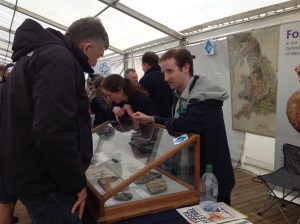
Monica and a festival-goer discuss William Smith's map
Monica and a festival-goer discuss William Smith’s map

This year marked the 200th anniversary of the very first geological map of Britain, made by geologist William ‘Strata’ Smith. As we hold the largest archive of his maps and papers, we were delighted to come and exhibit at the festival.

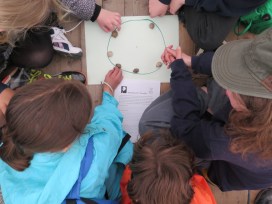
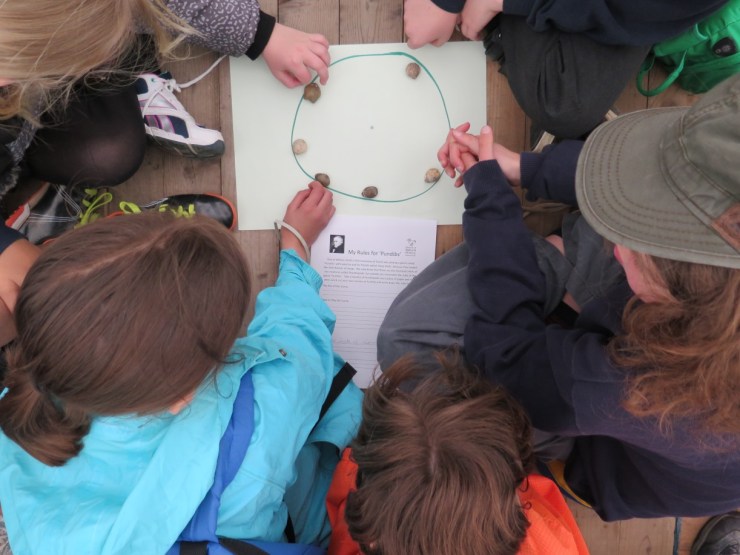
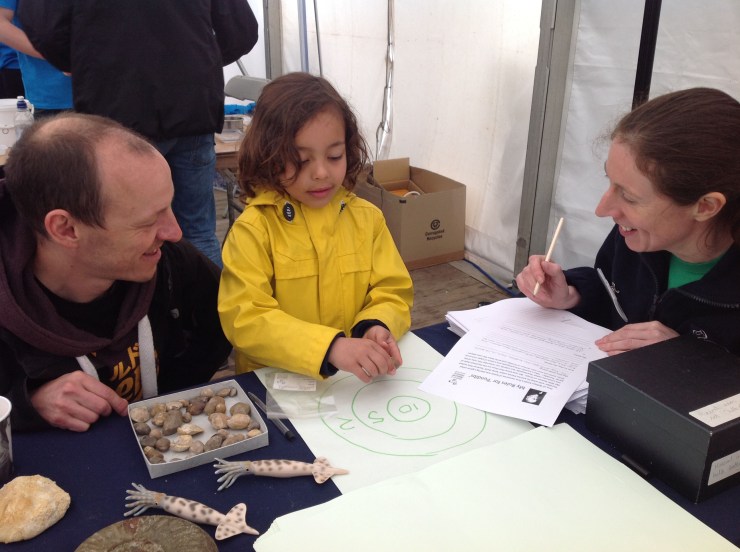
We brought with us some beautiful old specimens and archives from our collections, and let everyone enjoy and even play with real fossils. Play? Well, William Smith grew up in the Oxfordshire village of Churchill and used to play a game he called ‘pundibs’ using fossil brachiopods. He didn’t say what the rules were, and it appears that nobody living there today can remember either. We decided to challenge festival-goers to devise new rules.

Phil from Earth Collections shares some of the Museum's fossil specimens
Phil from Earth Collections shares some of the Museum’s fossil specimens

Brachiopods are curious aquatic animals that are very common in the fossil record, but are much rarer today. They have shells composed of two valves, a bit like a clam, but with a very different kind of body inside. The brachiopod holds onto a rock with its long stalk-like ‘pedicle’, opens its shell, and as the water filter through, catches food with tiny fibres on its loop-like ‘brachia’ or arms. The shell can be shaped like a pottery oil lamp, giving brachiopods their common name ‘lamp shells’.

Our brachiopod fossils proved quite challenging to play with. If you rolled them, they veered sideways. If you threw them, they’d bounce in all directions. Variations on skittles, boules, bowls and dice were all suggested, and even a race game to see which would fall to the bottom of a bowl of water first. Perhaps the original game is the one suggested by a former school teacher; children in his school used to play ‘dibs’, a throwing and catching game now better known as ‘knuckle bones’, ‘jacks’ or ‘five stones’.

Writing down the rules with Eliza

We thoroughly enjoyed our time at Lyme Regis, talking about fossils, answering enquiries, helping people have fun discovering the amazing world of geology – and of course, playing ‘pundibs’!